

PGT-P and PGT-A are two preimplantation genetic tests with similar methodology, but they answer different questions about your embryos.
PGT-A has been widely used for years to check for chromosomal abnormalities in embryos and is a standard recommendation from fertility specialists. PGT-P is a newer option that looks at health risks beyond basic chromosomal screening. They both play an important role in embryo selection, but whether PGT-A or PGT-P (or both) would be valuable for you depends on your personal circumstances.
This guide compares PGT-P vs. PGT-A in detail, explaining what each test detects, their accuracy and limitations, and when they are relevant.
What is PGT-A?
Preimplantation genetic testing for aneuploidy (PGT-A), previously known as preimplantation genetic screening (PGS), checks whether an embryo has the correct number of chromosomes.
Every embryo should have 46 chromosomes, 23 from each parent, but sometimes an embryo has too many or too few chromosomes. The condition is called aneuploidy and is often the cause of:
Failed implantation
Miscarriage
Severe genetic conditions
PGT-A helps identify chromosomally normal embryos and select the one with the best chance of implantation and a healthy pregnancy.

Source: Antoni Shkraba Studio
Bonus read: Learn more about PGT options in these guides:
What is PGT-P?
Preimplantation genetic testing for polygenic conditions (PGT-P) is a relatively new type of embryo screening designed to estimate long-term health risks associated with polygenic conditions.
Instead of looking for missing or extra chromosomes (like PGT-A), PGT-P analyzes an embryo’s DNA for polygenic risk or how likely each embryo is to develop late-onset and chronic conditions, such as:
Diabetes
Certain types of cancer
Mental health disorders
These conditions are influenced by many genes working together. PGT-P provides a risk assessment for embryos, helping you see whether one embryo may have a lower risk of developing a particular health condition later in life.
PGT-P is an opportunity for parents to gain more information about their embryos and provide their future children with the best possible start in life. Studies show that many parents feel they lack information when making critical decisions about their future families. Deep analytical IVF screenings like PGT-P can fill this knowledge gap.

Source: Tima Miroshnichenko
PGT-P and PGT-A comparison
To clarify the difference between PGT-P and PGT-A and their role in decision-making during IVF, follow the sections below:
PGT-A vs. PGT-P scope and focus
When to use PGT-P vs. PGT-A
Limitations of PGT-A and PGT-P
PGT-P vs. PGT-A result accuracy
Polygenic vs. aneuploidy testing cost and availability
1. PGT-P vs. PGT-A scope and focus
The fundamental distinction between PGT-A and PGT-P lies in how their insights shape the decisions families make during IVF.
PGT-A focuses on embryo viability. Its scope is limited to chromosomal health, which is highly relevant in determining whether an embryo is likely to implant and lead to a successful pregnancy. For many parents, this information helps shorten the IVF journey by reducing the number of failed transfers or miscarriages.
PGT-P looks beyond immediate viability. Its scope is long-term, assessing embryos’ lifetime relative genetic risk for developing chronic conditions later in life. It doesn’t predict whether an embryo can implant, but it may influence the choice when several viable embryos are available.
Here are some examples of what each test can help detect the potential for:
Test | Conditions screened or reduced |
|---|---|
PGT-A |
|
PGT-P |
|
2. When to use PGT-P vs. PGT-A
While PGT-A is a standard part of IVF, PGT-P is still not routinely recommended as it’s a newer option. Informed parents discuss their interest in polygenic embryo screening with their doctor at the beginning of their IVF journey, which makes planning easier for the care team.
PGT-A is recommended to all couples undergoing IVF. If it identifies multiple euploid embryos, PGT-P becomes relevant as it can provide additional information to help you choose the one that feels right among seemingly equally healthy embryos.
Parents who want to take a proactive approach to their child’s long-term health may find PGT-P results valuable, particularly if they have a personal or family history of certain chronic conditions and want to lower potential risks for future generations.

Source: Singkham
3. Limitations of PGT-A and PGT-P
Neither PGT-P nor PGT-A provides absolute answers.
PGT-A doesn’t guarantee a successful pregnancy, and its limitations are especially evident in the case of mosaicism. Mosaic embryos contain a mix of normal (euploid) and abnormal (aneuploid) cells.
Since PGT-A relies on testing only a few cells from an embryo’s outer layer, the results may not fully represent the embryo as a whole. That means that an embryo labeled “abnormal” could still develop into a healthy baby, while one labeled “normal” might fail to implant.
Some clinics discard mosaic embryos, while others will consider them for transfer, especially if no euploid ones are available.
Limitations are different for PGT-P. The test provides predictions based on population-level statistics. Polygenic scores capture trends in large groups of people, but they don’t account for every factor that shapes a person’s health, such as:
Environment
Lifestyle
Random genetic variations
PGT-P offers probabilities, not guarantees, so a lower-risk embryo may still develop a condition, while a higher-risk one may not.
PGT-P’s additional value also depends on context. In cases of advanced maternal age when there’s a limited number of embryos, PGT-P will likely not influence decision-making.
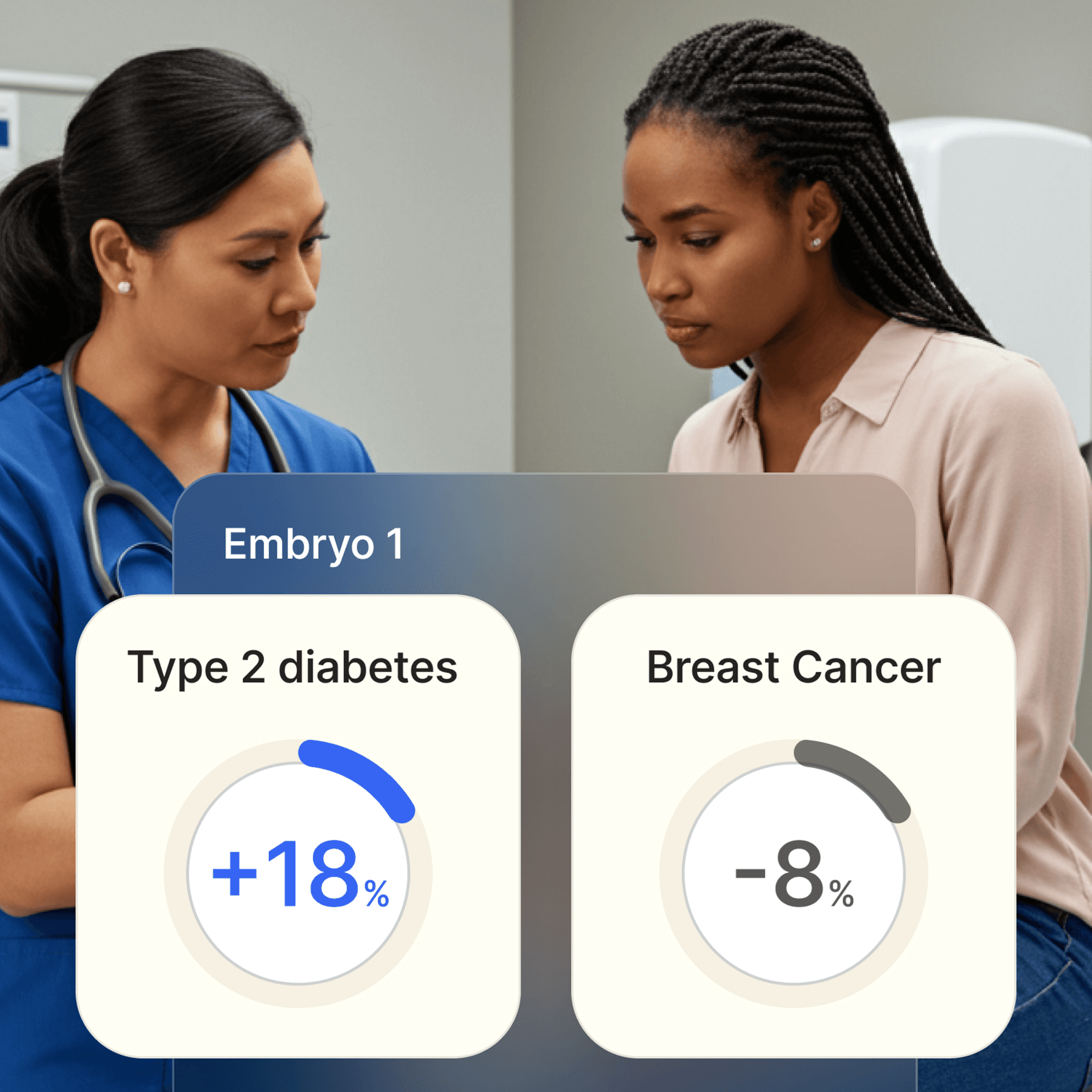
It’s best to ask your clinic about tests that align with your journey.
4. Polygenic vs. aneuploidy testing cost and availability
PGT-A is available in most IVF clinics, while PGT-P is available through select providers.
The cost of preimplantation genetic testing varies depending on several factors, including:
Your fertility clinic
Location
Your IVF package
The number of embryos tested
On average, PGT-A costs approximately $4,300, with prices ranging from $3,000 to $13,000. These costs typically include the embryo biopsy procedure and individual embryo testing. Some clinics offer testing per batch, while others charge per embryo.
PGT-P expenses are around $2,500 plus $450 per embryo, added to your total IVF cost.
5. PGT-P vs. PGT-A results accuracy
Approximately 50% to 70% of miscarriages occur due to aneuploidy, and PGT-A can detect major chromosomal abnormalities with 98% accuracy.
PGT-A can also determine the biological sex of embryos with equally high accuracy. This information is crucial in the case of X-linked conditions, such as:
Hemophilia
Duchenne muscular dystrophy
Certain forms of intellectual disability
Regarding PGT-P accuracy, studies have shown that embryo genotyping through this genetic test achieves an accuracy comparable to that of testing in adults. When applied retrospectively to adult siblings with known type 1 diabetes status, PGT-P-based embryo selection could have reduced disease incidence by 45–72% compared to random selection.

Source: RDNE stock project
Another study of 11,883 sibling pairs extended these findings, showing that PGT-P can achieve simultaneous relative risk reduction for multiple diseases, including diabetes, certain types of cancer, and heart disease. This effect was observed even in families without a known history of these conditions.
Pro tip!
Families who are known carriers of X-linked conditions often undergo preconception genetic screening before IVF to identify potential risks. If carrier screening reveals that a prospective mother carries an X-linked gene variant, PGT-A can help determine the sex of embryos, thereby removing the possibility of transferring a male embryo that is at risk of developing the disease.

This is where Nucleus Preview can make a significant difference. It is a clinical-grade, physician-approved carrier screening that uses whole-genome sequencing to help couples understand the likelihood of passing on genetic conditions to their children.
Both partners can test together, receiving a combined risk assessment that indicates whether your child could inherit a condition. You will receive clear, detailed reports that highlight carrier status, and these insights can help you explore options such as donor gametes or additional testing.

You can also explore our Nucleus IVF+ product for a more assisted and seamless IVF experience. We help you with tailored guidance on which tests to take, when, and what to do next before and during IVF. That way, you can focus on growing your family and leave logistics to professionals.
Leverage genetic insights with Nucleus IVF+
Nucleus IVF+ is an all-in-one fertility support program that makes scientific advancements in the fertility and genetics space and expert guidance from top clinics more accessible. We help you interpret genetic testing results with clarity, make confident embryo selection decisions, and plan for the healthiest possible future for your family.
With Nucleus IVF+, you get:
Comprehensive genetic insight: Access comprehensive carrier screening with Nucleus Preview, as well as standard and advanced embryo testing options that go beyond viability.
Holistic care coordination: From preconception to embryo transfer, Nucleus helps you find the right clinic, navigate appointments, select genetically compatible donors if necessary, and get clear answers at every step.
Clinical-grade interpretation: Genetic counselors explain what each report and test result means for your family’s long-term health and IVF success.

Nucleus IVF+ also includes a proprietary embryo analysis software that interprets complex results from PGT-P or whole-genome sequencing to identify the strongest embryo with the best long-term health potential. You will get:
An interactive breakdown of each embryo’s predicted health profile
Side-by-side comparisons of up to 20 embryos, sorted by your personal priorities
Explanations that make genetic risk scores understandable
Scientifically credible analysis based on peer-reviewed research
Confidence in embryo selection, supported by deep insights, not guesswork
Here’s what kind of health insights you can get with Nucleus:
Category | Examples |
|---|---|
Rare variant screening for numerous hereditary diseases |
|
Body and physical health |
|
Women’s health |
|
Metabolic conditions |
|
| |
Neurological and mental health |
|
Other conditions |
|
Book a call to begin your Nucleus IVF+ journey with tailored support and compassionate guidance.
You may also like…
Features image source: Laura Garcia