

New York is one of the most expensive states for IVF treatment, but it offers some of the best-quality labs and numerous high-rated clinics. It is also one of the few states with partial insurance protections, mandating employer-sponsored plans to cover some fertility services.
This guide breaks down the IVF cost in New York, from the average price of a single cycle to the factors that drive that number higher, and explains how insurance works in the state.
How much is IVF in New York?
The cost of IVF in New York ranges from approximately $5,700 to over $30,000 per cycle, with a statewide average cost of around $24,000. This wide gap exists because clinics:
Bundle services differently
Use different medication protocols
Charge separately for add-ons like preimplantation genetic testing (PGT), intracytoplasmic sperm injection procedures (ICSI), or frozen transfers
Since most parents need more than one IVF cycle to achieve pregnancy, the cost of fertility treatment can reach as high as $60,000.

Source: RDNE stock project
What contributes to the average cost of IVF in New York?
Even when two clinics advertise the same IVF package, they may include different services in their pricing. At a minimum, all IVF cycles require the following components:
Monitoring appointments (ultrasounds and bloodwork)
Egg retrieval procedure
Anesthesia
Fertilization (standard IVF or ICSI)
Embryo development and culture
Embryo transfer
Clinic and lab fees
When you start looking for a fertility clinic for your treatment, ask what exactly is included in its base price and, based on your specific situation (age, diagnosis, etc.), what additional expenses you can expect.
What add-ons are usually not included in the base IVF cost in New York?
Beyond the base cost, you may pay significantly more depending on:
Age-related need for higher medication doses
Use of donor eggs, sperm, embryos, or a gestational carrier
The need for more than one retrieval to achieve a euploid embryo
The need for multiple additional services, like carrier screening, PGT-M to screen for genetic disorders like hemophilia, muscular dystrophy, and cystic fibrosis, or assisted hatching
Here’s what those additional expenses typically look like:
Additional expense | Typical cost |
|---|---|
IVF medications | $2,000–$7,000 |
Cryostorage | ~$600 for the first year + annual fees |
~$4,000 | |
Preimplantation genetic testing | $4,500–$7,000 |
IVF with frozen donor eggs | ~$26,000 |
IVF with fresh donor eggs | ~$43,000 |
Sample IVF treatment cost in New York
IVF clinics in New York generally fall into two main categories:
Large, hospital-affiliated fertility centers
Smaller boutique practices

Source: Yan Krukau
Large academic centers, like NYU Langone or Weill Cornell, typically have advanced laboratory facilities, large medical teams, and access to research-driven protocols. Many future parents feel reassured by the reputation and scale, but this often comes with a higher price tag, more administrative steps, and less personal interaction.
Boutique clinics, like Neway Fertility, tend to offer deeper individualized care, shorter wait times, and a more concierge-style experience. They may cost less than big hospitals but more than clinics with bundled discounts, and add-ons can further increase costs.
Low-cost, high-volume clinics, like CNY Fertility, can be a category for themselves. They keep prices low by streamlining protocols, handling a large number of cycles, and offering optional add-ons instead of all-inclusive pricing.
Here is a sample New York IVF cost comparison across three different clinics:
Service | CNY Fertility | Neway Fertility | NYU Langone |
|---|---|---|---|
Base IVF cycle | $5,769 | $11,200 | $16,800+ |
Frozen embryo transfer | $995 | $5,000 | $5,500+ |
Egg freezing | $6,390 | $6,500 | $10,450 |
Monitoring | $995 | $1,500 | Included |
$650 to $3,445 | $900 | $1,267.50 to $4,692.50 |
Bonus read: Explore our other guides for the region:
Does insurance cover the cost of IVF in New York?
New York is one of the states with mandated insurance coverage for fertility treatment, but the coverage is not universal. It depends primarily on the type of insurance plan you have rather than your medical needs.
Under New York’s 2020 IVF mandate, large-group insurance plans (employers with 100+ employees) must cover:
Up to three IVF cycles (fresh or frozen transfers)
IVF medication prescribed for those cycles
Infertility diagnostics, such as bloodwork, ultrasounds, HSG, semen analysis, etc.
Medically necessary fertility preservation, such as egg or sperm freezing before chemotherapy, surgery, or gender-affirming treatment
The law also protects against discrimination based on age, marital status, sexual orientation, gender identity, or disability.
The mandate may not apply to:
Individual insurance plans: Purchased on the marketplace or directly from an insurer
Small-group plans: Employers with under 100 employees, typically startups, private practices, nonprofits, etc.
Self-funded employers: Large companies that pay claims themselves
Medicaid, Medicare, and Essential plans: Although the mandate doesn’t apply, you can check your coverage with your provider
Recent updates
As of October 1, 2025, medically necessary fertility preservation will be covered by Medicaid, making New York the first state to guarantee access to the service regardless of income.
Additionally, a new Bill is currently before the Senate Insurance Committee that proposes removing the three-cycle limit and requiring individual insurance plans, not only large group policies, to cover IVF in New York.
Still, even when IVF is covered, you may still be responsible for:
Deductibles
Copays
Coinsurance
Storage fees
Out-of-network charges

Source: RDNE stock project
How is infertility defined for insurance approval?
To qualify for covered IVF treatment, you must meet New York’s legal definition of infertility:
Twelve months of trying to conceive (either naturally or through artificial insemination)
Six months of trying to conceive if you’re over 35
Presence of known medical causes of infertility, such as endometriosis, low sperm count, blocked fallopian tubes, and cancer treatment (earlier treatment is allowed in these cases)
The definition of infertility also includes donor insemination, which means same-sex female couples and single mothers are eligible.
How clinic choice impacts IVF cost in New York and your chances of success
Clinic selection is one of the strongest predictors of total cost because it affects two key factors:
How many cycles you may need before a live birth
How many add-on services (testing, medications, lab procedures) are recommended or required

Source: Pixabay
Here’s how clinic choice can impact your final IVF cost in New York City:
Factor | How it impacts IVF cost |
|---|---|
Success rates by age group | A clinic with higher live-birth rates for your age may reduce the number of retrievals needed. Every additional cycle can add $12,000 or more to the total cost. |
Lab quality | High-performing labs can produce more blastocysts, thereby increasing the chances and number of viable embryos per cycle. |
Services bundled | Some clinics list the IVF cycle price at $12,000, but upwards of $6,000 in lab fees after consultation. |
In-house donor programs or external agencies | In-house donor programs can be more cost-effective, which is especially relevant for gay male couples, parents over 40, and single parents. |
Refund policies | Some clinics promise a refund for a portion of your treatment if no live birth is achieved. For example, the Spring Fertility network offers a money-back guarantee in eligible cases if no successful pregnancy is achieved with frozen eggs. |
Aggressive vs. more conservative treatment | Nuances like medication dose, number of retrievals, and willingness to transfer mosaic embryos can save you money or delay pregnancy, depending on your situation. |
Most people don’t realize how much clinic selection matters until they’re already a cycle or two in and tens of thousands of dollars deep. To make the right choices, try seeking professional support before booking a consultation with a clinic — one option is Nucleus IVF+.
Nucleus matches you with the clinic and treatment strategy most likely to work for you, as well as offers advanced genetic technology to help you have potentially healthier babies.
Nucleus IVF+: All-in-one IVF package to have your best baby
Nucleus IVF+ is the first genetically informed, end-to-end IVF program that integrates clinic selection, treatment strategy, reproductive genetics, and embryo screening into one coordinated experience.
The goal is to undergo fewer cycles, have healthier embryos, and increase the chances of a successful pregnancy.
Instead of going through IVF alone, piecing together multiple services, or hoping you choose the right clinic, Nucleus guides you from the moment you decide to pursue IVF until you bring home a baby, and beyond.
Nucleus IVF+ includes:
Clinic matching based on your age, diagnosis, and goals: Nucleus recommends clinics from a vetted network that match your profile.
Full IVF cycle support: A dedicated team guides you through every stage, stimulation protocols, preparation for retrieval, fertilization strategy, PGT decisions, and embryo transfer. You don’t get one-size-fits-all instructions but personalized support.
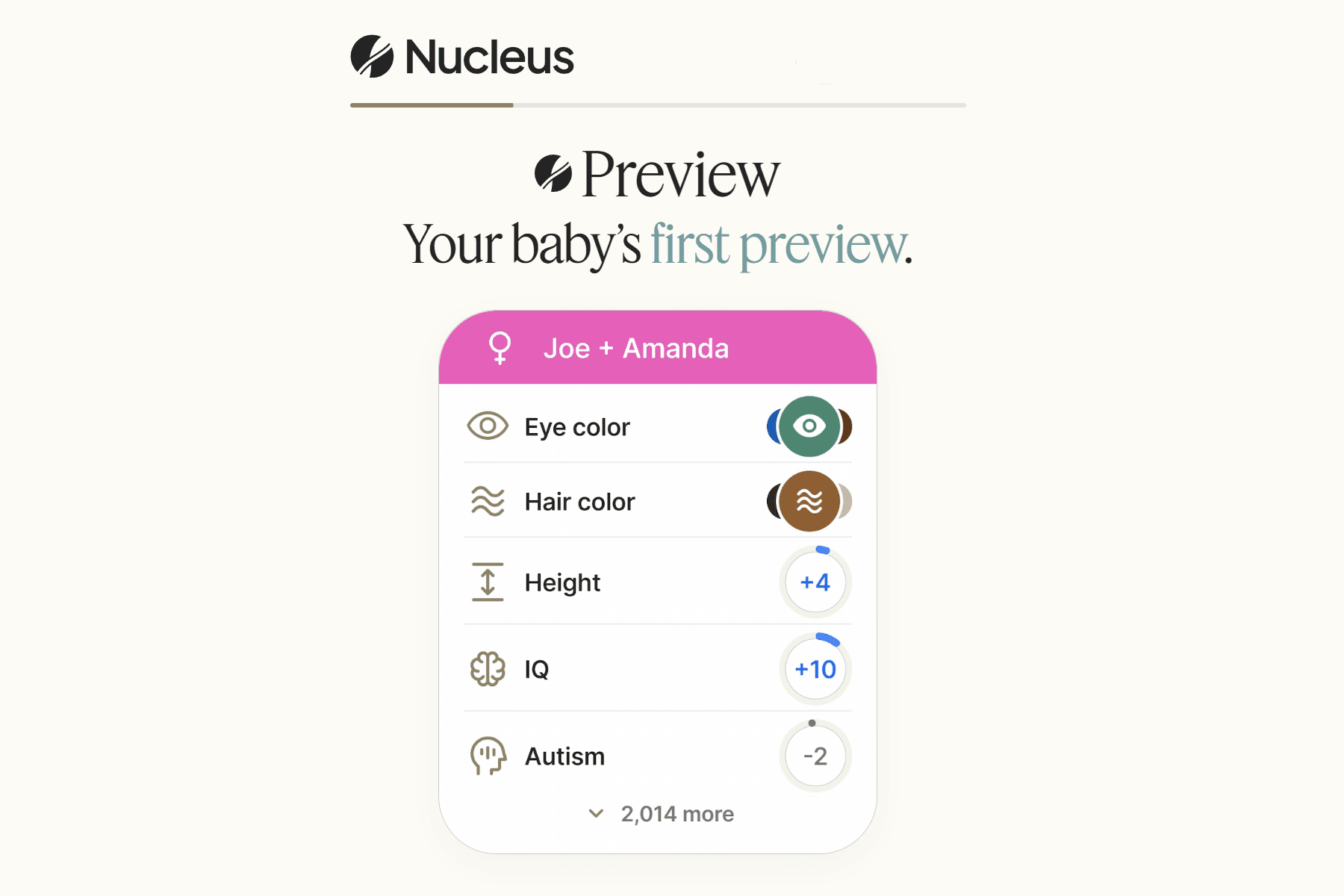
Preconception genetic screening: With Nucleus Preview, you and your partner get whole-genome carrier screening for over 2,000 inherited conditions, far more than other commercial tests.
Preimplantation genetic screening: Nucleus supports traditional embryo screening options, such as PGT-A, PGT-M, and PGT-SR, as well as more advanced PGT-P screening for common adult-onset and complex conditions.
Donor matching: If using donor eggs, sperm, or embryos, Nucleus IVF+ connects you to a network of preferred donors and screens for genetic compatibility.
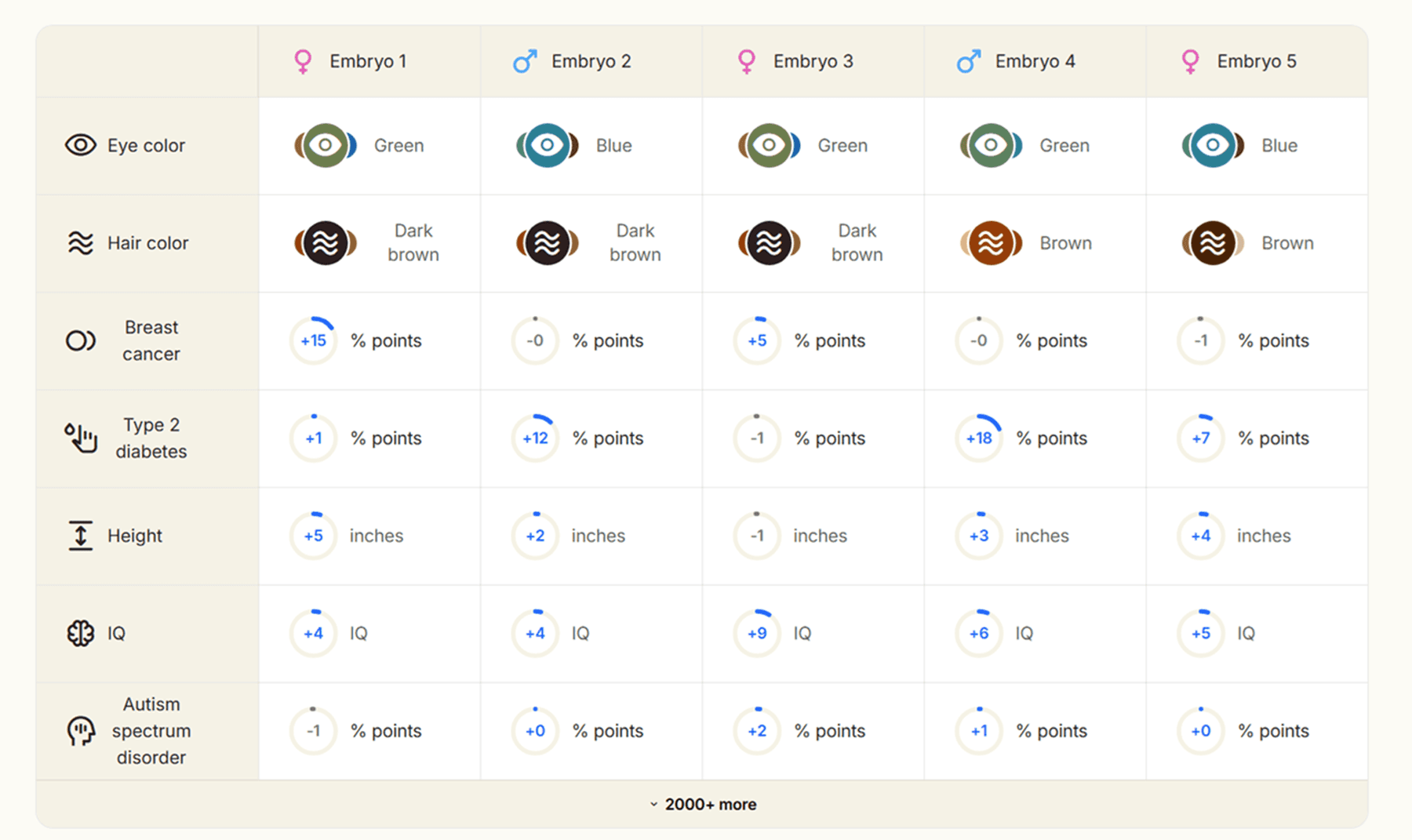
Embryo selection support with Nucleus Embryo: Traditional embryo selection relies mostly on morphology and embryo grading. Nucleus Embryo adds AI-powered analysis of genetic embryo test results, giving you:
Predictive polygenic health scores for each embryo
Side-by-side comparison based on your priorities (e.g., heart disease, cancer, diabetes, and other health risks)
Clear explanations of genetic findings, not merely a “normal/abnormal” label
Unlimited access to genetic counselors: You can enjoy ongoing support before, during, and after IVF, and get answers to all your questions.
Schedule an onboarding call with Nucleus to get matched with a clinic and start IVF.
Featured image source: Eugene Lisyuk