

If you’ve reached the stage of a frozen embryo transfer (FET), you’ve already been through some challenging steps of IVF. Now comes the part when timing is everything.
Implantation depends on a precise window of receptivity in your uterus. Whether you’re following the natural or programmed cycle, your clinic will carefully plan when to start medications, when to transfer the embryo, and when to test.
This IVF frozen embryo transfer timeline maps out each stage, from preparing your uterine lining to the much-anticipated pregnancy test.
When are frozen embryos transferred in IVF?
When people talk about an IVF transfer cycle timeline, they talk about two things happening simultaneously:
Preparing your uterine lining so it reaches the right thickness for egg receptivity
Synchronizing embryo development with your body’s natural or medication-driven hormone signals
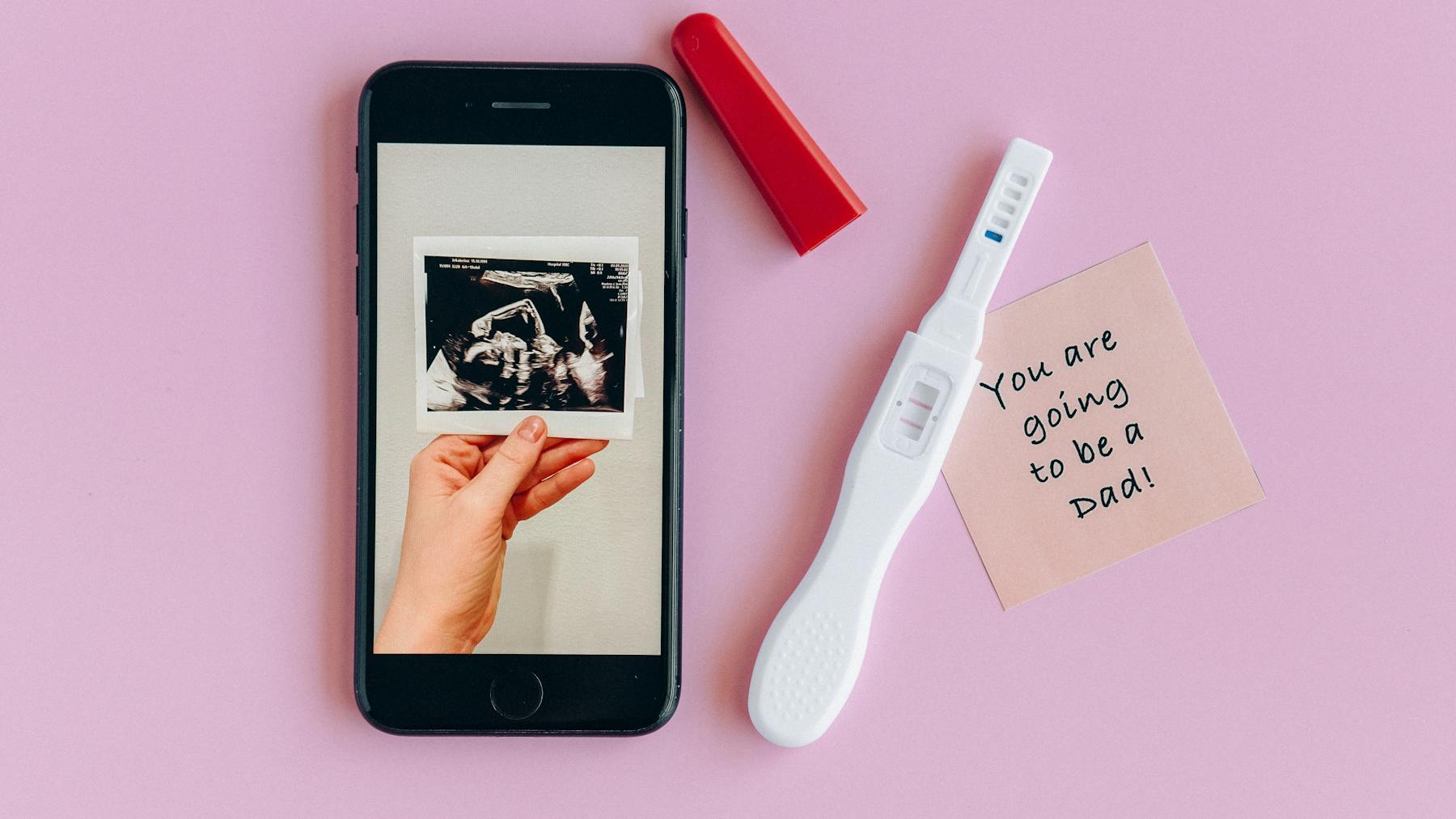
The goal is to line up these two events so that the embryo reaches your uterus at the precise moment when the lining is ready to welcome it. This short window, sometimes referred to as the implantation window, opens approximately 5–7 days after ovulation or after starting progesterone therapy.
Source: Nataliya Vaitkevich
Every detail in the IVF frozen embryo transfer calendar (when you start estrogen or progesterone, when your doctor confirms ovulation, and the exact day of the transfer) is chosen to match the implantation window. Even minor shifts in timing can significantly impact the chances of implantation, so clinics closely monitor hormone levels, perform ultrasounds, and provide medication instructions.
Takeaway: The FET cycle IVF timeline is similar for everyone, but the exact dates depend on:
Your cycle type (medicated or natural)
Embryo stage (day 3 vs. day 5 or day 6)
Your clinic's protocol
The 2 approaches to the frozen IVF cycle timeline
When planning a frozen embryo transfer, your clinic will recommend one of the following two options:
Natural cycle FET
Medicated or programmed (HRT) FET
These protocols have slightly different timelines, but the goal is the same: transfer the embryo at the optimal moment for implantation.
1. Natural IVF cycle timeline
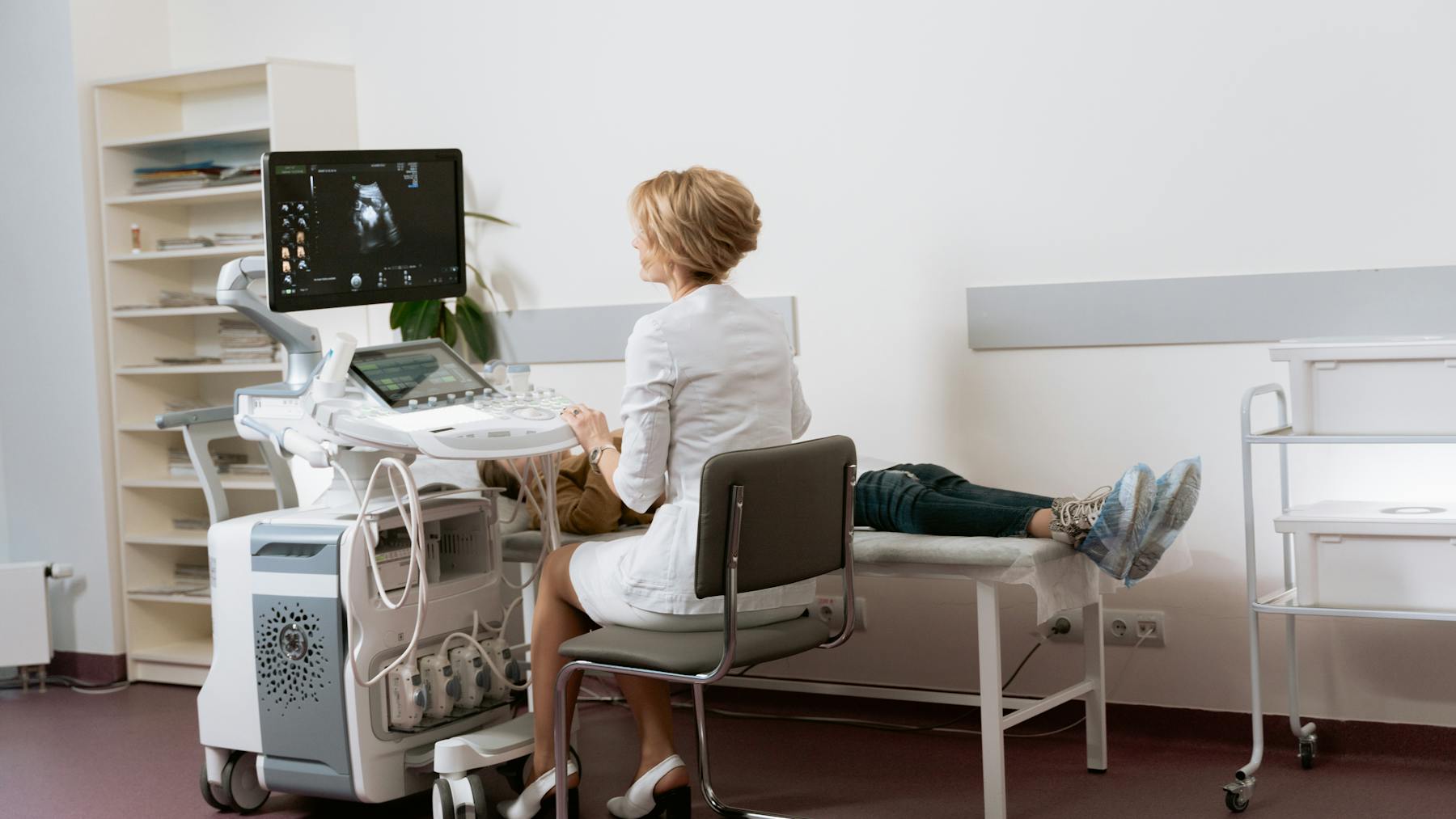
A natural frozen embryo transfer works with your body’s hormones, rather than relying heavily on medication. Instead of artificially preparing your uterine lining with estrogen and progesterone, your clinic closely monitors your natural cycle to identify ovulation and then schedule the transfer during the implantation window.
Source: MART production
This approach is suitable for women who:
Have regular menstrual cycles
Ovulate predictably
Develop a good endometrial lining naturally
Prefer fewer medications
Want to reduce treatment costs
If your doctor recommends a natural cycle FET, there are two available sub-protocols:
Standard natural cycle FET
Modified natural cycle FET
Standard natural IVF frozen cycle timeline
In a standard natural cycle, ovulation occurs spontaneously without the need for medical intervention. Once ovulation is confirmed, the embryo transfer is scheduled to match the developmental stage of the thawed embryo.
Here’s what the standard natural IVF cycle timeline looks like:
Cycle day | What happens |
|---|---|
Day 1 | Menstrual period begins. Some clinics perform a baseline ultrasound or blood test to assess the patient's condition. |
Day 10–14 | Ultrasound scans and/or hormone blood tests monitor follicle growth and the thickness of the lining. You may also use ovulation predictor kits. |
Day 14–16 | Ovulation is confirmed via a surge in LH levels or an ultrasound. |
Day 17–19 | Cleavage-stage embryo transfer is performed when using a day 3 embryo. Embryos are thawed and transferred via a thin catheter. |
Day 19–21 | Blastocyst transfer occurs if using a day 5 or day 6 embryo. |
Day 29–31 | A blood test is performed to check for pregnancy. |
Modified natural IVF frozen cycle timeline
A modified natural cycle follows the same monitoring pattern but uses minimal medications to control timing better, which can help avoid canceled cycles when ovulation is unpredictable.
A modified natural IVF cycle includes:
Ovulation support: A trigger shot (hCG or Lupron) to induce ovulation at a specific time
Luteal support: Progesterone supplementation (vaginal or injectable) after ovulation to support implantation
Embryos are transferred 3 days (cleavage stage) or 5 days (blastocyst stage) after the trigger, similar to a standard natural cycle.
2. Medicated IVF cycle timeline
A medicated frozen embryo transfer, also called a programmed or anovulatory cycle, is the most common way clinics perform FET. Here, estrogen and progesterone are used to prepare the endometrial lining and carefully coordinate the transfer.
Source: Tara Winstead
Unlike a natural cycle, ovulation is not required, so this option is suitable for women with irregular cycles or ovulatory dysfunction.
Because the process is controlled with medications, programmed cycles allow for more predictability and flexibility, which can be important for parents traveling for treatment or balancing busy schedules.
Here’s what the medicated IVF cycle timeline looks like:
Cycle day | What happens |
|---|---|
Day 1–2 | Starting estrogen (oral, vaginal, patch, or injection) to build the uterine lining |
Day 10–14 | Ultrasound and/or blood work to check endometrial thickness and adjust estrogen if necessary |
Day 14–16 (progesterone day 0) | Beginning with progesterone (vaginal, oral, or intramuscular injections) |
Day 17–19 (progesterone day 3) | Cleavage-stage (day 3) embryo transfer after about 72 hours of progesterone exposure, with the embryo thawed and transferred using a thin catheter |
Day 19–21 (progesterone day 5) | Blastocyst (day 5 or day 6) embryo transfer after about 120–125 hours of progesterone exposure |
Day 29–31 | Blood test to confirm pregnancy |
IVF frozen embryo transfer process: What happens on transfer day
FET is a short outpatient procedure that usually takes under 30 minutes. There is no general anesthesia, so you may only receive a mild sedative.
The process involves these steps:
Thawing the chosen embryo: The embryology team warms and rehydrates the embryo on the day of the transfer. Warming is done gradually to avoid thermal shock. The lab then assesses survival and re-expansion. About 95% of embryos survive cryopreservation.
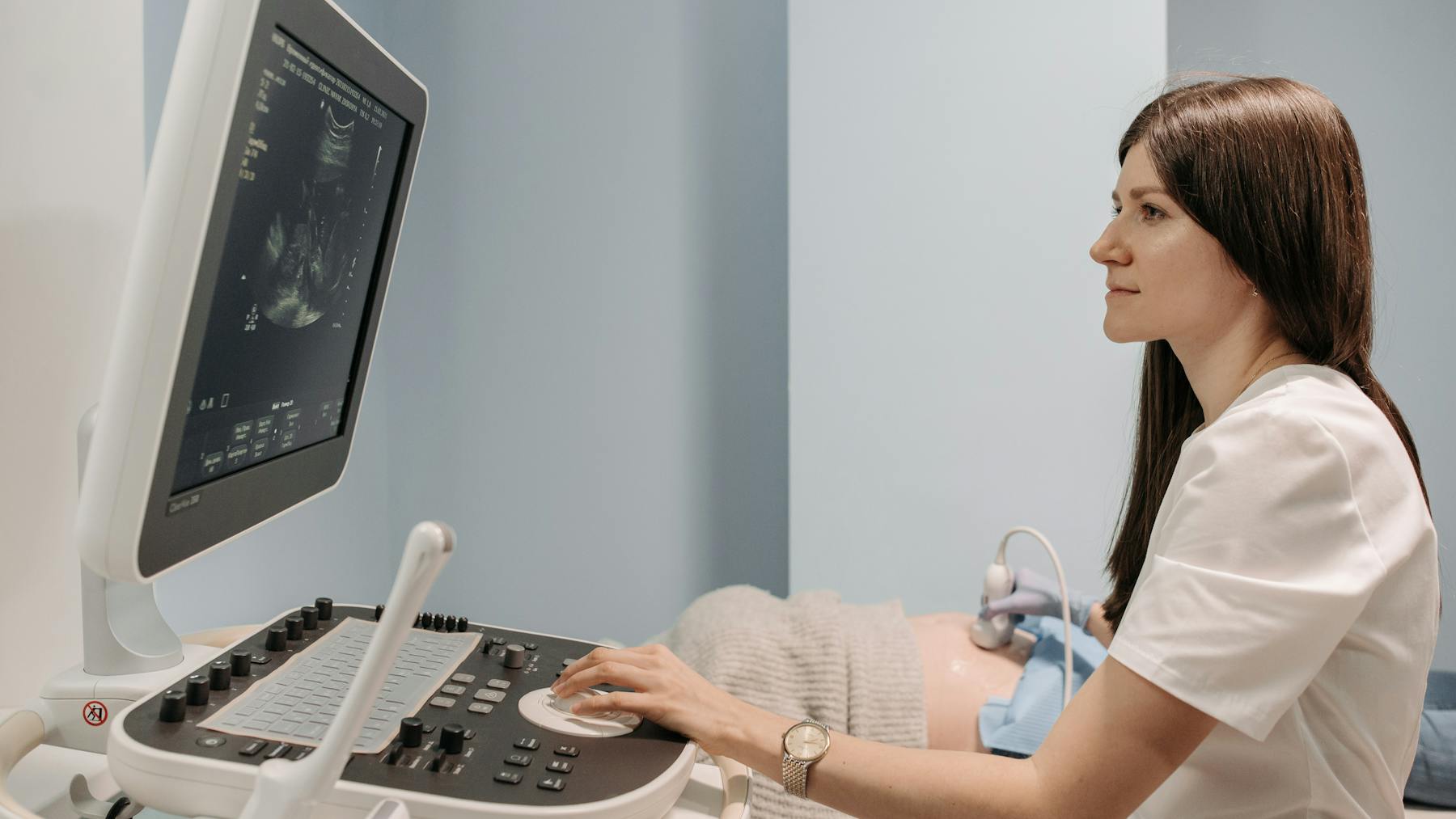
Transabdominal ultrasound: The mother will lie on the exam table in a gynecologic position for an ultrasound. She should have a full bladder for better uterus visibility.
Cervix cleaning: A speculum is used to visualize the cervix, and then the cervix and vagina are cleaned to reduce the risk of contamination.
Measuring cervical length and uterine cavity: Many clinics perform this procedure during a mock transfer, before the actual event, to determine the optimal point for embryo positioning.
Catheter insertion: The embryo is placed in a thin, flexible catheter, often with a small air bubble. Under ultrasound guidance, your doctor advances it gently toward the planned deposition point.
Embryo expulsion: The clinician injects the embryo into the uterine cavity, withdraws the catheter, and examines it to confirm that the embryo has been released.
Verification scan: Some clinics perform an abdominal scan to document the final position (the air bubble helps with the visualization).
Source: Pavel Danilyuk
Immediately after the transfer, you will rest for 10–20 minutes. Long bed rest is not usually recommended because it hasn’t been shown to improve outcomes. You will likely keep taking progesterone (and possibly estrogen) to support the uterine lining while implantation happens.
Benefits of FET cycle IVF
Fresh embryo transfers were once the standard, but frozen transfers are becoming increasingly common for their added flexibility, safety, and precision.
Some of the most important advantages of FET cycles include:
Better synchronization with the uterine lining condition: FET allows for carefully controlled timing to ensure the embryo and uterine lining are in perfect sync. That can improve implantation success rates compared to fresh cycles, where hormone fluctuations may impact the timing.
Increased safety for the patient’s health: In fresh IVF cycles, the ovaries are often still enlarged and sensitive from ovarian stimulation medications. This can increase the risk of ovarian hyperstimulation syndrome. FET allows the body to recover before transfer, which minimizes risks and makes the process physically easier.
Safe long-term storage of embryos: With modern cryopreservation techniques, embryos can be safely frozen and stored for many years without compromising their quality or viability. This gives you the option to try for another baby in the future with sibling embryos.
Higher success rates: Many clinics and studies report higher success rates with frozen transfers. Fresh embryo transfers have a live birth rate of about 39.8%, while FET has a slightly higher live birth rate of around 48.3%.
Time for preimplantation genetic testing (PGT): After eggs are fertilized and embryos develop, a small number of cells can be biopsied and analyzed for chromosomal abnormalities (PGT-A), chromosomal rearrangements (PGT-SR), specific inherited conditions (PGT-M), and even long-term health potential through polygenic screening (PGT-P). Freezing embryos ensures there’s enough time to get these results before deciding which embryo to transfer.
Bonus reads: Learn more about IVF genetic testing and the risks of PGT.
How to choose the right embryo for FET
One reason for higher success rates of FET cycles is the ability to transfer embryos at the optimal time. The other reason is the option to choose genetically healthy embryos through PGT.
Genetically healthy embryos are more likely to implant and result in a successful pregnancy. However, choosing the most viable embryo can feel like a big decision. The right guidance and data can alleviate the stress associated with such choices.
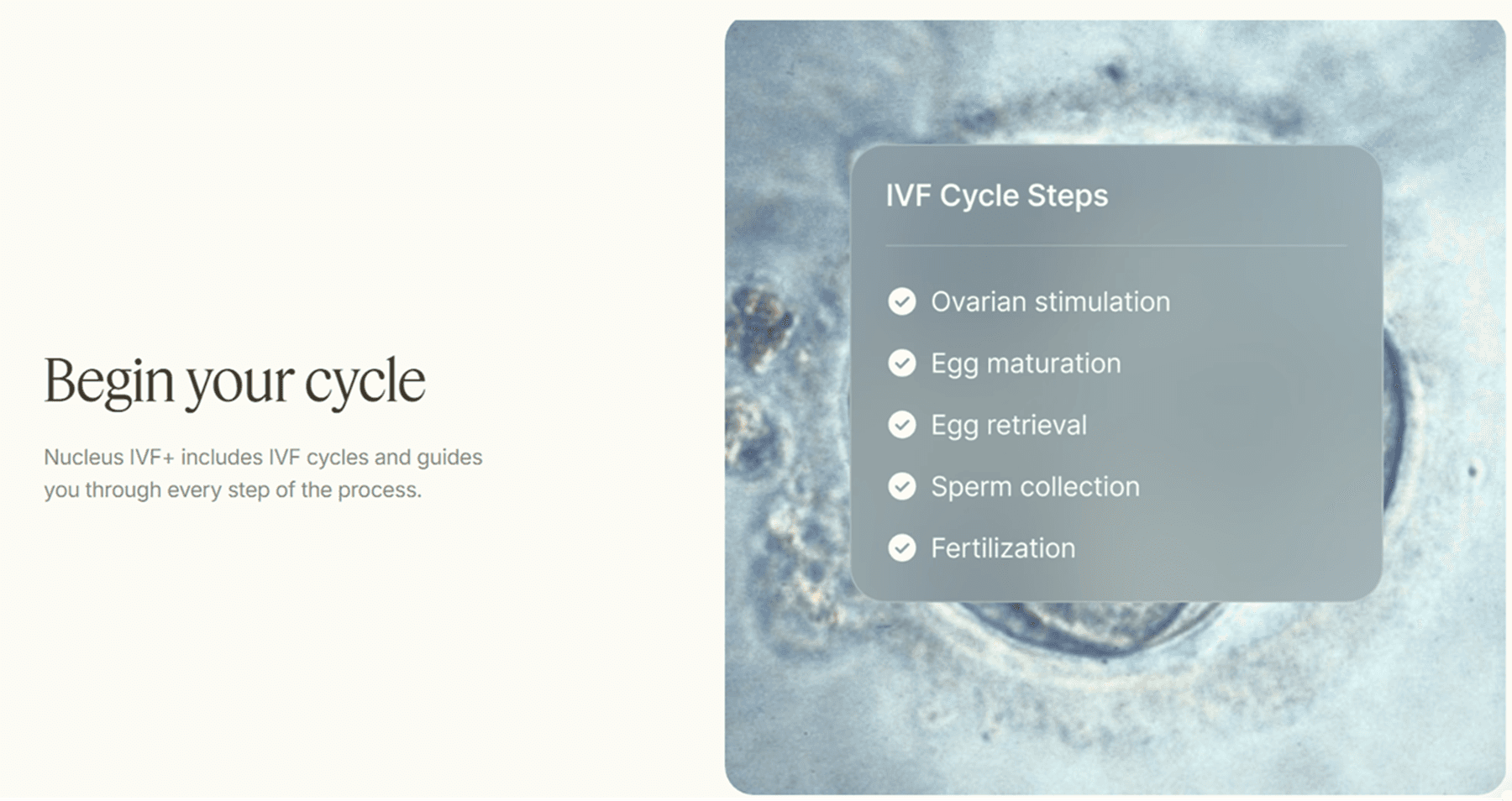
With Nucleus IVF+, you’re supported at every stage of the IVF process to make confident, well-informed choices, whether you’re evaluating clinics, testing options, or embryos. We combine personalized guidance with advanced genetic testing, helping translate complex genetic and medical information into clear, actionable insights.
Nucleus IVF+: Personalized support across your IVF journey
Nucleus IVF+ is the first all-in-one IVF solution, combining genetic optimization with a human touch. We help future parents navigate every step of IVF with confidence and expert support. From choosing the right clinic to selecting the healthiest embryo for transfer, Nucleus integrates advanced genetic insights into a comprehensive fertility plan.
Nucleus IVF+ includes multiple products and services, including Nucleus Preview and a genetic optimization platform, to give you a complete picture of your and your future child's genetic health. The package includes:
Access to an exclusive network of vetted fertility clinics
Carrier screening for 2,000+ conditions, including hemophilia, muscular dystrophy, and cystic fibrosis
Access to a network of preferred donors if you need IVF with donor eggs
A complete IVF cycle with personalized guidance
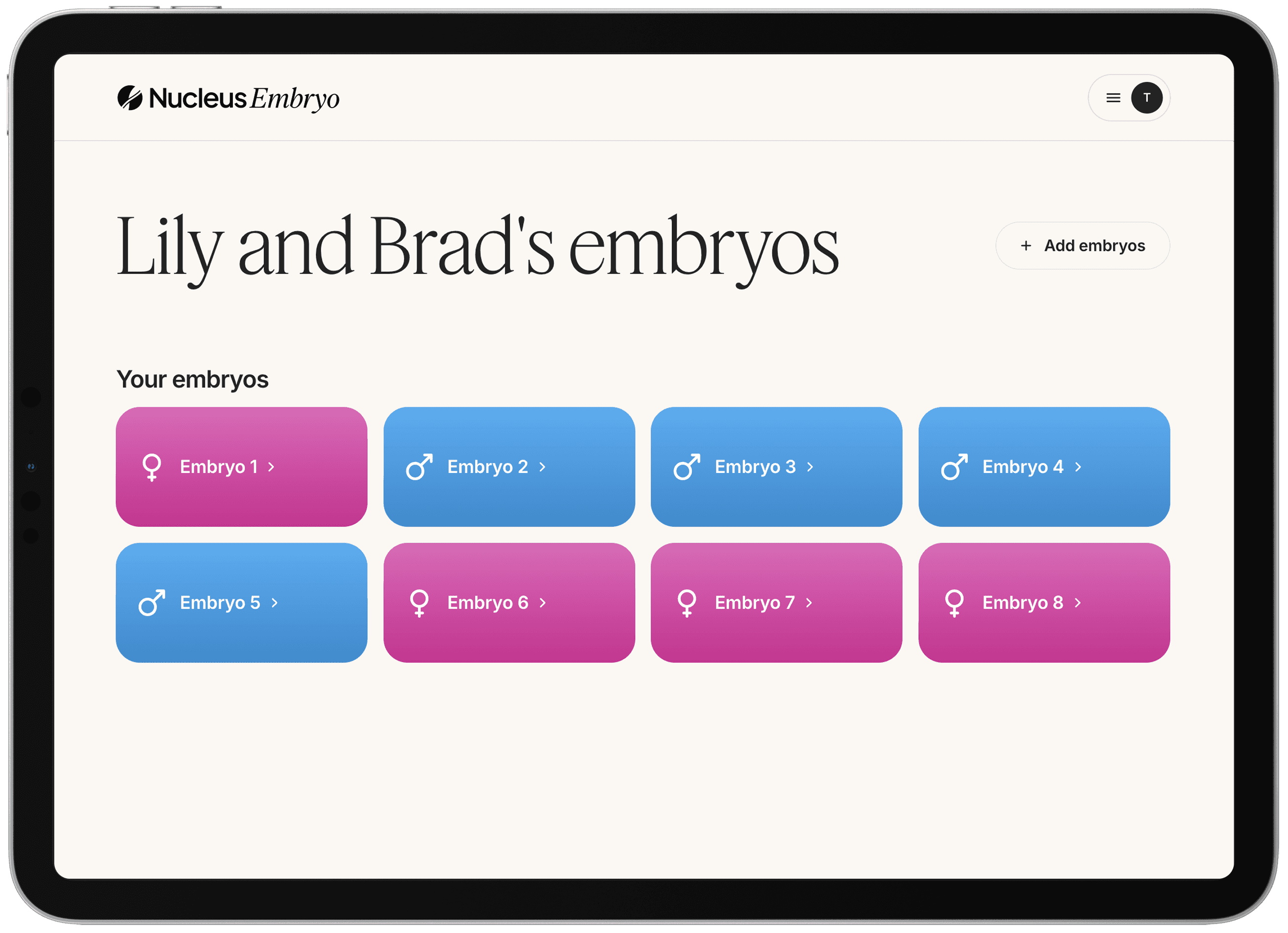
Embryo screening and software to compare embryos based on testing data
24/7 support from genetic counselors
Integrated health insights to help you take proactive steps for your longevity
Nucleus is all about giving your child the best possible start in life. Book a call with our team to get started.
You may also like…
Featured image source: Karola G