

Preimplantation genetic testing (PGT) is a set of laboratory tests performed on embryos created through IVF to check their chromosomes or specific genes before an embryo is selected for transfer. These tests offer valuable insights and help increase the chances of successful implantation and pregnancy.
Still, is there a potential risk of PGT?
This testing option is a valuable tool, but like all medical tools, its value depends on how, when, and why it’s used. This guide walks you through different types of PGT, potential risks, and the advantages it can offer.
PGT use and available options
PGT is used to reduce the risk of transferring embryos with known genetic problems, such as whole-chromosome aneuploidies or family-known inherited single-gene disorders, because these embryos are less likely to lead to a successful pregnancy or a healthy child.

Source: MART production
There are several types of PGT, each designed for a different purpose. Choosing the right type depends on factors like your:
Medical history
Family background
Maternal age
Previous IVF or pregnancy outcomes
Below is an overview of available PGT options, their goals, and who they are best for:
PGT type | What it is | What it detects/prevents | Who it’s for |
|---|---|---|---|
PGT-A | Screens embryos for the correct number of chromosomes | Extra or missing chromosomes (aneuploidy), which cause:
| Standardly recommended to all couples undergoing IVF |
PGT-M | Tests for a specific single-gene condition known to run in the family | Mutations in a single gene that cause conditions like:
|
|
PGT-SR | Looks for structural changes in chromosomes | Translocations, inversions, duplications, or deletions of chromosomes that lead to:
|
|
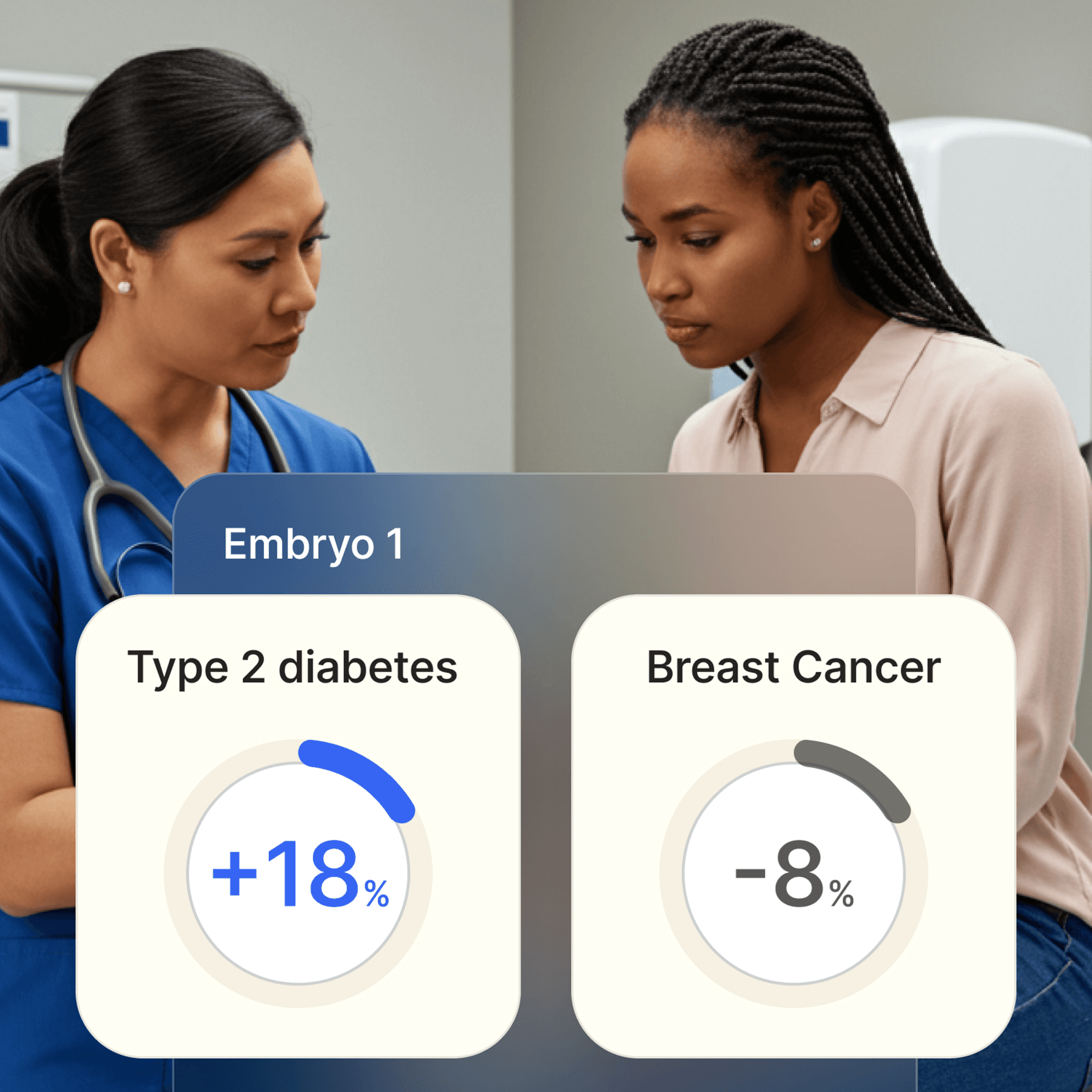
PGT-P | Assesses many genes together and estimates long-term health potential | Cumulative risk for common, chronic, and late onset diseases, such as:
|
|
These tests are performed after the embryo reaches the blastocyst stage, which typically occurs 5–7 days after fertilization. A few cells are biopsied from the outer layer of the embryo, which will develop into a placenta. The embryo is then frozen until the results come in, typically in 10–14 days.
Pro tip
PGT-P is especially useful for parents with a family history of chronic disease, couples with several viable embryos, and those who want to optimize embryo selection for long-term well-being.
Unlike PGT-A or PGT-M, which address particular questions about chromosomal health, PGT-P provides a broader perspective by examining multiple genes simultaneously and estimating future health risks.
If you’re interested in PGT-P, one of the questions worth asking a fertility clinic before you commit is whether they support the test in-house or through a trusted third-party provider.

Source: Edward Jenner
Risks and advantages of PGT testing
The risks of PGT primarily have to do with the potential damage to the embryo during the procedure, since biopsy, freezing, and thawing require additional handling. There are no documented health risks for children born after preimplantation genetic testing.
Much of the worry about embryo testing goes back to the early days of IVF, when scientists were still learning the best way to culture embryos. At the time, embryos were usually only grown until day 3, when they had only a few cells. Testing at this stage (cleavage-stage biopsy) meant removing one or two of those few cells.

Source: Edward Jenner
The research suggested that the procedure can potentially hurt embryos. An old 2013 study also found that implantation rates can be lower with early-stage biopsies.
Today, however, clinics leverage advanced technology to grow embryos safely to the blastocyst stage, when embryos have hundreds of cells and can better tolerate biopsy.
Here’s a quick comparison between cleavage and blastocyst stage biopsy:
Feature | Cleavage stage biopsy | Blastocyst biopsy |
|---|---|---|
Number of cells in the embryo | 6–8 | 200–300 |
Number of cells removed | 1–2 | 5–6 |
Other risks of PGT testing
Potential PGT risks may also include:
Embryo biopsy risk: Complications during the removal of cells from the embryo are rare. There’s a slight chance the embryo would stop developing after the biopsy, but it’s impossible to know whether the biopsy is the cause or if it would happen anyway. Most clinics report a 1–5% chance of this happening.
Embryo loss during freezing or thawing: While there’s a risk of embryo loss, over 95% of embryos survive the freezing and thawing process. Even the older, slow freeze method has a reasonably high survival rate of 86%. Additional procedures, though, such as double biopsy and repeated freezing, can reduce the chance of pregnancy.
False positives or false negatives: PGT is a screening test, not a diagnostic one, and the results may misclassify an embryo. There's a slight chance that healthy embryos may be discarded, and an aneuploid embryo may be selected based on faulty information.
Inconclusive results: The likelihood of inconclusive results ranges from 0.86% to 3.8%, which can confuse future parents.
Accuracy limitations: No test is 100% accurate, which is why prenatal genetic testing during pregnancy, such as NIPT and amniocentesis, is also necessary.
No guarantees: Transferring a euploid embryo doesn’t guarantee a pregnancy. A 2018 study found that euploids have a 60–70% chance of success.
Ambiguity: Sometimes, PGT reveals that an embryo contains a mix of normal and abnormal cells, a condition known as mosaicism. It doesn’t always mean the embryo is unhealthy, and many mosaics result in healthy live births. The challenge lies in interpretation, and some clinics discard mosaics, while others transfer them depending on the level of mosaicism.
Advantages of PGT testing
The benefits of PGT testing are significant for many couples and individuals undergoing IVF. It can offer peace of mind and reassurance during a stressful and uncertain process.
Some of the most notable benefits of PGT include:
Improved implantation rates
Higher chance of a healthy pregnancy
Reduced risk of miscarriage
Sex selection (for instance, in cases of confirmed X-linked inherited conditions)
Fewer IVF cycles
Reduced emotional and financial burden
More informed embryo selection
The ability to make more informed decisions about embryo selection is the root of all the PGT benefits. To make the most of embryo screening, you may also benefit from carrier screening to determine whether and for which conditions your embryos need to be screened.
With so many decisions to make during this long and strenuous journey, future parents can get overwhelmed. Expert guidance and support during IVF can help in streamlining the process and lead to the best possible outcome.
Nucleus can support you at every step of this journey, from selecting clinics and donors to carrier screening and embryo selection. Whether you need help reviewing genetic testing results or planning for future family health, Nucleus combines a parent-friendly and personalized approach with advanced genetic testing and analysis to ensure you feel confident and empowered along the way.
Nucleus IVF+: Personalized support at every stage of IVF
Nucleus IVF+ guides you through every stage of IVF with expert support, helping you make confident, informed decisions while keeping your well-being front and center.
Nucleus integrates the most advanced genetic testing with personalized clinical guidance, providing clarity and support at every step. Here’s what’s included:
24/7 expert guidance from genetic counselors who can explain results, answer follow-up questions, and help you understand the next steps.
Nucleus Preview for preconception genetic screening and understanding the hereditary risks you could pass on to your child.
Clinic matching based on your needs and preferences.
Donor selection, if you’re using donor eggs or sperm, through a vetted donor network and advanced genetic tools to pick a genetically compatible option.
A one-of-its-kind genetic optimization software to assess embryos for nearly 2,000 genetic traits related to health, longevity, and well-being, helping you select the ones with the best potential for a healthy, thriving life.

With Nucleus IVF+, you gain more than advanced genetic insights. You also get a trusted partner dedicated to streamlining IVF while increasing your chances of success.
Book an onboarding call with the Nucleus team to begin your family planning journey.
You may also like…
Featured image source: Matilda Wormwood