

New Jersey is one of the states with an insurance mandate requiring employer-sponsored plans to cover fertility treatment. Still, that doesn’t mean that every future parent pays the same price, nor that covered equals free.
This guide breaks down IVF costs in New Jersey with insurance, exploring insurance rules and how treatment plans, coverage details, and clinic choice impact what you pay out of pocket.
IVF insurance laws in New Jersey
Although New Jersey’s insurance mandate requires plans to cover infertility diagnosis and treatment, it only applies to specific employers and comes with particular rules, limits, and exemptions.
The law applies to group health plans in New Jersey with more than 50 employees that provide hospital or medical benefits, including pregnancy coverage. The table below summarizes the scope:
Who is covered? | Who is exempt? |
|---|---|
|
|
How is infertility defined, and who is eligible?
According to the NJ law, infertility is a condition that causes the inability to achieve a successful pregnancy due to abnormal functioning of the reproductive system of either partner. Insurance must cover services when a board-certified REI (reproductive endocrinologist) or OB-GYN diagnose infertility, or when any of the following apply:
Male factor infertility: If factors like low sperm count, poor motility, or abnormal shape make it difficult to fertilize an egg.
Trouble conceiving for couples: If you're unable to get pregnant after one year of trying, and you’re under 35, or after six months of trying, and you’re 35 or older.
Trouble conceiving for single mothers: If you’re under 35 and unable to get pregnant after 12 unsuccessful IUI cycles, or you’re 35 or older and have had six unsuccessful IUI attempts.
Medical conditions preventing conception: If you’re sterile due to an involuntary previous surgery, chemotherapy, radiation, etc., or a medical condition known to cause infertility, such as blocked fallopian tubes, severe endometriosis, or a genetic disorder.
Inability to carry a pregnancy to live birth: If you’ve had recurrent pregnancy loss or issues with the uterus.

Source: Tima Miroshnichenko
As of January 2024, NJ law requires insurers to cover infertility services without discrimination based on age, relationship status, or sexual orientation. Previously, the age limit was set to 46, and insurers could deny coverage to LGBTQ+ couples and single parents.
Coverage now also extends to partners of people who previously had voluntary sterilization (such as tied fallopian tubes or vasectomy) but reversed it.
Bonus read: Our guides explain what the IVF process looks like from different perspectives:
What fertility services must be covered in NJ?
The fertility insurance mandate requires coverage for a broad set of services when a plan is subject to the law, presented below:
Covered fertility services | Limits and exceptions |
|---|---|
|
|
How much is IVF in New Jersey?
The base IVF cost in New Jersey fertility clinics for a single cycle is usually between $12,000 and $18,000. Total costs may increase to $20,000–$30,000+ once you factor in medications, lab add-ons like advanced embryo screening, cryostorage, and the possibility of needing more than one cycle.
Here’s the typical IVF cost in New Jersey based on average clinic fees and add-on pricing:
Treatment/service | Typical cost range | What’s included |
|---|---|---|
IVF without PGT (preimplantation genetic testing) | $12,000–$18,000 |
|
IVF with PGT | $16,000–$23,000 | All of the above plus:
|
Medications | $3,000–$7,000 |
|
Frozen embryo transfer (FET) | $4,000–$7,000 |
|
IUI | $2,950–$5,000 |
|
Egg freezing | $7,500–$48,500 |
|
Fresh donor egg cycle | $32,000–$34,000 |
|
Banked eggs | $7,350–$9,750 |
|
$2,600–$4,500 |
|
Some clinics may bill certain procedures separately. For instance, you can expect:
Around $1,500 for egg freezing (often includes one year of storage)
From $600–$1,250 annual embryo or egg storage fee
$350–$500 yearly sperm cryopreservation and storage fee
Around $1,000 for anesthesia during egg retrieval
About $2,000 for fertilization using the ICSI method

Source: Eric Moura
Most people need two to three rounds of IVF to achieve a pregnancy. According to SART, these are the latest live birth rates for the first attempt per age group:
Under 35: 35.5%
Age 35 to 37: 26.4%
Age 38 to 40: 17.3%
Age 41 to 42: 8.8%
Over 42: 2.8%
What impacts the cost of IVF in New Jersey, even with insurance?
IVF pricing in New Jersey and out-of-pocket expenses varies significantly from patient to patient, depending on factors such as:
Insurance plan: Differences in deductibles, coinsurance, and whether fertility treatments are considered in-network can impact your costs. Some plans may cover the procedure itself but exclude medications or lab add-ons.
Medication coverage: Even if your IVF procedure is covered, some insurance plans categorize medications such as stimulation drugs under a pharmacy benefit rather than a medical benefit. This may result in higher copays or partial coverage.
Personalized treatment needs: Age, prior IVF attempts, ovarian reserve, or male-factor infertility may influence your treatment plan. Additional procedures like ICSI or elective options like carrier screening and polygenic embryo testing can increase the costs.
Clinic-specific policies: Some clinics offer bundled packages to reduce upfront costs.
In-network vs. out-of-network clinics: Mandated coverage requires services to be provided at facilities following ASRM or ACOG guidelines. Out-of-network clinics may get limited or no coverage.
How to afford IVF in New Jersey
You should review the details of your insurance plan with your provider to determine which services, procedures, medications, and lab tests it covers. Some plans require prior authorization or documentation from your physician to approve coverage for IVF and additional procedures.
Most NJ fertility clinics have financial counselors who can help you understand your options and maximize your benefits, providing personalized estimates, identifying coverage gaps, and helping you plan for multiple cycles. Many clinics also offer payment plans, financing programs, or medical loans to help spread out the cost of treatment. These include:
Monthly payment plans
Low-interest financing through third-party lenders
Bundled IVF packages that may include multiple cycles
IVF procedures, medications, and certain lab tests may also be eligible for reimbursement using FSA or HSA funds. These accounts allow you to pay for qualified expenses tax-free, which can meaningfully reduce overall costs.

Source: Eric Moura
Why clinic choice directly affects your total IVF cost in New Jersey
The total IVF cost in New Jersey with insurance or without it can vary by thousands of dollars per cycle, depending on the fertility clinic you choose. The differences aren’t only seen in base pricing, but they also come from measurable variables such as:
Clinic-specific success rates for your age or diagnosis: Higher IVF success rates can indicate fewer cycles and lower total cost over time.
Use of additional services: PGT-P and whole-genome preconception screening are often not covered by insurance, but they can improve chances of success. Clinics providing such services in-house or those with third-party partnerships can offer better prices.
Donor services and LGBTQ+ friendly policies: Some clinics charge additional fees for donor coordination or non-infertility-related coding.
That’s why two patients with the same diagnosis, age group, and insurance plan can still incur different total costs depending on where they receive treatment. However, you rarely get this information upfront. Public clinic success rates, insurance calculators, and clinic reviews each offer partial insights which makes decision-making challenging.
The Nucleus IVF+ program can help fill such gaps.
Instead of leaving you to compare dozens of clinics across marked claims or social media reviews, Nucleus uses hard data to connect you with vetted clinics aligned with your diagnosis, family-building path, and budget.
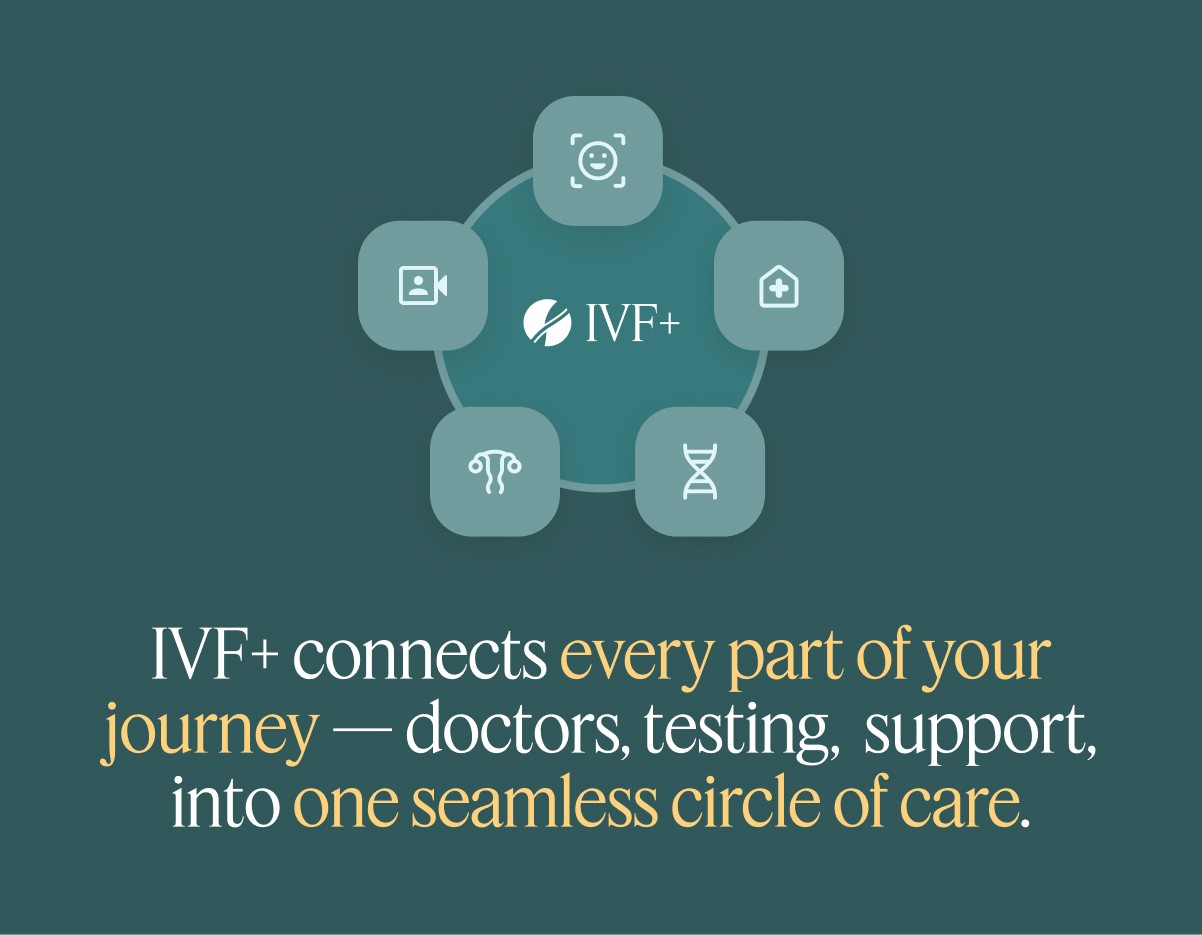
Nucleus IVF+: Tailored care and coordination throughout IVF
Nucleus IVF+ is an all-in-one IVF program that helps you invest in the clinic, treatment plan, and embryo to maximise your chances of a successful pregnancy. It offers:
Clinic matching: Personalized recommendations based on your age, diagnosis, medical history, treatment path, budget, and location.
IVF cycle support: Step-by-step guidance throughout stimulation, egg retrieval, fertilization, PGT, and embryo transfer.
Genetic insights before and during IVF: Nucleus Preview carrier screening for 2,000+ inherited conditions help you understand what risks you may pass on to your future child (and choose the right embryo testing options).
Donor matching: Access vetted donor networks to find compatible donor eggs, sperm, or embryos.
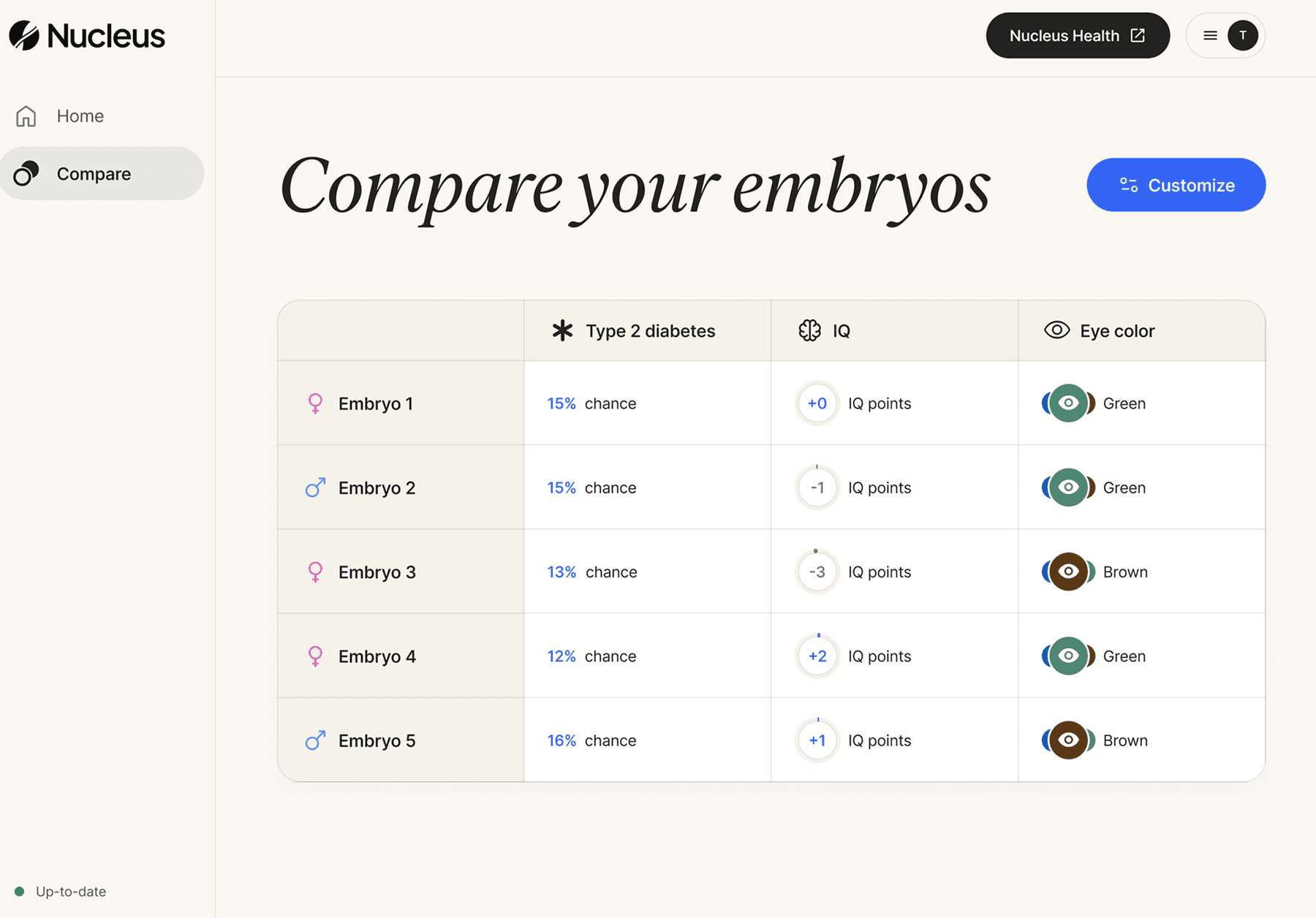
Embryo selection guidance: Use Nucleus Embryo, an AI-powered analysis tool for comparing embryos side-by-side based on genetic test results, predicted health outcomes, and long-term wellness potential.
Unlimited genetic counseling: Ask questions any time, get second opinions, interpret test results, and make decisions with expert guidance.
Schedule an onboarding call with the Nucleus team to get started!
Featured image source: RDNE stock project