

IVF is an option for many couples when natural conception proves challenging. Still, even with advanced techniques, embryos sometimes fail to implant in the uterus. If this happens repeatedly, some clinics may recommend assisted hatching (AH), a lab procedure that can increase the likelihood of implantation.
This guide answers crucial questions about this approach:
What is assisted hatching in IVF?
When is assisted hatching done in IVF?
How does it work and who can benefit from this?
What are the success rates of assisted embryo hatching in IVF?
What are the risks and alternative options?
What does assisted hatching mean in IVF?
Assisted hatching is a laboratory technique used during IVF to help embryos complete one of the most important steps before pregnancy: breaking out of their protective shell. This shell, known as the zona pellucida, surrounds the egg and protects the embryo during its earliest days, preventing excessive sperm from entering the egg and ensuring proper development.
Embryo hatching naturally takes place around day 6 of embryo development. By this time, embryos have reached the blastocyst stage, a point when they have developed two distinct sets of cells:
Inner cell mass, which will develop into the fetus
Trophectoderm, which will develop into the placenta
A blastocyst-stage embryo is grown and expanded to the extent that the zona pellucida becomes thinner and eventually breaks, allowing the embryo to emerge from its shell and attach to the uterine lining. Only after hatching can implantation (and pregnancy) begin.

Source: Jonathan Borda
But not all embryos hatch easily. Some may struggle due to a thickened or hardened zona pellucida. In this case, the embryo’s protective layer acts more like a barrier than a support system. And if an embryo can’t fully hatch, implantation in the uterus is unlikely.
To help overcome this challenge, embryologists may perform assisted hatching. Using precise tools, they create a tiny hole or weaken a small section of the zona pellucida. This opening makes it easier for the embryo to push out of its shell and begin the implantation process once transferred into the uterus.
When is assisted hatching done in IVF?
Hatching embryos in IVF is typically done on the third or fourth day of embryo development, when the embryos have divided into about 6–8 cells.
Embryologists may decide to perform assisted hatching if they notice signs that an embryo may not hatch efficiently on its own, such as:
Poor morphology: An embryo doesn’t look as healthy or well-formed under the microscope compared to what’s expected at that stage. Embryologists check for features like cell shape, symmetry, and uniformity.
Slow cell division: Healthy embryos typically divide at a predictable pace, from two cells on day 2 to about 6–8 cells by day 3. If an embryo divides slowly, it may signal developmental delays, which can make hatching more difficult.
Excessive fragmentation: As embryos divide, small pieces of cytoplasm (fragments) can break off. A small amount of fragmentation is normal, but too much can interfere with cell function and reduce embryo quality.
Thicker zona pellucida: Embryos with a zona thicker than 15 micrometers are less likely to hatch naturally.
Assisted embryo hatching is also considered in frozen embryo transfers, as vitrification hardens the zona, or when preimplantation genetic testing (PGT) is planned, since it can prepare embryos for safe biopsy.
How does assisted embryo hatching in IVF work?
Embryologists use specialized micromanipulation techniques to help the embryo break through its protective shell. The goal of each approach to IVF embryo hatching is to create a small opening or weaken a portion of the zona pellucida so the embryo can hatch naturally, without harming it.
The table below presents the main assisted hatching methods:
Method | How it works | Advantages | Risks / Limitations |
|---|---|---|---|
Laser-assisted hatching | A focused infrared laser beam carefully creates a tiny hole or thins part of the zona. |
| Higher cost |
Acid Tyrode’s solution | A microneedle delivers a small amount of acidic solution to dissolve a part of the zona. |
|
|
Partial zona dissection (PZD) or mechanical dissection | A microneedle physically pierces and slits the zona while the embryo is held steady. |
|
|
Piezo technology | Vibratory pulses generated by a piezo-electric device carve a small area in the zona. |
|
|
Zona expansion | Fluid pressure is used to stretch the zona mechanically, mimicking natural expansion. |
|
|
Laser-assisted hatching is the most widely used approach because it’s safe and associated with high implantation potential. Acid Tyrode’s solution is less used today, primarily in labs with substantial expertise, because of the increased risk to embryos.
PZD is also rarely used due to the numerous risks it poses to the embryo. In contrast, Piezo technology and zona expansion show promise but are still considered experimental and are seldom available outside of research.
Who can benefit from assisted hatching?
Assisted hatching is an additional procedure typically used for lower-quality embryos that are unlikely to hatch naturally. Embryo quality usually reflects underlying biological factors, such as:
Advanced maternal age (over 37): As eggs age, they are more likely to develop into embryos with a thicker or hardened zona pellucida.
Poor egg quality: Women at an advanced age tend to produce fewer eggs of lower quality, which is indicated by elevated FSH levels on day 3 of the cycle and low AMH levels (low antral follicle count).
Repeated IVF failures: Low-quality eggs and resulting poor-quality embryos often lead to repeated IVF failures. Sometimes, recurrent failed cycles happen despite transferring embryos that appeared healthy under the microscope.

Source: Pavel Danilyuk
What are the success rates of hatching embryos in IVF?
Evidence suggests that assisted hatching can improve outcomes compared to standard IVF, especially with laser-assisted hatching. A study of 180 patients compared three groups:
Group | Clinical pregnancy rate | Implantation rate | Miscarriage rate |
|---|---|---|---|
Laser-assisted hatching (LAH) | 52% | 48% | 18% |
Mechanical assisted hatching (MAH) | 45% | 41% | 22% |
Control group with no assisted hatching | 30% | 26% | 25% |
Another key finding was embryo development, with the percentages of successfully hatched embryos in IVF as follows:
84% in the LAH group
76% in the MAH group
54% in the control group with no AH
However, evidence is still mixed. The American Society for Reproductive Medicine has released guidelines which states there is not enough evidence to recommend assisted hatching as of 2022.

Source: Anastasiya Gepp
What are the risks of assisted hatching in IVF?
Although considered safe, assisted hatching still involves micromanipulation of delicate embryos, and with that come the following risks:
Embryo damage: Creating an opening in the zona pellucida carries a small risk of harming the embryo, which might compromise viability or destroy the embryo.
Multiple pregnancies: Assisted hatching slightly increases the likelihood of an embryo splitting into two. While identical twins may be welcome, multiple pregnancies carry higher risks of preterm birth, low birth weight, and pregnancy complications. According to a study of 180 patients, multiple pregnancy rates were slightly higher in the assisted hatching groups (12% for LAH, 10% for MAH, and 8% in the control group), but still within expected limits.
Premature hatching: If an embryo hatches too early, before the conditions in the uterus are optimal, the chances of implantation may decrease.
Infection: The zona acts as a natural protective barrier. Weakening it can theoretically expose the embryo to infection. However, this is rare in modern IVF labs with strict protocols.
Maternal complications: Some clinics prescribe preventive antibiotics and steroids to help prevent infection of the embryo. The mother may react to these medications and experience nausea, vomiting, water retention, swelling of the face, and headaches.
What are the complementary options to assisted hatching in IVF?
Assisted hatching can support embryo implantation, but it’s only one component of a successful IVF cycle. Many parents benefit from a combination of strategies that optimize embryo selection and uterine receptivity.
Embryologists routinely evaluate embryos based on morphology, cell division, and developmental milestones to select those with the highest potential for implantation. It is during this evaluation that they determine which embryos may require assistance with hatching.
Still, careful embryo grading and monitoring can help identify embryos likely to hatch and implant successfully without outside interventions.
Another tool to support IVF is analyzing embryos for chromosomal or genetic abnormalities before transfer, which can help prioritize embryos with the best chance of developing into a healthy pregnancy and ultimately live birth. Here are the options available:
Testing type | What it detects |
|---|---|
PGT-A | Abnormal number of chromosomes |
PGT-M | Specific inherited disorders caused by mutations in a single gene, such as hemophilia, cystic fibrosis, and muscular dystrophy, identified in parents by carrier screening |
PGT-SR | Chromosomal structural abnormalities, such as translocations or inversions |
PGT-P | The estimated risk of chronic diseases later in life |
Maternal health is vital for implantation, so it’s crucial to pay attention to:
Uterine health: Adequate endometrial thickness, absence of fibroids, and good blood flow
Endometrial receptivity: Hormonal balance and proper timing of embryo transfer
Overall wellness: Nutrition, stress management, and chronic conditions

Source: Chris Wade Ntezicimpa
IVF is complex and requires multiple decisions, from choosing the right fertility clinic, evaluating embryos, considering PGT testing, and procedures like assisted hatching to managing emotional and physical health.
While any IVF process can be tedious, Nucleus IVF+ can guide and support you through every stage. Nucleus offers a comprehensive, patient-centered program that integrates multiple IVF considerations so you can get personalized support and care for your case.
Explore which Nucleus product aligns with your journey today.
Make IVF simpler with Nucleus IVF+
Nucleus IVF+ combines cutting-edge genetic insights with clinical expertise, making complex genetic and medical information more accessible and helping you make informed decisions during IVF.
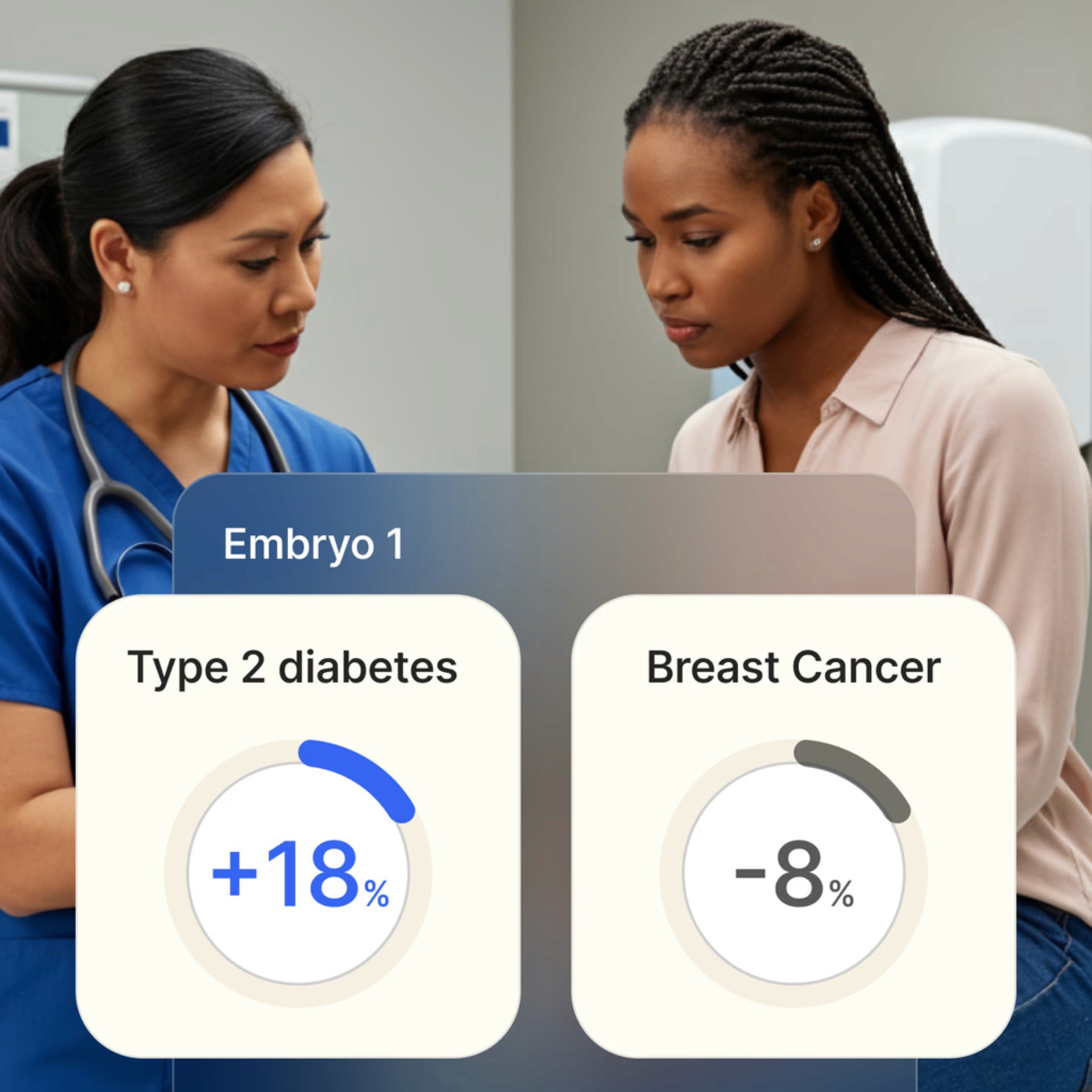
Nucleus IVF+ can help you:
Identify clinics that match your medical needs and personal preferences from a network of vetted partner clinics.
Access thoroughly screened donors with extensive health and genetic profiles to ensure compatibility.
Get personalized consultations and support from fertility specialists and assistance in navigating protocols, procedures, and testing options.
Understand your embryo health deeply with advanced embryo testing and analysis across dozens of health and well-being markers.
Get screened for 2,000+ genetic conditions that you may unknowingly pass on to your child.
Understand your genetic health and receive detailed reports with actionable health recommendations for your long-term wellness.
Nucleus IVF+ ensures continuous support at every step of IVF, improving your chance of success.
To learn more, book a consultation with the Nucleus team today.
You may also like…
Featured image source: Cedric Fauntleroy