

Assisted reproductive technology (ART) offers various treatment options, including conventional in vitro fertilization (IVF) and intracytoplasmic sperm injection (ICSI).
Both procedures involve fertilizing eggs outside the body and transferring embryos into the uterus, but the fertilization method differs — and that difference can matter depending on the underlying cause of infertility.
So, what is the difference between IVF and ICSI, and which method may give you the best chance of success? This guide explains how these options work, when they’re recommended, and the risks and benefits they entail.
What is IVF, and when is it recommended?
IVF is a medical process that retrieves a woman’s eggs, fertilizes them with sperm in a lab where the embryo is created, and transfers the resulting embryos into the uterus. It’s used to bypass many causes of infertility, most commonly female-factor issues, including:
Ovulation disorder
Blocked or damaged fallopian tubes
Endometriosis
PMOS (formerly known as PCOS)
Unexplained infertility
Age-related fertility issues
IVF is also an excellent option for couples at risk of passing on a genetic disorder to their child, as well as for same-sex couples and single parents who wish to use donor sperm or gay male couples who need gestational surrogacy.
IVF is a solution for fertility preservation. Women can choose to have their eggs frozen or, if they have a partner or sperm donor, they can freeze embryos for later use.

Source: Mart production
How IVF works
During your first fertility appointment, your clinic will perform a set of baseline assessments and counseling to determine your ovarian reserve, identify uterine issues that may affect implantation, and decide which stimulation protocol is safest and most likely to succeed.
You will discuss your medical history and undergo a physical exam that includes:
Blood tests to check AMH, FSH, LH, and estradiol hormone levels
Transvaginal ultrasound to count antral follicles
Semen analysis for the father or donor
Infectious disease screening
Uterine cavity assessment
When you’re ready to begin your IVF cycle, you’ll go through the following steps:
Controlled ovarian stimulation: Daily injections for up to 14 days to stimulate follicle growth and produce multiple eggs.
Egg maturation trigger: When follicles reach a target size, a trigger injection is administered to mature the eggs for retrieval.
Egg retrieval: Eggs are collected from the ovarian follicles in a minor surgical procedure under light sedation that takes 15–30 minutes.
Sperm collection: The partner provides a sperm sample, or previously frozen donor sperm is used, and the lab staff prepares it for insemination.
Fertilization: The staff places the sperm together with each mature egg and allows fertilization to occur naturally in the dish.
Embryo culture and assessment: Embryos are cultured in the lab and monitored as they develop. Embryologists grade embryos based on their development at two points:
Day 2 or 3 when they reach the cleavage stage
Day 5 or 6 when they reach the blastocyst stage
Embryo transfer: Your doctor uses an ultrasound to place the selected embryo into the uterus using a soft catheter.
What is ICSI in IVF, and when is it recommended?
ICSI is a specialized form of IVF developed to overcome male-factor infertility, usually revealed in a semen analysis.
Instead of allowing sperm to penetrate the egg on their own in a lab dish, an embryologist selects a single healthy-looking sperm and injects it directly into the egg’s cytoplasm using a tiny needle. Since only a single viable sperm is necessary, this overcomes many of the sperm-related barriers to fertilization, such as:
Low sperm count
Poor motility
Abnormal morphology
Inability to ejaculate
Blockage in the male reproductive system
Retrograde ejaculation
ICSI also helps in cases when sperm must be surgically retrieved, such as in the case of inability to ejaculate, retrograde ejaculation (when semen flows back into the bladder), or azoospermia (the absence of sperm). Besides overcoming male-factor infertility, this approach can also be recommended if:
Previous conventional IVF cycles produced few or no embryos
Thawed sperm doesn’t seem active
You’re using frozen eggs (vitrification can harden the egg’s outer shell, so natural fertilization may be challenging)
You’re doing preimplantation genetic testing (PGT) because additional sperm near the embryo may interfere with the results
ICSI isn’t automatically better than conventional IVF, though. When sperm are healthy, IVF is equally effective, less invasive on the egg, and more cost-efficient. Fertility specialists will carefully evaluate when ICSI is medically necessary.

Source: Vidal Balielo Jr.
What is the difference between ICSI and IVF procedures?
IVF and ICSI differ primarily in the fertilization step. Until that moment, everything is the same. Here’s a quick comparison between the two procedures:
Step | IVF | ICSI |
|---|---|---|
Ovarian stimulation and egg retrieval | Same | Same |
Sperm preparation | Washed and placed with eggs in a dish | Single sperm selected |
Fertilization | Sperm naturally penetrates the egg | An embryologist injects a single sperm directly into the egg |
Only mature eggs are suitable for ICSI. The presence of a polar body (a small, haploid cell that signifies the egg has completed the right stage of division) indicates that the eggs are mature and ready for insemination. To detect the polar body, embryologists must first remove the surrounding granulosa cells (ovarian cells that support egg development) before performing ICSI.
Once mature eggs have been identified, here’s what happens in the lab:
Sperm selection: The embryologist identifies the best-looking sperm by assessing its shape and movement. Selected sperm are aspirated into a fine glass microtool called an ICSI needle.
Egg positioning: Eggs are placed in a culture dish drop, and a second microtool, called a holding pipette, gently secures the egg with light suction, keeping it steady in the correct position for injection.
Sperm injection: The embryologist aligns the ICSI needle with the egg, usually pressing it into the side of the egg, below the polar body. The needle gently punctures the outer shell and egg membrane, and a tiny amount of the egg’s inner fluid is aspirated into the needle to mix it before the sperm is carefully injected inside.
Incubation: The egg is released from the holding pipette and returned to the incubator for culture.
Embryologists will repeat this process for multiple eggs, depending on the number retrieved during that cycle.
Fertilized eggs continue to develop for five to six days, and the rest of the process is the same as with conventional IVF.
Conventional IVF vs. IVF with ICSI success rates
When comparing IVF and ICSI, it’s important to separate two different outcomes:
Fertilization rates: How many eggs successfully fertilize
Clinical success rates: Pregnancy and live birth rates
At first glance, ICSI appears more effective because it achieves higher fertilization rates, ranging from 50% to 80%, compared to approximately 50% with conventional IVF. But once fertilization occurs, the chances of achieving pregnancy or live birth are the same for ICSI and IVF, which is about 40–50% for women under 35 and decreases with age.
Here’s a real-life experience from one couple, who had both traditional IVF and ICSI:

Full post: Reddit
Today, around 60% of IVF procedures use ICSI, but research shows that in couples without male infertility, ICSI doesn’t improve pregnancy or live birth rates compared to traditional IVF.
ICSI can improve your chances of success when sperm quality is an issue, but only because it increases fertilization chances. That said, it doesn’t guarantee fertilization. Several biological factors can still prevent fertilization, notably:
Poor-quality eggs or eggs that show signs of intrafollicular degeneration may not survive after sperm injection.
If sperm DNA remains locked in the head, fertilization doesn’t occur or occurs abnormally.
Some eggs may not initiate the cellular processes required for fertilization after injection.
Risks and benefits of conventional IVF vs. ICSI
The main benefit of both IVF and ICSI is that they help couples overcome fertility issues. Here’s an overview:
Conventional IVF | IVF with ICSI |
|---|---|
|
|
When it comes to potential risks, conventional IVF and IVF with ICSI both involve ovarian stimulation, egg retrieval, and embryo transfer, so most risks overlap, such as:
Ovarian hyperstimulation syndrome from fertility medications
Egg retrieval complications (bleeding, infection, injury)
Risk of ectopic pregnancy
Emotional and financial stress
Multiple pregnancies (if more than one embryo is transferred)
The additional risks of ICSI are tied to the direct injection technique (about 5-15% risk of egg damage during sperm injection) and genetic considerations, such as:
Slightly higher risk of X- or Y-linked chromosomal abnormalities
Possible inheritance of male infertility if genetic in origin
Occasional association with conditions like Angelman syndrome, Beckwith-Wiedemann, autism, hypospadias, and intellectual disabilities (less than 1%)
The risks of congenital conditions are similar to natural conception with IVF (1.5–3%), and only slightly higher with ICSI, about 1% higher than conventional IVF. Experts believe that these risks are more likely due to the underlying infertility itself, not the procedure.

Source: Jonathan Borba
IVF vs. ICSI cost comparison
IVF is a significant investment, and ICSI further increases the costs. However, since ICSI decreases the chances of failed fertilization, it may also reduce the need for additional cycles, making treatment more cost-effective in the long run.
Costs vary by clinic, location, and insurance coverage, but here’s what you can generally expect if you undergo IVF with ICSI:
Expense category | Average cost |
|---|---|
Base IVF treatment (procedures, monitoring, lab work) | $12,000–$20,000 |
Injectable medications | $2,000–$6,000 |
ICSI procedure | $800–$2,500 |
These costs don’t include embryo freezing and storage, egg or sperm donation, or gestational surrogate compensation if necessary. Standard options like carrier screening and preimplantation genetic testing, such as PGT-A, PGT-M, or PGT-SR, aren’t included either.
Some parents also want to include PGT-P screening to minimize the risk of late-onset, chronic conditions, which adds to the total cost of the process.
Understanding the financial side of IVF and ICSI is important, but cost is only one part of the picture. Decisions about whether ICSI is necessary or which type of IVF genetic testing to pursue add more complexity to an already demanding process that is fertility treatment.
That’s why having expert guidance matters. With the right support, you can make informed decisions, feel more in control of your journey, and keep your focus on what matters most: becoming a parent.
Nucleus IVF+ provides you with clarity, confidence, and support throughout your IVF journey, helping you select the best treatment methods tailored to your needs — start exploring here.
Nucleus IVF+: Comprehensive support for your fertility journey
Nucleus IVF+ is an end-to-end IVF package that combines expert medical support, personalized genetic insights, and science-backed embryo optimization software. It helps prospective parents feel more informed and less overwhelmed as they navigate complex decisions with their care team.
Book an onboarding call with Nucleus, and we can help you with decisions like choosing the right clinic, genetic testing, and embryo selection.
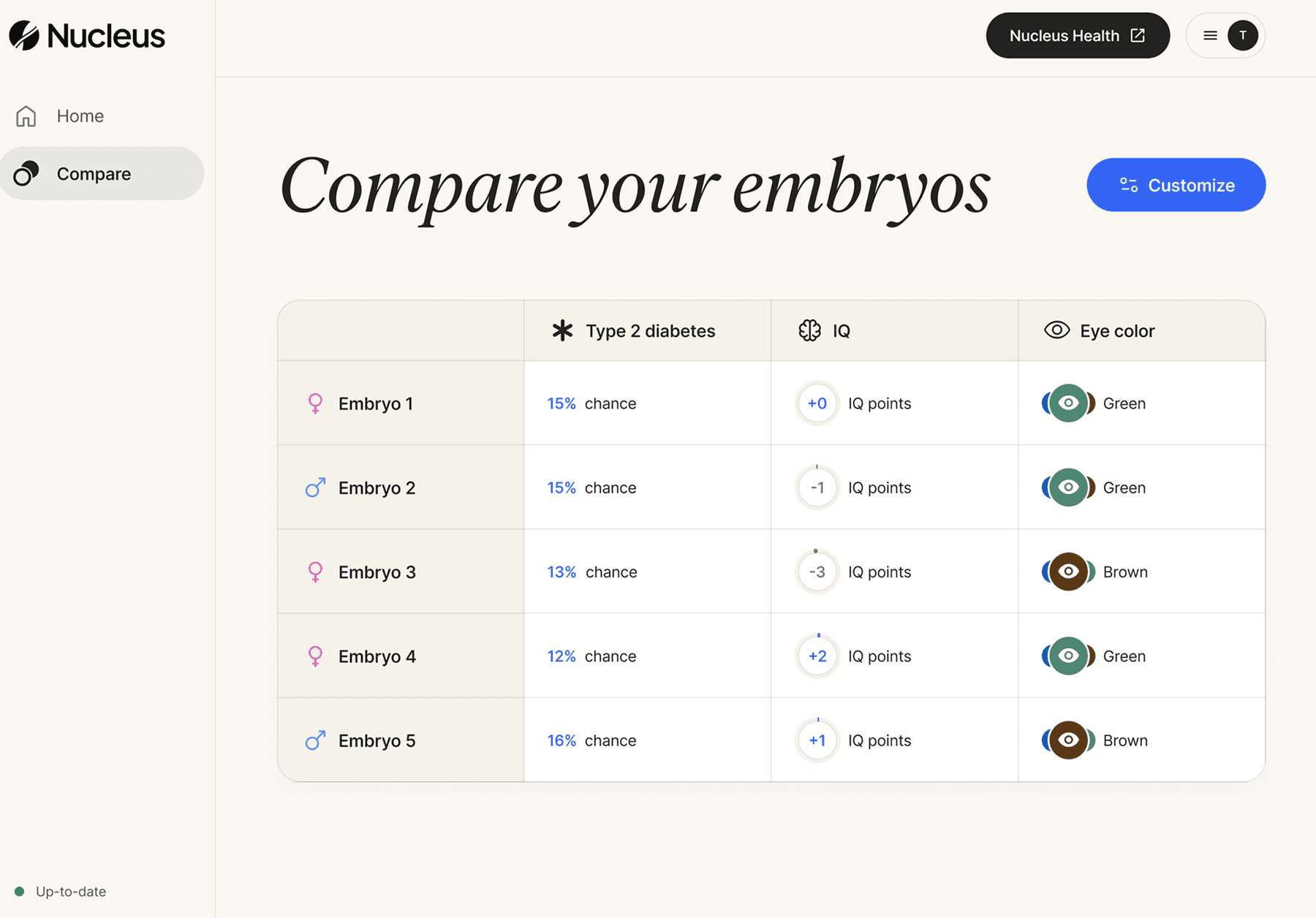
With Nucleus IVF+, you get the following:
1. Clinic and donor matching
When choosing the right clinic and the perfect donor, the stakes are high, and options can feel overwhelming. Nucleus assists by:
Identifying clinics from its partner network that match your medical and personal needs, including expertise in conventional IVF and ICSI
Providing access to a broad, high-quality donor network and helping you make informed choices based on genetic compatibility, health history, and family goals
Ensuring inclusivity for LGBTQ+ families, intended single parents, and those using donor gametes
Our clinic evaluations use Nucleus’s proprietary quantitative–qualitative model, which merges verified success rates for embryo transfers with professional judgment from reproductive specialists. This dual-lens methodology ensures every clinic that Nucleus partners with demonstrates excellence validated by both empirical data and expert evaluation.
2. Complete IVF cycles
Nucleus helps you find support at each stage of the cycle, so you can make informed choices, reduce stress, and feel confident in your treatment plan. You will know what to expect and how to prepare as Nucleus coordinates with your clinic to ensure smooth and efficient care.
3. Genetic testing
Genetic testing before conception is a critical tool for understanding fertility risks and choosing the healthiest embryos. With Nucleus IVF+, you gain access to Nucleus Preview, comprehensive whole-genome carrier screening for both parents for more than 2,000 genetic conditions you could unknowingly pass on to your child, including:
Huntington’s disease
Tay-Sachs disease
Sickle-cell anemia
When your embryos are ready, you will be able to explore preimplantation genetic testing and get your embryos tested in the best labs. That way, you’ll have enough data on the quality of your embryos before selection.
4. Genetic optimization
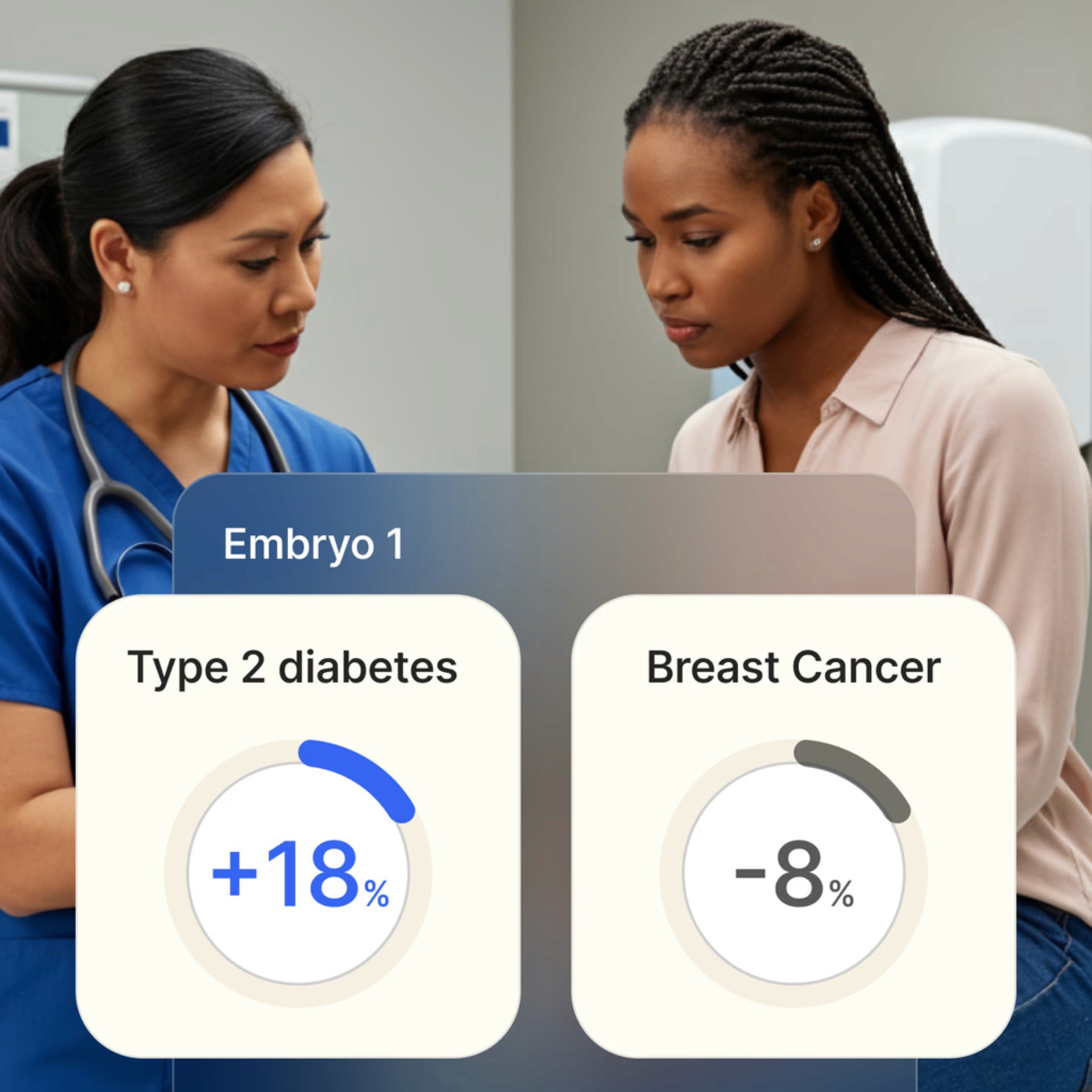
Nucleus IVF+ offers you access to Nucleus Embryo, the first genetic optimization platform that leverages advanced genetic insights to give you a deeper understanding of each embryo’s genetic status and health potential.
You can compare up to 20 embryos side-by-side in an interactive dashboard. You can sort them by health and well-being traits that matter most to you, such as the predicted risk for:
Kidney disease
Certain cancers
Neurodevelopmental issues
Immune disorder
Metabolic issues
5. Practical support and guidance
Fertility treatment isn’t just about medical procedures. It’s an emotionally and logistically complex journey. Nucleus IVF+ offers:
Unlimited access to genetic counselors and fertility specialists for expert advice
24/7 availability for questions and support
Guidance for managing appointments, medications, and test results efficiently
Book a consultation call today and let Nucelus support you on your path to parenthood.
You may also like…
Featured image source: Emma Bauso