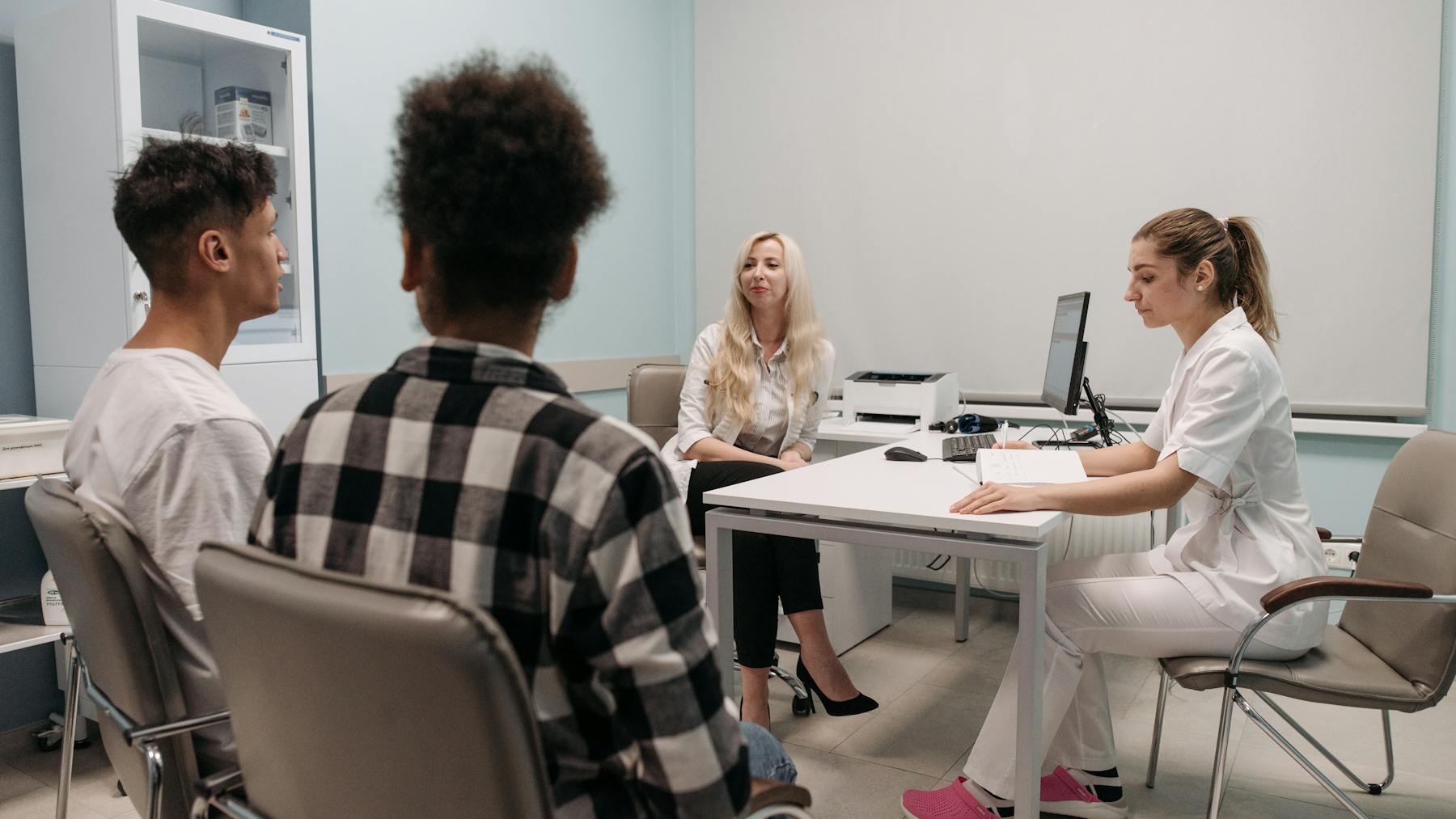

The first appointment with a fertility specialist is crucial for developing a personalized treatment plan. It’s your chance to understand your reproductive health, undergo relevant diagnostic tests, explore your treatment options, and discuss whether IVF might be the right next step.
This guide explains what to expect at a fertility appointment, how to prepare so you get the most out of this initial consultation, and what future visits may involve.
How to prepare for the first fertility appointment
You should come prepared for your first appointment at the fertility clinic, so you can have a productive consultation and give your specialist the information they need to determine the best next steps.
Here’s what you need to do:
Prepare your medical history
Gather insurance information
Put together your questions

Source: Tima Miroshnichenko
1. Prepare your medical history before your first fertility appointment
Before seeing a fertility specialist for the first time, the clinic will ask you to provide your complete medical history (and your partner’s if applicable). That includes past pregnancies, miscarriages, menstrual cycle details (length, regularity, changes), and family history of genetic conditions or infertility.
If possible, request copies of your medical records from your OB/GYN, primary care physician, or any other specialist you’ve seen to help your fertility team create the optimal plan.
Different medications and supplements can also influence fertility and may need to be adjusted before or during treatment, so write down medications you take regularly, including:
Prescription drugs
Over-the-counter products
Herbal remedies
Vitamins and nutrition supplements
2. Gather insurance information
Fertility treatment can be expensive, and coverage varies widely depending on your insurance plan. It’s helpful to know exactly what your policy covers before your appointment, so you can discuss financing options, payment plans, or discounts for multiple cycles.
Here’s how to prepare:
Contact your insurance provider about fertility benefits. Coverage for fertility services can depend on your state of residence, your employer’s plan, and the type of treatment you’re pursuing.
Ask about diagnostic and treatment coverage because many plans cover initial consultations, testing, and lab work, but not procedures like IVF and egg freezing.
Check medication coverage and whether you must use a specific pharmacy.
Clarify coverage limits as some plans set a lifetime maximum on fertility benefits or limit the number of covered cycles.
Learn about referral or pre-authorization requirements before starting treatment.
3. Prepare your questions
Write down a list of questions to ask the fertility team to determine whether you have chosen the right clinic. Here are some examples:
How does my age affect my chances of success?
What treatment options are available, and how successful might each be for me?
Do you have experience treating individuals of my age or with a similar medical history?
How long should we try each option before considering something different?
Who will be my primary contact for treatment questions or test results?
If we need IVF, do you offer preimplantation genetic testing? Which lab do you work with?
Do you offer polygenic risk screening for embryos?
Can we choose our own genetics lab for preimplantation genetic testing?
Pro tip!
If you are at the beginning of your fertility journey, think about including carrier screening in your preparation list.
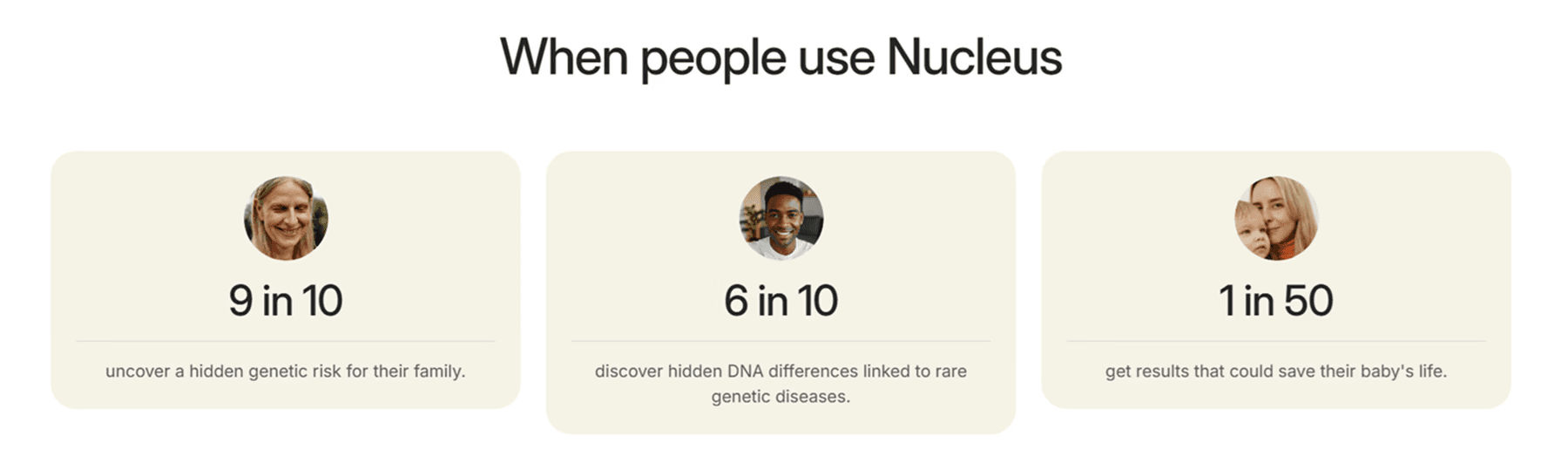
9 in 10 parents are carriers of at least one genetic condition, and 80% of affected children have no known family history. A simple test can check whether you or your partner carry genetic mutations that could be passed on to your child, even if you are completely healthy or have no family history of genetic conditions.
Some of the benefits of carrier screening are:
Ruling out hidden genetic risks
Managing shared genetic risks if you both carry the same condition (by exploring IVF with genetic testing or donor options)
Making informed decisions about your reproductive health
Increasing the chances of having a healthy baby
Nucleus Preview is a clinical-grade, whole-genome DNA test with 99.9% sequencing accuracy. A quick cheek swap screens for numerous genetic diseases, such as hemophilia, cystic fibrosis, or muscular dystrophy, and the results can help determine whether you proceed with natural conception, IUI, or IVF.
What to expect at your first fertility appointment
Each clinic has its own protocol, so this initial appointment may be conducted over the phone or via video call. Once you attend your first in-person fertility appointment, it typically lasts 45–90 minutes. You will meet with your care team for a conversation, physical exams, and initial tests.
In general, here’s what happens at your first fertility appointment:
Check-in and clinic protocols
Medical history and lifestyle review
Physical exam and initial testing
Findings and next steps
We’ve expanded these general steps below.
Step 1: Check-in and clinic protocols
When you arrive at your clinic, the staff may:
Confirm your referring doctor if applicable
Collect your co-pay or payment information
Take your photo or biometric scan
Review basic details for their records

Source: Pavel Danilyuk
To save time, some clinics offer downloadable registration forms you can complete in advance. They may also ask you to forward relevant medical documentation to their offices before your first consultation.
Step 2: Medical history and lifestyle review
Your fertility specialist will review your medical background so they can understand the factors that may be influencing your fertility and identify risks that could affect your treatment plan or pregnancy.
They will ask questions about your lifestyle and health habits, including inquiries about how regularly you have intercourse or a history of STIs. Such questions may be uncomfortable, but it’s crucial to be open and thorough in addressing them.
Here’s what you can expect your provider to discuss:
Medical and reproductive history | Lifestyle factors |
|---|---|
|
|
Step 3: Physical exam and initial testing
At your first fertility appointment, your doctor will measure your height, weight, and blood pressure. A basic physical exam helps identify factors that may affect your fertility, such as BMI or hypertension.
You can expect a pelvic exam to check for any visible abnormalities, tenderness, or signs of infection in the reproductive organs. This can help identify issues like fibroids, cervical problems, or pelvic inflammatory disease that may interfere with conception.
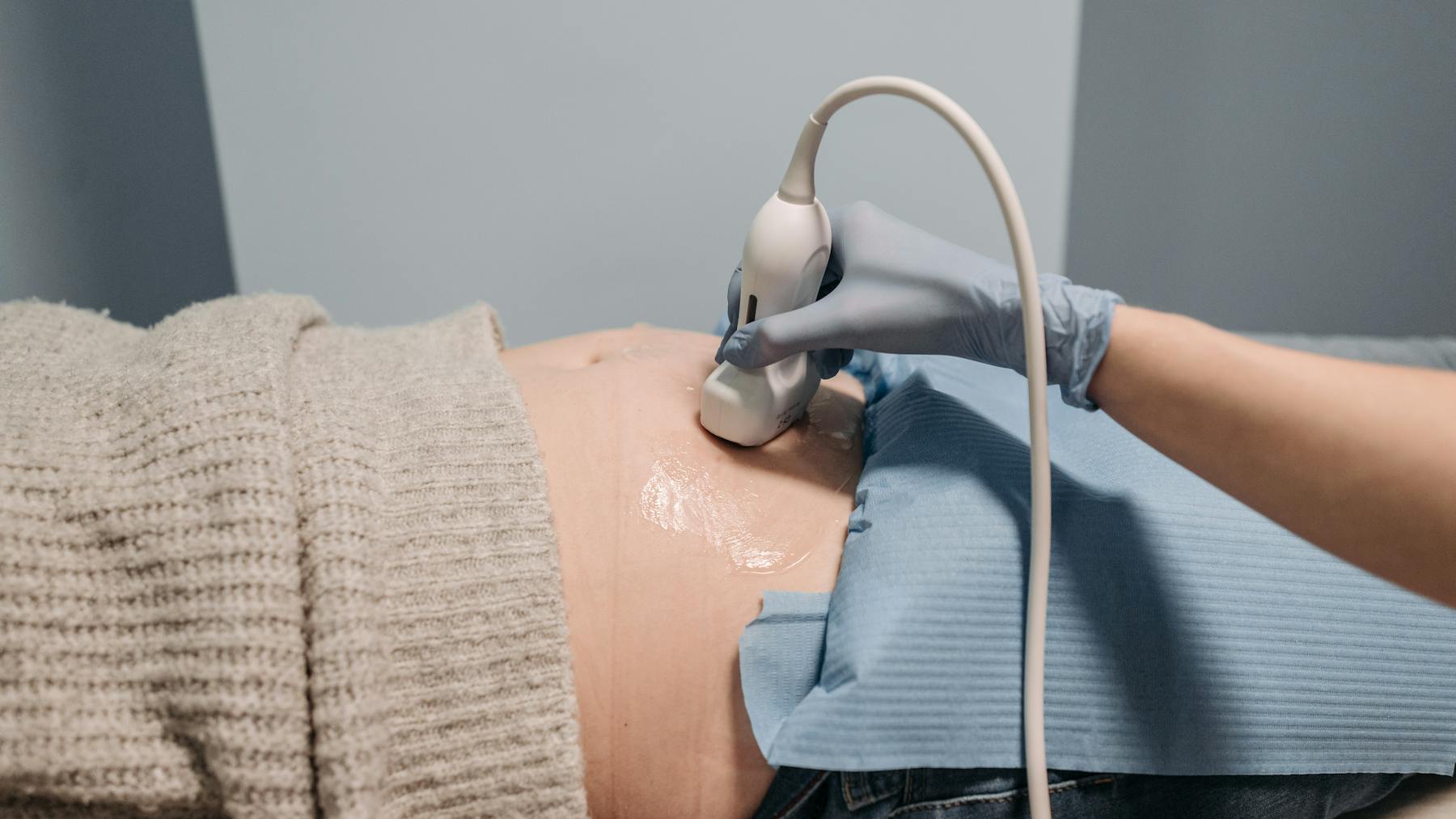
Source: Pavel Danilyuk
A transvaginal ultrasound may follow to get a detailed view of your uterus, ovaries, and endometrial lining and potentially reveal structural problems like polyps or scar tissue. This imaging also allows your doctor to perform an antral follicle count (how many small, immature eggs are visible in your ovaries), which helps estimate your ovarian reserve.
Additional tests that may happen during the first fertility appointment or be scheduled for later are presented in the following table:
Test | Purpose |
|---|---|
Blood and urine tests |
|
Semen analysis |
|
Hysterosalpingogram (HSG) |
|
The exact steps depend on your clinic, and in some cases, these tests can span several appointments:
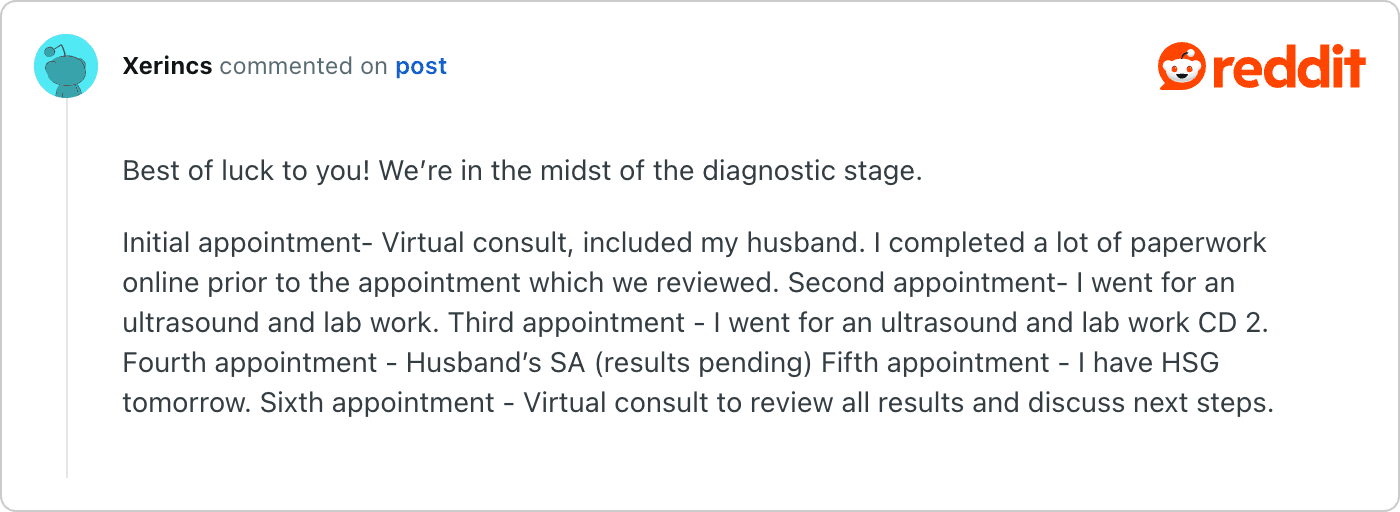
Full post: Reddit
Step 4: Results and planning your next steps
Some reports (like ultrasound images and pelvic exams) can be reviewed and explained immediately. Others, such as hormone panels or infectious disease screening, may take several days to return.
Your doctor will walk you through:
Preliminary findings and what they mean for your fertility
Additional tests needed to confirm or clarify the results
The treatment plan that might be appropriate for your situation, such as:
Medications
Timed intercourse
In vitro fertilization (IVF)
Risks, benefits, and realistic success rates for each option based on your medical profile
This is also the time for you to ask all the questions you have prepared and request clarification if anything seems confusing. Before you leave, the staff will schedule follow-up appointments and testing and explain timelines for results and treatment initiation.
What happens after your first appointment with a fertility specialist
Depending on your test results, your subsequent visits may focus on less invasive options, such as ovulation induction with medication, IUI, or surgical correction of an anatomical issue. If these approaches aren't effective or suitable, your team may recommend IVF.

Source: Pixabay
If IVF becomes part of your plan, you’ll have a series of time-sensitive appointments that follow a structured timeline:
Ovarian stimulation: Hormone injections stimulate your ovaries to produce multiple eggs instead of the usual one.
Monitoring appointments: Ultrasounds and blood tests track follicle growth and hormone levels.
Egg retrieval: Your doctor collects the eggs from your ovaries in an outpatient procedure that takes 15–30 minutes and is done under light sedation.
Fertilization and embryo culture: Your eggs are combined with sperm in the lab, by conventional insemination or via intracytoplasmic sperm injection. The resulting embryos are cultured until they reach the blastocyst stage, typically on days 5 or 6. Embryo grading is also done to assess their quality.
Embryo biopsy: If IVF genetic testing is recommended, a few cells are removed from each embryo.
Preimplantation genetic testing: The biopsied samples are tested using various PGT methods:
PGT-A to detect chromosomal abnormalities that could cause implantation failure or miscarriage
PGT-M to screen for inherited genetic conditions known to run in your family
PGT-SR to identify chromosome structural issues
PGT-P to assess risk of chronic and late-onset conditions
Embryo freezing: Your embryos are frozen until PGT results are ready. That allows you to recover from stimulation and to prepare your uterus for implantation.
Mock embryo transfer: Many clinics perform a practice transfer to identify challenges and the appropriate transfer technique.
Frozen embryo transfer: Once you’ve selected the healthiest embryo, it is thawed and placed into your uterus.
We can help❣️
Fertility treatment can feel like a maze of appointments, results, and decisions. From hormonal stimulation to genetic testing, every step requires coordination between multiple specialists and labs. Having expert guidance from the beginning can make the process less overwhelming and much more effective.
Nucleus IVF+ is a comprehensive fertility solution that can support you at every stage of IVF.
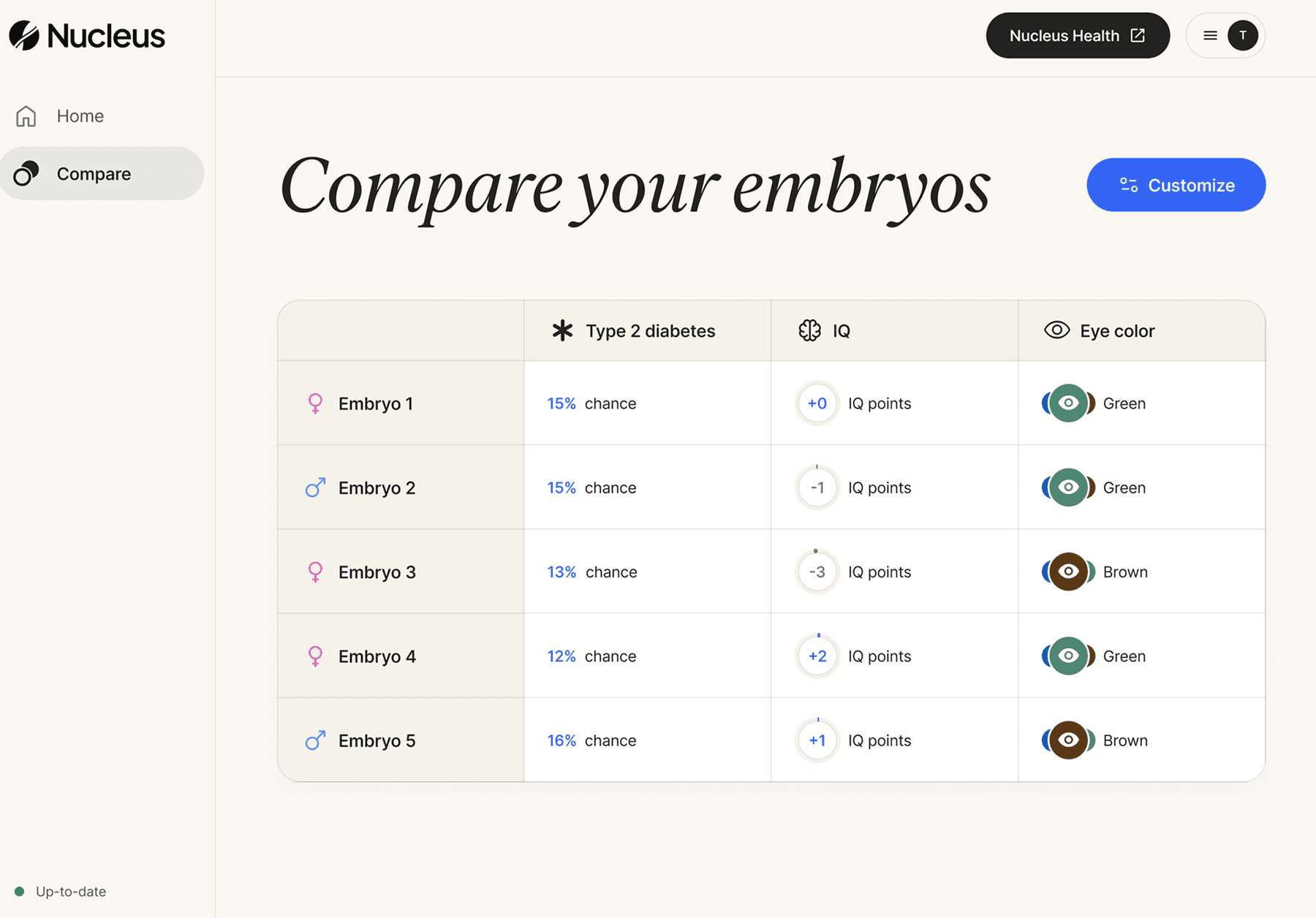
Nucleus IVF+: Parenthood, with precision
Instead of managing separate providers, platforms, and tests, Nucleus IVF+ consolidates all key elements into a single, seamless system: fertility care, clinic matching, genetic testing, and advanced genetic optimization software.
With Nucleus, you can:
Get 24/7 expert support from genetic counselors who answer all your questions, explain test results, and help you move forward
Screen for more than 2,000 genetic conditions with Nucleus Preview and understand your reproductive genetics in detail
Connect with top clinics and go through complete IVF cycles while receiving personalized support
Use our proprietary genetic optimization software to understand your embryos on a deeper level and compare them
Book a call with the Nucleus team and get the support you need from your first appointment to a healthy pregnancy and beyond.
You may also like…
Featured image source: Pavel Danilyuk