

Ivy Fertility is a well-known U.S. fertility network with a strong presence across the West Coast. It positions itself around offering advanced technology, comprehensive care, and consistently reported successful outcomes, but what do these promises look like in practice?
This review explores how Ivy Fertility network handles cost transparency and patient support. We’ll look at the services offered, evaluate what it does well, and identify potential gaps.
What is Ivy Fertility?
Ivy Fertility is one of the largest fertility networks in the country, bringing together over 50 physicians across more than 25 locations unified under one brand. It was founded in 1989 and has its headquarters in San Diego.
Its clinics provide a full spectrum of fertility services, from fertility preservation to third-party reproduction. Beyond treatment, Ivy highlights research and innovation initiatives in industry-leading science. This enables Ivy Fertility clinics to remain more adaptable to new approaches in fertility care.
The network has recently launched Ivy Demo Days, a biannual event connecting startups, clinicians, and researchers to explore emerging technologies in fertility care.

Source: Nataliya Vaitkevich
How the Ivy Fertility clinic network performs: 5 areas of IVF care
We looked at the Ivy Fertility center network through five service aspects that most directly impact your IVF experience:
Ivy Fertility services
Clinic network and accessibility
Cost transparency and insurance
Success rates and outcomes
Patient experience and support
1. Ivy Fertility services
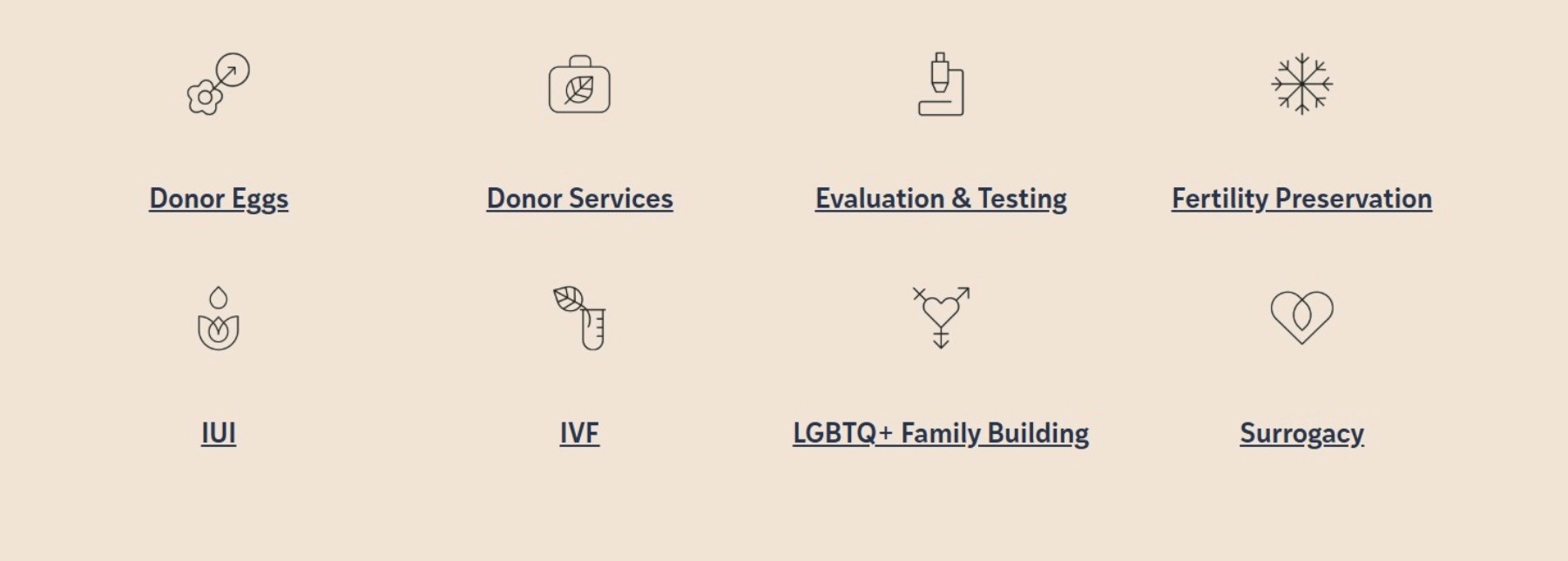
Ivy Fertility services offers a broad, end-to-end service mix, from initial diagnostics and IUI to IVF. Particularly, its expertise in third-party reproduction via a donor-based pathway enables it to serve LGBTQ+ and single parents.
Source: Ivy Fertility
Here’s an overview of Ivy’s key fertility services:
Service | What’s included | Highlights |
|---|---|---|
Evaluation and testing |
| Strong emphasis on education and early diagnosis |
| Can be a straightforward option for single moms and same sex female couples | |
In vitro fertilization (IVF) |
| Reduced injections, clinic visits, and medication costs with the Gentle IVF protocol |
Fertility preservation |
| Industry standard protocols and options available for medical or elective reasons |
Donor eggs | Fresh and frozen donor eggs | Diverse in-house database with rigorous donor screening, as only 1–2% of donor applicants end up meeting the in-house criteria |
Donor sperm | Coordination with external sperm banks | No in-house sperm bank, but established partnerships |
Gestational surrogacy support with agency coordination | External agency costs are separate | |
PGT-A, PGT-M, PGT-SR | Standard preimplantation genetic testing options |
As with any large network, services can vary slightly between clinics. Despite the general listed services, some Ivy Fertility centers don’t offer in-house donor programs and advanced genetic testing but coordinate through partner facilities. You should always confirm what’s available locally before starting treatment.
We couldn’t verify if Ivy clinics offer PGT-P for embryo screening. It’s an advanced test, but it can make a meaningful difference for parents looking to have babies with the lowest chronic disease risk.
2. Ivy Fertility clinic network and accessibility
Most Ivy Fertility centers are located along the West Coast, primarily in California, but there’s a spotty presence in other states. You can contact your nearest Ivy center to check if it offers assistance with treatment elsewhere, in case you need to relocate or travel.
Below are all Ivy Fertility locations across nine states:
State | Ivy Fertility centers* |
|---|---|
California |
|
Idaho | Idaho Fertility Center |
Nevada |
|
New York | Ivy Fertility NYC |
Tennessee | Fertility Associates of Memphis |
Texas | Dallas IVF |
Utah | Utah Fertility Center |
Virginia | Virginia Fertility & IVF |
Washington | Pacific Northwest Fertility |
*Data sourced in December 2025.
Service accessibility is efficient. You can contact your Ivy center directly or submit a contact form through the clinic's website. Once under care, you gain access to a patient portal, which helps streamline communication, document access, and the sharing of test results.
Source: Ivy Fertility
The network model has advantages such as shared expertise, unified protocols, and care coordination; however, it’s unclear how medical records, lab data, and treatment histories are transferred internally when switching clinics. Continuity of care and level of personalization may also vary between centers, which is a common tradeoff of clinic networks.
3. Cost transparency and insurance
Ivy Fertility costs vary by location, but most clinics in the network publish price lists on their websites. This level of transparency is not yet standard in fertility treatment.
To give you a ballpark idea of what you can expect, here are the prices listed for three Ivy centers:
San Diego Fertility Center | NOVA IVF | Utah Fertility Center |
|---|---|---|
|
|
|
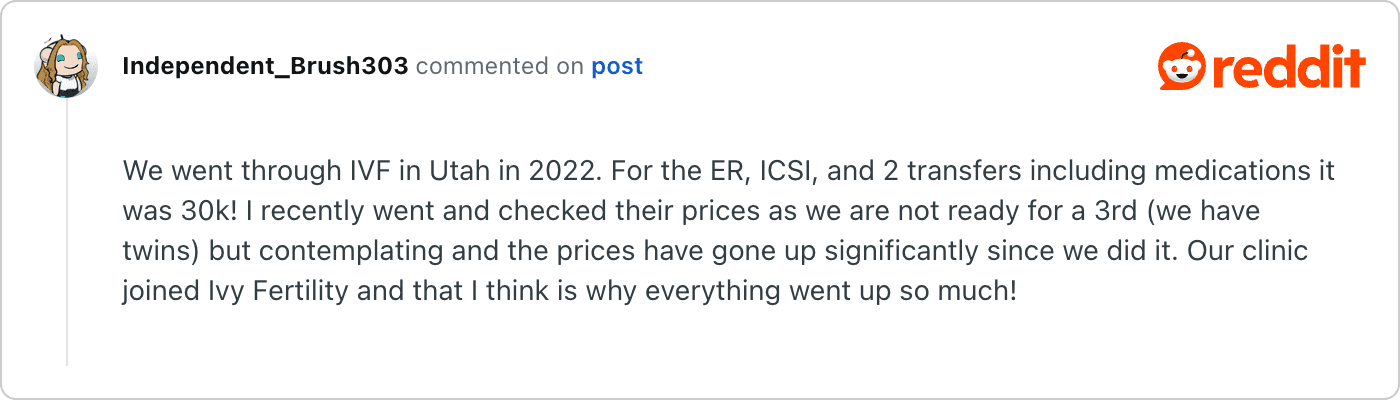
However, some patients reported that the price of their local clinic went up after it partnered with Ivy.
Full post: Reddit
Most Ivy Fertility centers work with major insurance providers, including Aetna, Anthem, and Cigna. They also collaborate with fertility financing partners, such as:
Sunfish
CapexMD
Future Family
Lending Club Patient Solutions
Prosper Healthcare Lending
EggFund
However, not all clinics offer the same financing options. For instance, NOVA IVF only works with CapexMD, whereas Ivy Fertility clinics in San Diego and Utah work with multiple providers.
San Diego Fertility Center also offers bundled packages, including discounted IVF cycle packages, global packages that bundle donor and surrogacy costs, and a risk-sharing “guaranteed plan” that promises some reimbursement if treatment does not result in live birth.
Tip 👩❤️👨
If you prefer a streamlined, cost-effective IVF package, you can explore the Nucleus IVF+ program. Its full service includes the complete IVF cycle and testing with a compatible clinic, medication, donor network access, and counseling within a patient-friendly portal.
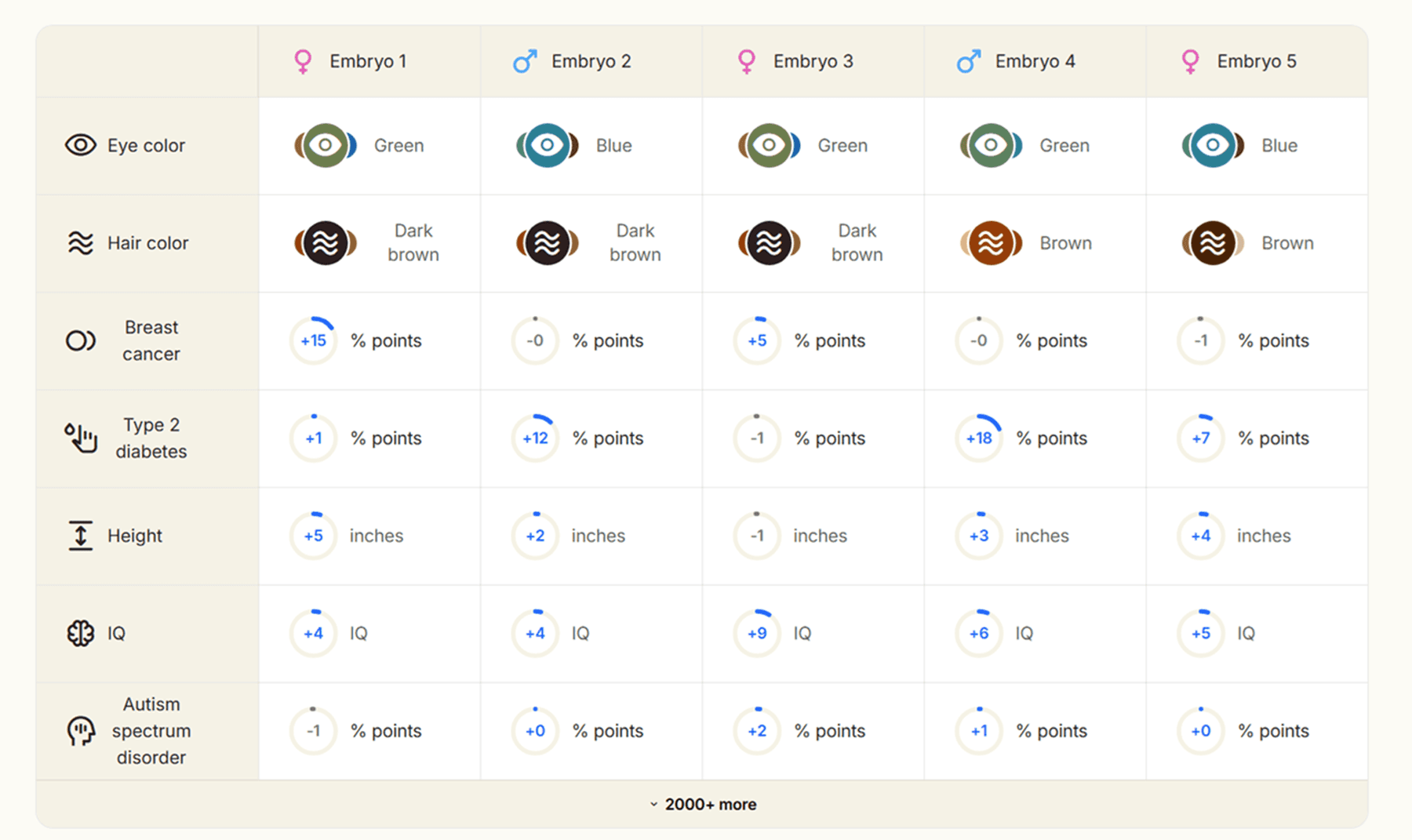
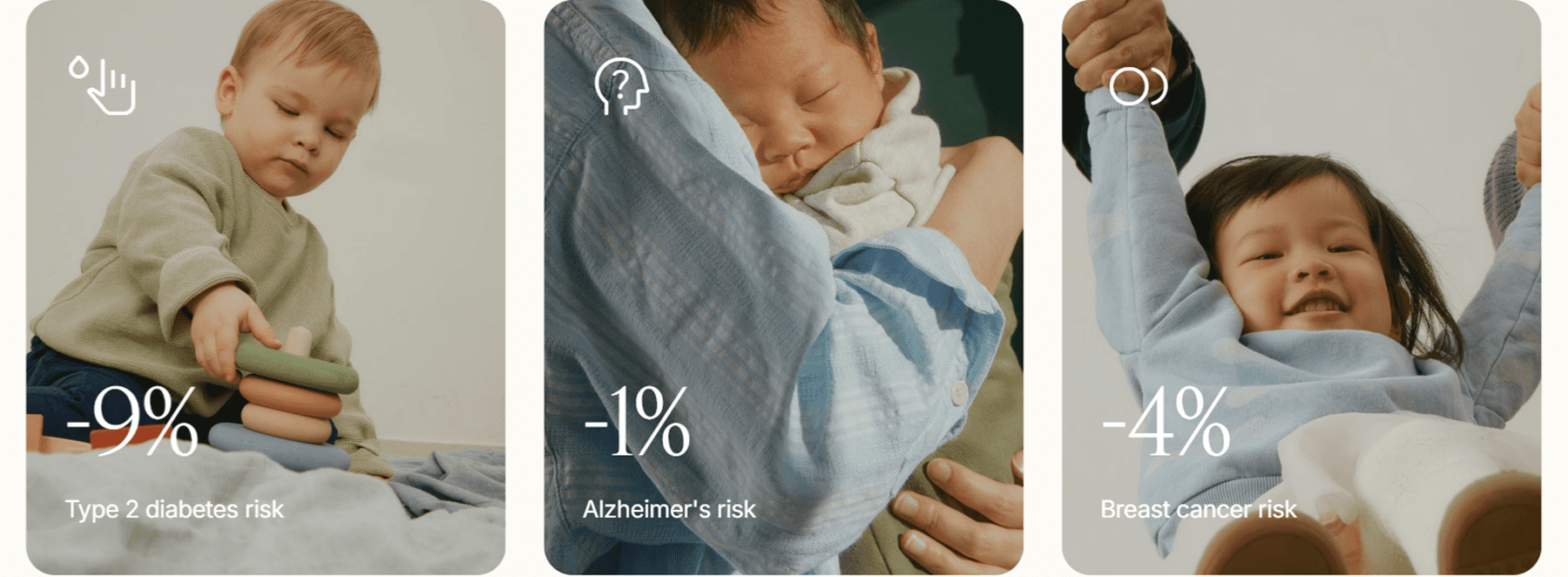
The program stands out because it also lets you optimize your embryo selection process with the help of a one-of-a-kind comparison tool. You can analyze how your embryos fare in terms of long-term health risks and well-being traits, and make the decision that is best suited for your family.
4. Success rates and outcomes
While specific numbers vary by clinic and the general complexity of cases, the pattern for the Ivy network is consistent: higher-than-average IVF success rates. For example:
Utah Fertility Center reports IVF success rates up to 28% above the national average.
NOVA IVF and Northern California Fertility Medical Center each report rates 30% to 50% higher than the national average.
The CDC data for the San Diego Fertility Center shows a 71% success rate per embryo transfer.
To give you a clearer picture of success rates, here are the live birth numbers (using patients’ own eggs) by age group for three randomly chosen Ivy Fertility clinics:
Clinic | Under 35 years | 35–37 years | 38–40 years | 41–42 years | Over 42 years |
|---|---|---|---|---|---|
72.5% | 51.2% | 47.4% | 23.1% | 4.2% | |
68.5% | 64.7% | 57.1% | 38.3% | 0/19 | |
64.3% | 41.3% | 50% | 4/19 | 8.7% |
Note that IVF clinics are not always directly comparable. Reported outcomes can vary based on how clinics define outcomes and select patient cohorts, so they don’t always reflect the quality of care.

Source: Mart production
5. Patient experience and support
Recognizing the network’s strong clinical outcomes, patient satisfaction, and medical leadership, Newsweek included eight Ivy fertility centers in its 2025 list of America’s Best Fertility Clinics.
Patient reviews predominantly align with this recognition, although experiences vary across locations. For instance, Dallas IVF has a 4.6-star rating on Google, while Fertility Associates of Memphis holds a lower score of 3.8 stars.
What most parents agree on is the warmth and attentiveness of the physicians. They praise their professionalism, crediting them for clear coordination and positive outcomes.
There’s mixed feedback about long wait times, billing issues, and occasional communication gaps. However, clinics take the time to respond to negative reviews and make an effort to understand patient experiences better and improve their service.
The verdict: Is Ivy Fertility the right option for you?
Ivy Fertility’s strength lies in its medical excellence, but maintaining consistency across locations remains a challenge. Here’s a quick overview of the network:
Pros | Cons |
|---|---|
|
|
For a multi-clinic network, Ivy balances scale and specialization quite well, but there can be tradeoffs in personalization and the depth of services you access.
For parents seeking a centralized, tailored, and well-coordinated IVF experience, Nucleus IVF+ can be an excellent option. The program combines clinical depth, advanced genetic research, and embryo analysis with a fully managed, end-to-end IVF experience, giving you more agency and confidence in every choice you make.
Nucleus IVF+: An integrated IVF program built around your DNA
Nucleus IVF+ is the first full-service IVF platform designed to put genetic optimization at the center of every step of fertility care. It supports you from the first decisions about family planning all the way through embryo transfer and beyond, giving you the clarity and care when it matters most.
Despite the science-forward approach, you get a human-centered experience where every choice you make is informed, personalized, and guided by specialists. Here’s what IVF+ includes:
Comprehensive carrier screening: Nucleus Preview screens for 2,000+ conditions that you might pass on to your child. This also informs personalized care during IVF and pregnancy.
Clinic matching: You gain access to an exclusive network of vetted clinics tailored to your fertility needs.
Donor network: Nucleus IVF+ integrates advanced technology and a curated donor network, making it easier to find a family-aligned option.
Optimized embryo selection: With the Nucleus Embryo software, you can evaluate up to 20 embryos simultaneously for long-term health and well-being risks. This provides you with more independence to choose an embryo based on easy-to-understand scientific data.
24/7 support from genetic counselors: You can get guidance and answers throughout the process.
Book a consultation to discuss how we can meet your fertility needs.
You may also like…
Featured image source: kelvin agustinus