

The Prelude Network is one of the largest and most well-connected fertility networks in North America. Still, for anyone pursuing IVF, size and scale don’t tell the full picture. What matters most is how care is delivered and how supported and informed patients feel.
This review examines the performance of the Prelude fertility clinic network in practice. We'll look at its overall strengths, service logistics, and potential tradeoffs, covering real patient experience and clinical outcomes where possible.
Prelude Network: An overview
Entrepreneur Martin Varsavsky founded the Prelude fertility network in 2016. It has over 90 locations across the U.S. and Canada, and a team of 100+ specialists. Its clinics have delivered more than 300,000 babies through their combined programs.
Source: Jonathan Borba
In 2019, Prelude was acquired by Inception Fertility, the parent company of reproductive brands like Aspire Fertility and MyEggBank. The merger expanded Prelude’s offering to a broader, end-to-end IVF experience, including:
IVF with donor eggs
Embryo preservation
Advanced genetic testing
The network’s scale brings advantages like better infrastructure, standardized protocols, and expanded insurance coverage. At the same time, it raises important questions around how personalized and consistent fertility care can remain across network clinics.
Bonus read: Check out reviews of fertility networks similar to Preview:
How to find a Prelude fertility clinic
To find a suitable network clinic, you can launch the Fertility Clinic Finder on the Prelude website. You can search by city, state, or zip code.
You can also schedule a 15-minute consultation with a new patient coordinator. These coordinators are the first point of contact, helping you:
Explore clinic options
Answer insurance and financing questions
Connect with specialists within the network
To connect with a new patient coordinator, you need to request an appointment through an online form. If you already work with an in-network clinic but need to relocate, switching between Prelude fertility clinics is also an option. In such cases, you need to work with your patient coordinators to handle the transfer.
The Prelude Network review: 5 key considerations
Prelude’s network strengths and capabilities are clear, but it’s worth evaluating how they translate into day-to-day fertility care. Here are five factors that matter the most:
Fertility services
Patient tools and partner services
Cost and financing clarity
Patient experiences
Clinic outcomes
1. Prelude fertility services
Prelude clinics provide full-spectrum fertility treatment depending on your needs. This can include:
IVF
Egg, sperm, and embryo donation
New patients need to work with Prelude coordinators to help find a suitable clinic and clarify pretreatment testing needs. This kind of personalized onboarding is essential for centralizing services on the network level and avoiding clinic-level mixups.
Prelude also supports diverse family structures, from single parents by choice to LGBTQ+ individuals. For instance, cisgender female couples can explore reciprocal IVF, while cisgender gay male couples are guided through the donor and surrogacy process with help from partner agencies.
The Prelude Network also offers fertility preservation options:
Option | Who it’s for |
|---|---|
Egg freezing | Women who want to preserve younger, healthier eggs |
Sperm freezing | Men planning a vasectomy, facing medical risk, or delaying parenthood |
Embryo freezing | Couples or individuals undergoing IVF or saving embryos for later |
Oncofertility | Patients undergoing cancer treatment before chemo or radiation |
Pre-gender affirmation preservation | Transgender or nonbinary individuals to retain reproductive options before transitioning |
Prelude’s ability to coordinate fertility services through a single network is a major convenience for those facing time-sensitive medical procedures or life transitions.
We also love that Prelude integrates mental health care by offering a direct line (via a website form) to Dr. Ali D. Domar, one of the pioneers of mind-body medicine in fertility and Prelude’s Chief Compassion Officer.

Source: The Prelude Network
2. Patient tools and partner services
Prelude supplements its clinical care with a set of digital and partner services that play a central role in how care is delivered and coordinated. The network’s Prelude Connect app serves as a digital companion throughout treatment, enabling you to:
Schedule appointments
View treatment calendars
Check lab results
Message your care team
Link accounts with your partner for shared visibility
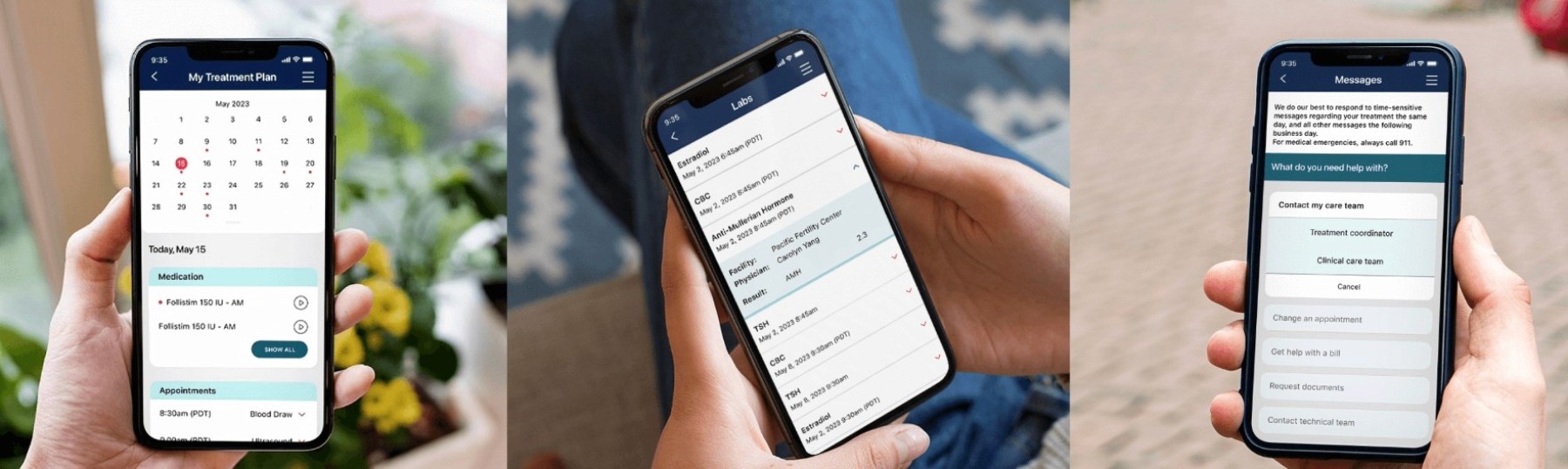
Source: The Prelude Network
The app helps make fertility care more transparent, connected, and patient-centric, without the inefficiency of frequent calls or emails. However, patients report experiencing connectivity issues from time to time.
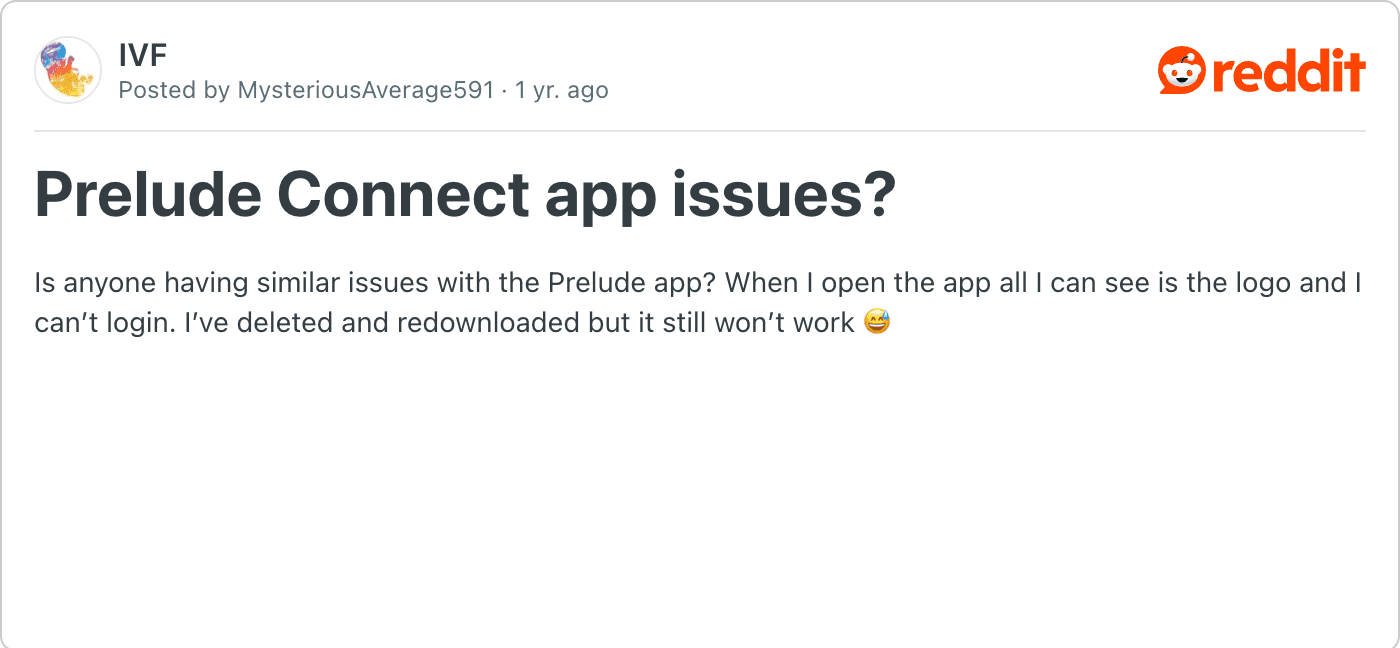
Full post: Reddit
Beyond the app, Prelude supplements its clinical care with a set of digital and partner services that simplify logistics and modernize fertility care from multiple angles. Four notable Prelude partners are:
InspireRx: A virtual fertility pharmacy that handles authorizations and medication delivery.
NutraBloom: Fertility-specific supplements formulated by experienced physicians.
Havencryo: Secure, off-site long-term storage for eggs, sperm, and embryos, designed with disaster risk mitigation in mind.
Inova: Proprietary software that streamlines clinic administration, patient onboarding, and data management.
3. Cost and financing clarity
Each clinic in the Prelude Network offers early financial consultations during which coordinators:
Walk you through the estimated costs
Outline available loan or package options
This prevents unpleasant surprises later, especially for parents who need multiple cycles or combine IVF with donor services and advanced genetic testing, such as polygenic screening, which insurance plans rarely cover.
The only problem is that pricing isn’t standardized across the network. Each clinic sets its own rates, although most participate in major fertility insurance programs like Progyny, Maven, and Carrot.
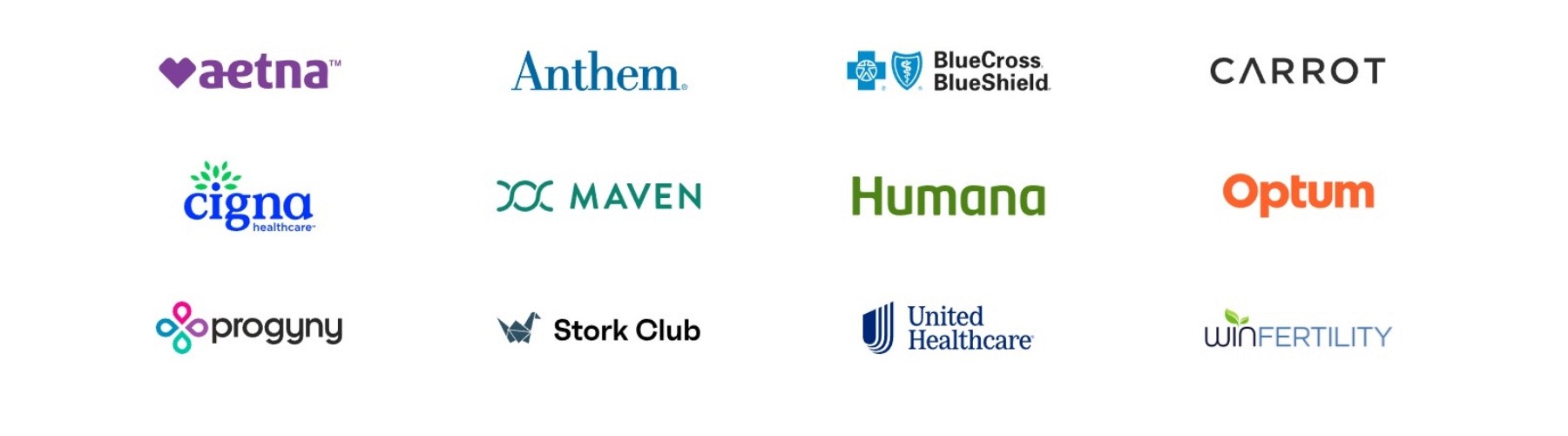
Source: The Prelude Network
They also offer flexible financing through third-party lenders to make care accessible to a broader range of patients. Financing partners vary across clinics, but some of the common options are presented below:
Financing partner | Loan range/terms | Key features |
|---|---|---|
PatientFi |
|
|
Bundl Fertility | Package pricing (varies depending on the services bundled) |
|
Future Family Financing |
|
|
Tip 💡
Planning fertility care is one of the most stressful parts for parents. It’s tricky to plan around unpredictable costs and manage and coordinate different care aspects, all while getting your treatment tailored to your fertility needs and history.
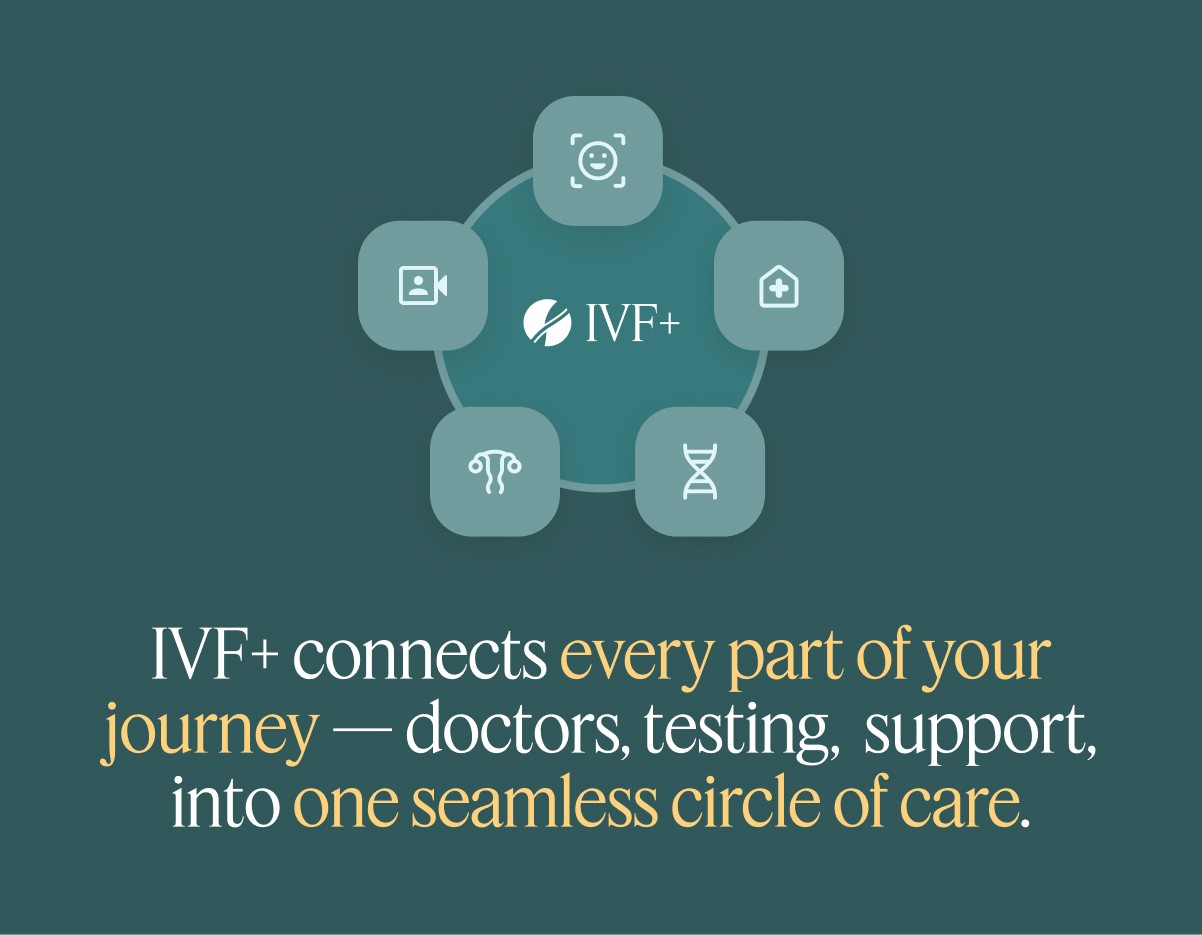
With Nucleus IVF+, your entire fertility journey is managed for you so you can focus better on becoming a parent. You don’t have to stress about scattered pricing and coordinating timelines with different experts. With Nucleus, you start with a transparent, single price point and get concierge-like assistance with everything from the IVF cycle and consultations to advanced genetic testing and embryo selection software. Explore the program here.
4. Patient experiences
Prelude fertility clinics share a strong record of patient satisfaction. Still, patient experiences can differ depending on the clinic’s scale, for example:
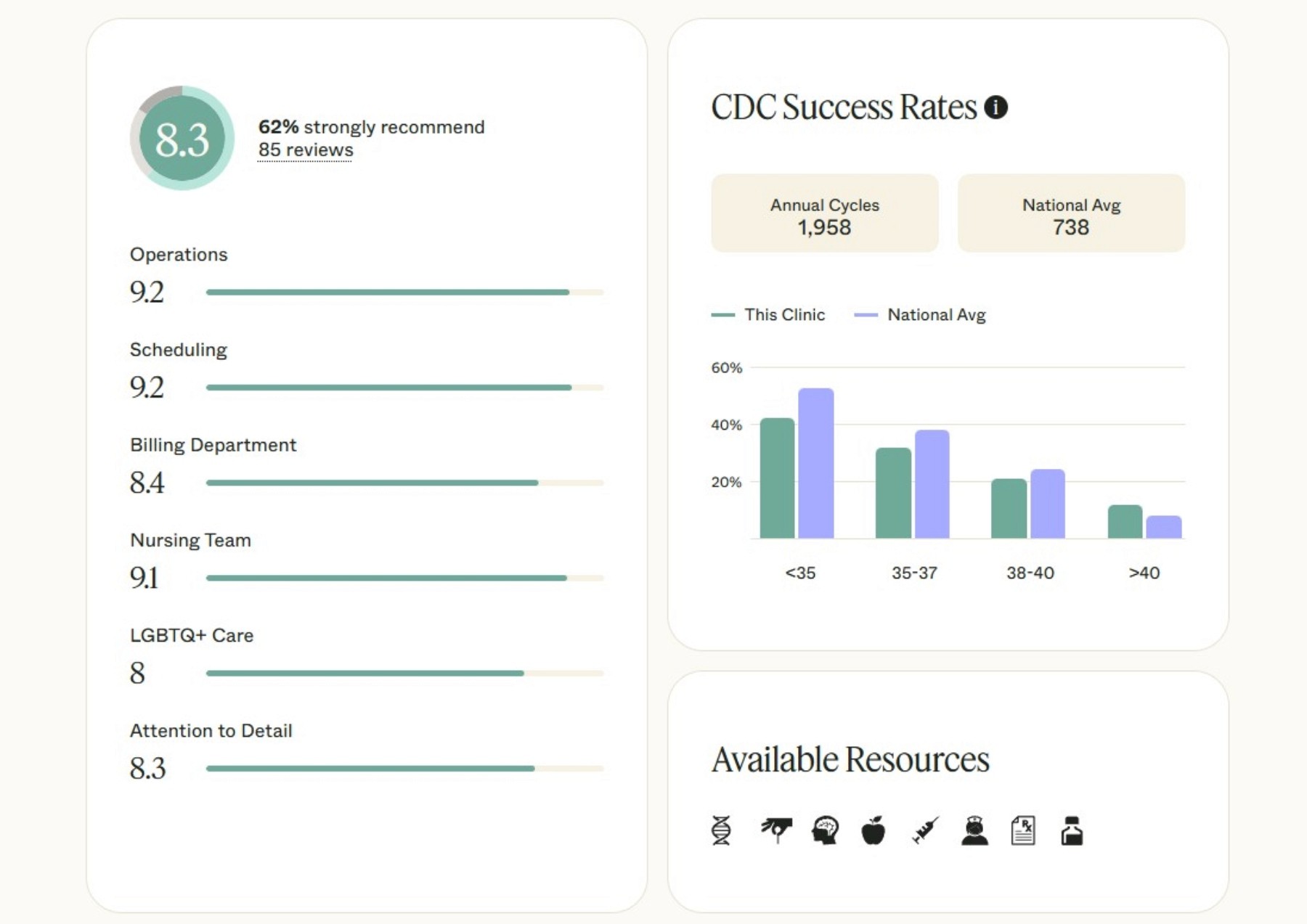
Pacific Fertility Center has an 8.3 score on FertilityIQ and does 1,950+ cycles a year.
Tennessee Fertility Institute scores a 9 on FertilityIQ but with significantly fewer cycles annually (under 250).
The Reproductive Medicine Group has a score of 7.4 at 1,100+ cycles a year.
NYU Langone Fertility Center has a FertilityIQ score of 8.6 and 3,150+ annual cycles.
Source: FertilityIQ
The patient experience at Prelude varies by clinic size and structure. There can be a tradeoff between high- and low-volume clinics, with the former having better infrastructure and the latter offering more personalization.
At large clinics like the Pacific Fertility Center, patients praise the professionalism and skill of multiple physicians, even noting that while schedules can be tight, staff work hard to offer care continuity.
Smaller Prelude clinics like Tennessee Fertility Institute can feel more personal. Patients appreciate seeing the same doctor and nurse at every visit and being addressed by their first name. This kind of individualized attention can get lost in larger centers.
Overall, you’ll notice that every Prelude clinic has its own set of reviews, both good and bad. Some reviewers mention occasional administrative hiccups or less flexible billing, but most people agree that the clinics operate efficiently and have compassionate staff who provide transparency on what happens next.
5. Prelude fertility clinic outcomes
Fertility clinics in the Prelude Network tend to have decent IVF outcomes. Below are live birth rates for a few randomly selected clinics in the network:
Clinic | Under 35 years | 35 to 37 years | 38 to 40 years | 41 to 42 years | Over 42 years |
|---|---|---|---|---|---|
40.7% | 29.3% | 19.1% | 13.1% | 5.9% | |
47.9% | 44.4% | 25.5% | 16.6% | 5% | |
57.4% | 48.1% | 31.5% | 16.7% | 10.1% | |
40% | 22.6% | 21.9% | 15.4% | 1/14 |
These numbers are generally in line with the national average, and in some cases, they exceed it. It’s important to read this data within its context, though, as case complexity and patient cohorts can impact success rates.
For instance, IVF outcomes decline with age, but the Chicago and NYU centers from the table maintain strong live birth rates even for patients in their late 30s and early 40s.
Takeaway: Do Prelude clinics offer consistent quality?
Prelude fertility clinics have many strengths, but there are also a few gaps:
Strengths | Limitations |
|---|---|
|
|
While a network of this scale has many perks, certain advanced aspects of IVF care, such as comprehensive carrier screening and advanced embryo analysis, are often out of scope for individual clinics. You still have to do your homework, check what services are available locally, and coordinate if additional services must be sourced elsewhere.
For families that want all modern aspects of IVF care under one roof, as well as understand their embryos’ full genetic potential before implantation, joining end-to-end programs like Nucleus IVF+ can be a great solution.
Shape the best future for your kids with Nucleus IVF+
Nucleus IVF+ is a full-service package that combines service coordination and human care with genetic optimization supported by the latest scientific developments. With Nucleus’ data-driven care model, you’re better equipped to make confident, informed choices at every stage of your fertility treatment, which can increase the likelihood of a successful pregnancy.
Nucleus integrates DNA science, AI-powered analytics, and compassionate support into every phase of your treatment, from preconception care through embryo selection and postnatal planning.
Nucleus IVF+ offers:
Clinic and donor matching based on your goals and medical conditions
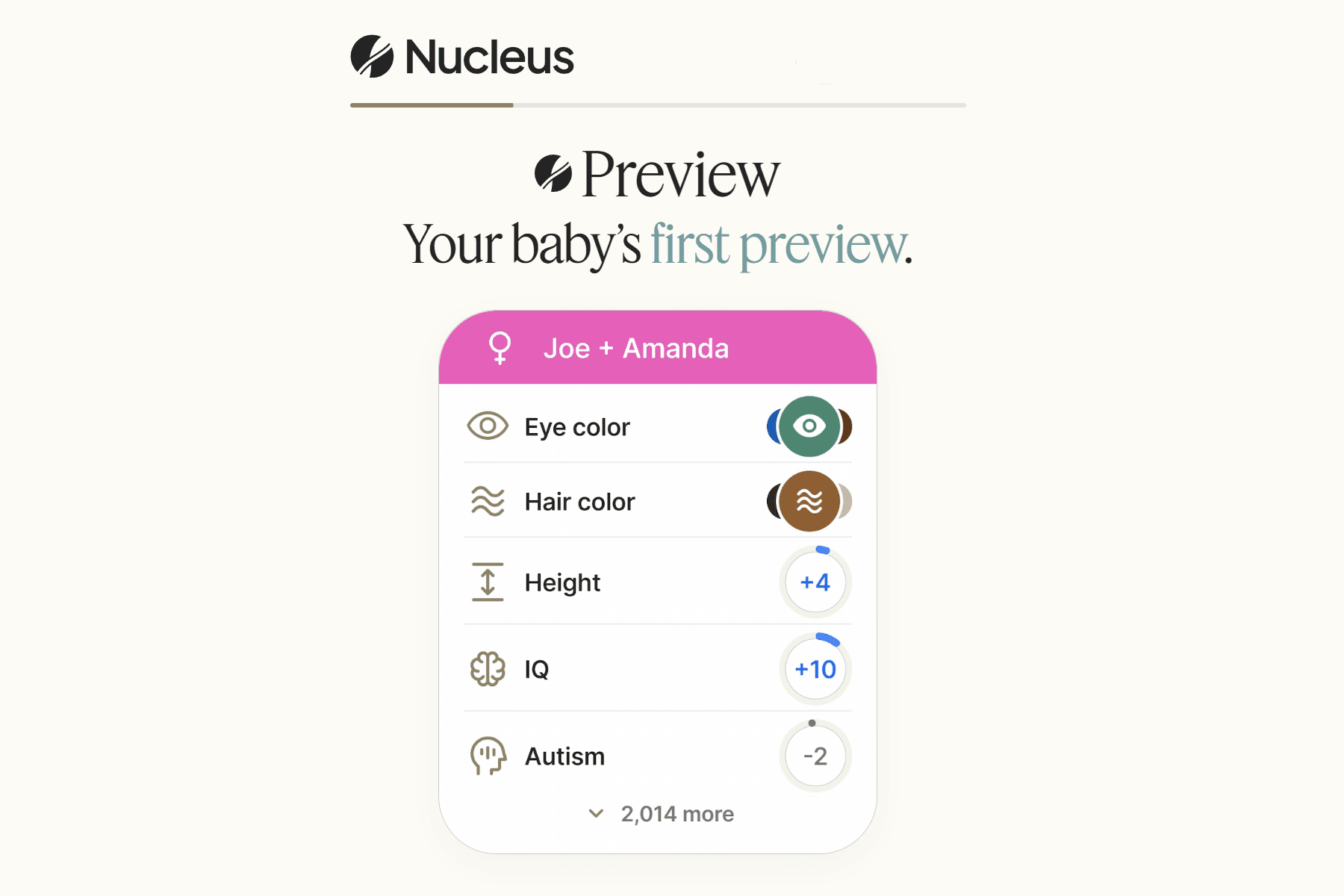
Genetic testing for both partners with Nucleus Preview — carrier screening for 2,000+ inherited disorders
One complete IVF cycle, with medications, ICSI, and STD and AMH testing
Full embryo testing support, including PGT-A, PGT-M, PGT-SR, and PGT-P
Nucleus Embryo software to compare and select embryos based on health, longevity, and well-being traits
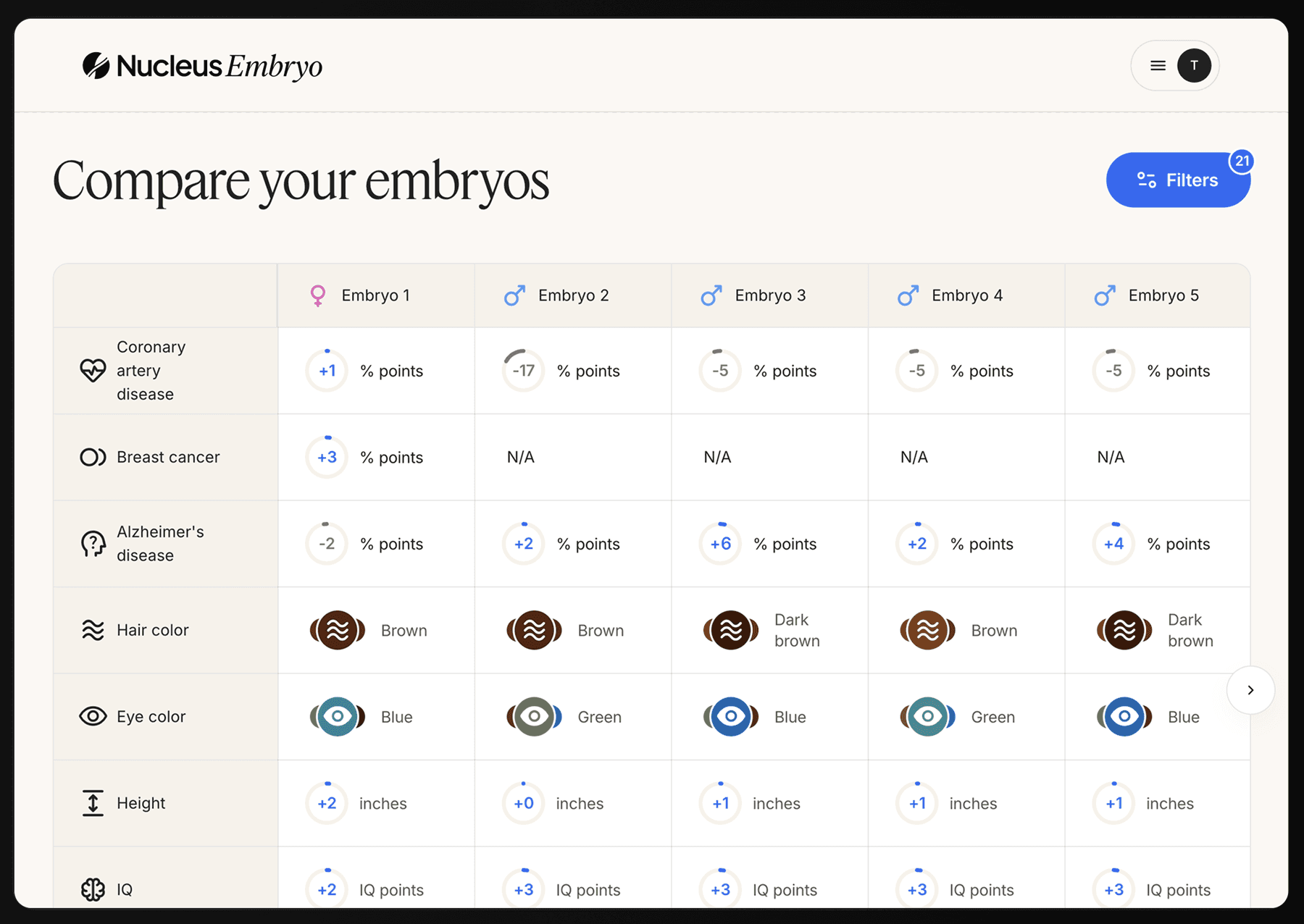
You will get guidance through appointments and lab results, so you can make choices aligned with your priorities and values. You can also access unlimited support from genetic counselors 24/7.
Book a call today to get started.
Featured image source: William Fortunato