

As fertility care evolves, so do the ways patients access it. Platforms like Maven Clinic and Progyny offer fertility benefits and virtual care that can make family building more accessible, personalized, and financially manageable.
While Maven Clinic and Progyny have helped thousands of people start or grow their families through employer-sponsored programs, they operate in different ways. Maven advertises itself as a virtual clinic offering comprehensive reproductive and family health care, while Progyny functions as a fertility benefit provider, focusing more on coverage and clinical partnerships.
This review compares Maven vs. Progyny across aspects that matter most to parents, including coverage, costs, care coordination, and real-world outcomes.
Maven vs. Progyny: An overview
Although Maven Clinic and Progyny often appear side by side in employer benefits lists, their service models are different.
Maven was built for continuous, end-to-end support, helping you stay connected to experts beyond traditional clinic visits. Progyny, on the other hand, simplifies the insurance side of fertility care, replacing complex coverage options with a more transparent system.
Maven functions as a care companion, while Progyny operates as a coverage gateway.
Here’s a quick overview of how they differ:
Feature | Maven Clinic | Progyny |
|---|---|---|
Type of service | Virtual fertility and family health platform | Employer-based fertility benefits manager |
Accessibility | Through employer plans of direct membership | Only through employer coverage |
Care model |
| In-person clinic access |
Network type | Virtual care providers and specialists | Partner fertility clinics and labs |
Availability | Available for employer plans | Available to employees with coverage |
Progyny vs. Maven models at a glance
Maven operates as a virtual clinic and benefit provider, connecting you to a digital network of specialists who offer guidance through secure video visits and 24/7 messaging. You receive personalized care plans and can consult with a wide selection of experts, including:
Reproductive endocrinologists
OB-GYNs and midwives
Lactation consultants
Pediatricians
Prenatal nutritionists and physical therapists
Career coaches
Developmental psychologists
Maven provides referrals based on your location and specific needs, and it can work alongside your existing fertility specialists and OB-GYN.
Progyny functions only as a fertility benefit manager that partners with employers to simplify access to care. If your company offers Progyny, you gain access to its nationwide network of fertility specialists.
Progyny has a unique coverage model called Smart Cycle, which values each treatment type as a portion of the Smart Cycle, rather than assigning a dollar amount to it. For instance, an IVF fresh transfer cycle is worth ¾ of a Smart Cycle, while an IUI would be ¼.
With Progyny, you get a dedicated care advocate who helps you understand your coverage plan, manage Smart Cycle usage, and coordinate appointments with in-network clinics.

Source: Tima Miroshnichenko
Maven Clinic vs. Progyny: 4 key aspects compared
To help you see which option may align better with your needs, we’ll compare Maven and Progyny across four important aspects:
Accessibility
Scope of coverage
Cost and coverage transparency
Patient outcomes
1. Accessing Progyny and Maven
Accessibility is one of the clearest distinctions between Maven and Progyny.
Maven Clinic offers two entry points:
Employer-sponsored coverage: If your company partners with Maven, you receive full fertility benefits, including a dedicated care advocate, unlimited virtual consultations, and personalized programs.
Pay-per-appointment You may book appointments with providers for a fee per appointment, connecting with specialists over video chat and text message.
This flexibility makes Maven accessible to anyone, while Progyny is exclusively available through employers. However, Progyny offers resources and a template letter to help you discuss fertility benefits with your employer. Since 64% of employers provide fertility benefits because employees have asked for them, Progyny aims to make this conversation less intimidating.

Source: Tessy Agbonome
2. Scope of coverage
Both Maven and Progyny promise end-to-end support, from preconception to menopause. The most significant difference is how you can access it: virtual accessibility with Maven and structured coverage and coordination with Progyny.
Here are their programs side by side:
Area of care | Maven Clinic | Progyny |
|---|---|---|
Preconception and fertility |
|
|
Pregnancy and postpartum |
|
|
Parenting and pediatrics |
|
|
Menopause and midlife health |
|
|
Maven is ideal if you want proactive support throughout your reproductive life, though not all employers offer all programs. Progyny’s offer is similar, but it focuses less on continuous coaching and more on structured clinical access.
Maven fills everyday gaps, offering second opinions, wellness guidance, and emotional support between appointments. Progyny fills financial gaps, ensuring treatments are covered, coordinated, and less fragmented.
3. Cost and coverage transparency
Maven’s pricing model for self-pay users is straightforward. You can pay per session, without a subscription or other recurring fees. Depending on the specialist, appointments last 10–40 minutes, and the prices typically range $25–$70. These appointments are not billable to insurance, but they are FSA and HSA-eligible, which offers some financial flexibility.
Costs are managed differently if you use Maven through your employer. You gain access to Maven Wallet, a digital tool that helps you track and manage reimbursements for fertility-related expenses, such as:
Medications
Clinic visits
Egg storage fees
Coverage scope varies by employer, so not all programs and reimbursement options are available to every employee.
This gives Maven an edge in transparency, as you always know what you pay, and employer-covered members can offset costs using clear reimbursement rules.

Source: Karola G.
Rather than setting dollar limits, Progyny uses the Smart Cycle system, which allocates a certain number of cycles to each member (depending on the employer’s plan). This approach is designed to prevent running out of funds mid-cycle.
Progyny states that standard fertility care services are included in the Smart Cycle benefit, but what happens if some tests or optional add-ons fall outside that benefit? It’s unclear how nonstandard outcomes are handled, such as if an IVF cycle needs adjustments, additional monitoring visits, or mid-cycle medication adjustments.
The system makes benefits easier to track in theory, but translating Smart Cycle usage into actual out-of-pocket costs can be challenging. You may benefit from requesting cost and Smart Cycle usage estimates, for a hypothetical IVF cycle with your clinic to understand what would be considered an add-on.
4. Patient outcomes
When evaluating fertility benefit platforms, clinical outcomes and real-world results matter as much as coverage support. Both Maven and Progyny report strong outcomes:
Outcome | Maven Clinic results | Progyny results |
|---|---|---|
Pregnancy rate per IVF cycle | 64% | 60.8% |
Both Progyny’s and Maven’s outcomes reflect their comprehensive support throughout fertility treatment via:
Customized treatment planning
Better embryo selection
Prioritizing single embryo transfers
Improved preconception care
Although both platforms show substantial improvements over national averages, your individual results will depend on the quality of care, your diagnosis, and the specific interventions used.

Source: Amina Filkins
Weighing your options: Maven or Progyny?
Both Maven Clinic and Progyny emphasize inclusivity, mental health support, and early interventions that can improve pregnancy and family-building outcomes.
Maven can easily scale fertility support internationally, while Progyny excels in structured coverage. Both are advantageous for employees, but fertility care can still feel scattered.
While standard preimplantation genetic testing is often included in coverage plans, more advanced screening options (that help choose healthier embryos) usually aren’t. This means you’re on your own meeting with multiple specialists, coordinating testing timelines, and handling lab reports that require additional interpretation.
If you want a clear and supportive fertility journey, try Nucleus IVF+ for a fully integrated approach. It helps unify clinical guidance, coordinated tests, genetic screenings, and personalized care into one end-to-end IVF program.
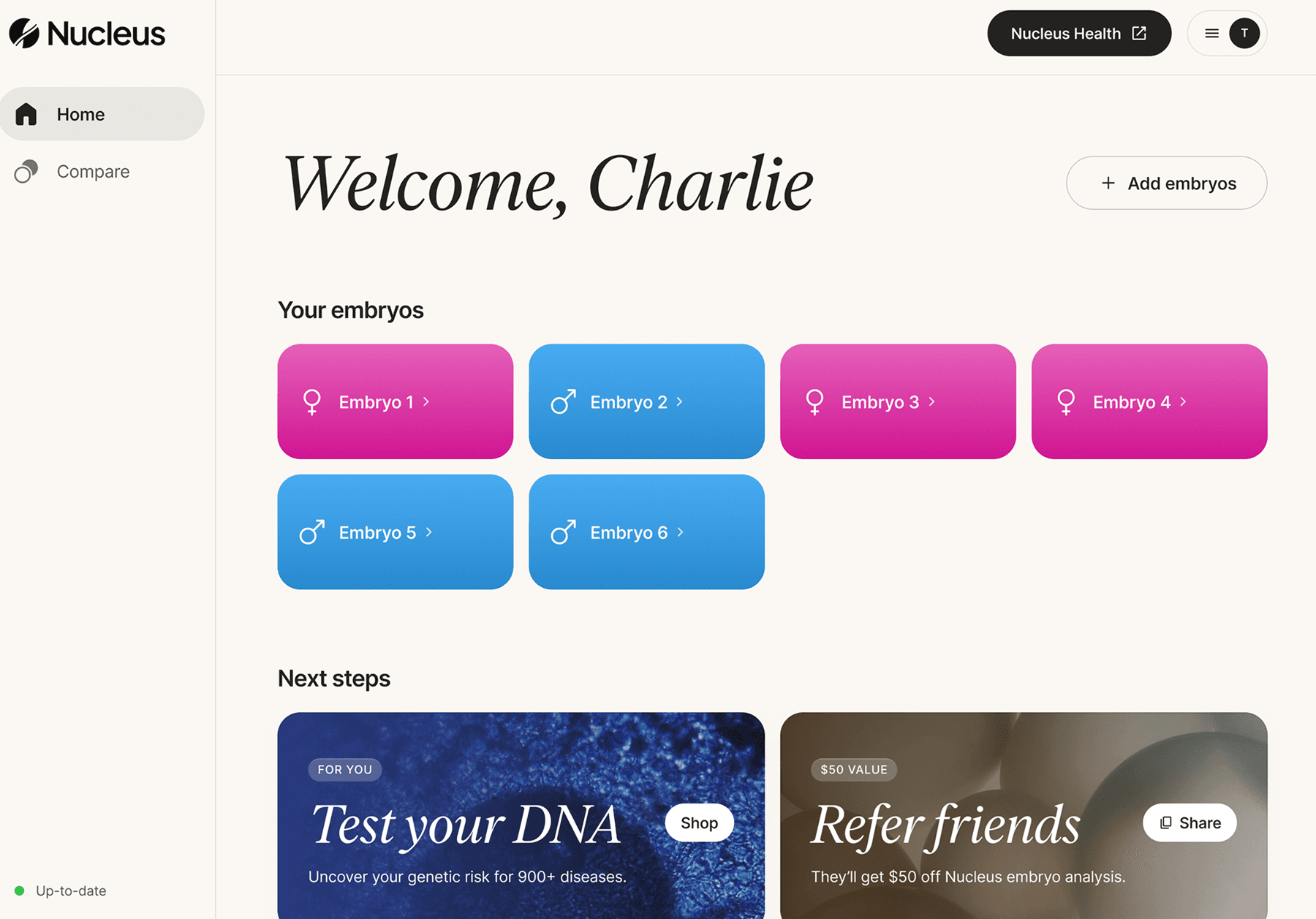
Streamline your fertility plan with Nucleus IVF+
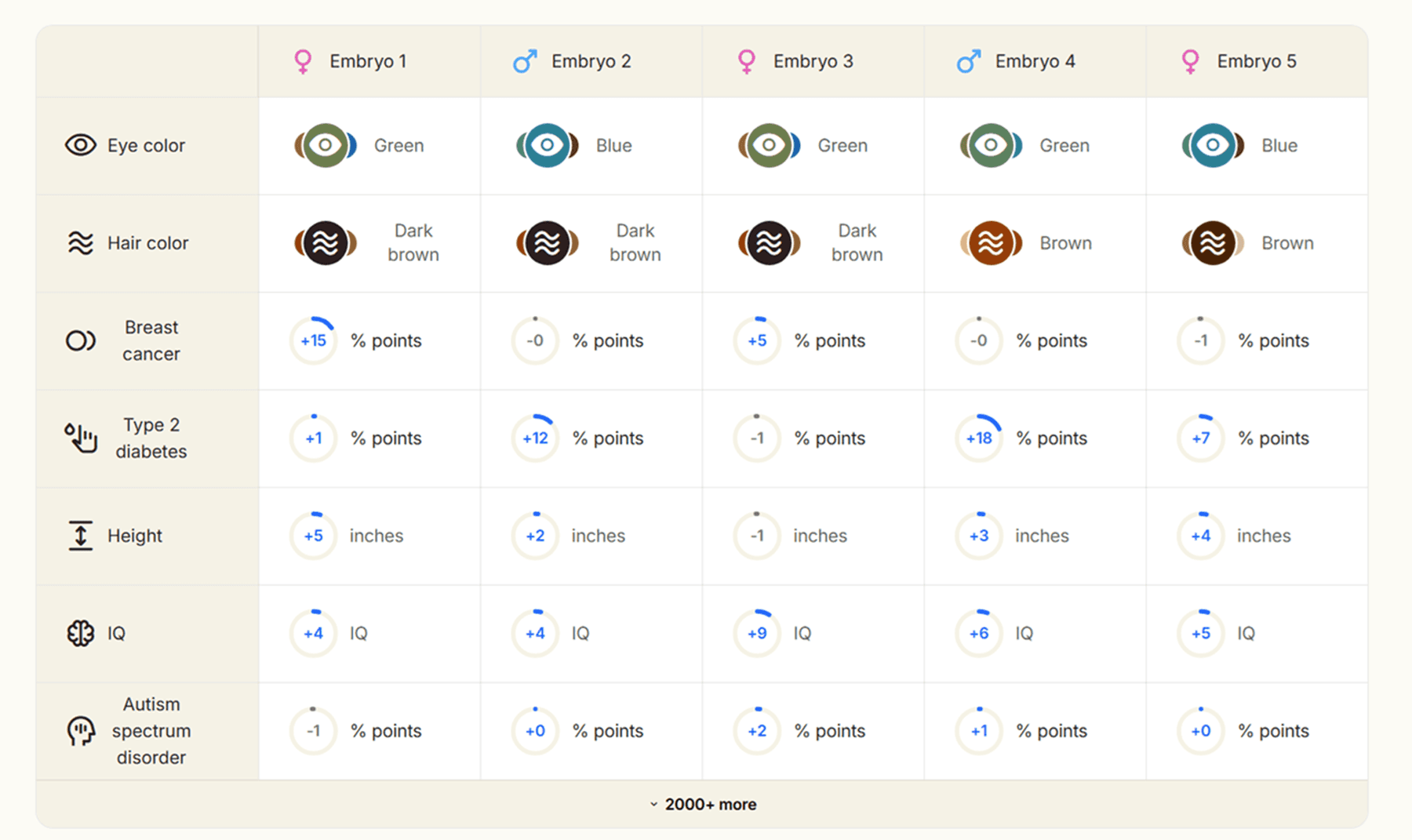
Nucleus IVF+ is an all-in-one IVF program that combines advanced genetic testing, clinical expertise, and compassionate guidance through all stages of fertility treatment. From preconception planning to embryo transfer and precision lifelong healthcare, the platform gives you the scientific data and actionable insights needed to support the healthiest possible future for your kid.
Nucleus can increase your chances of taking a baby home. Here’s what Nucleus IVF+ offers:
Feature | What’s included |
|---|---|
Personalized guidance at every step |
|
Genetic insights for you and your family |
|
Integrated care coordination |
|
Book an onboarding call for more information.
You may also like…
Featured image source: Karola G.