
San Francisco IVF success rates are often the first metric people review when evaluating a fertility clinic in the Bay Area. However, “success” in IVF can be defined and interpreted in different ways, and not all numbers tell you what really matters. Reported outcomes also vary by clinic, patient age, diagnosis, and treatment type, so it’s important to look beyond the headline figures.
This guide explains how to interpret San Francisco IVF success rates and identifies factors that can influence outcomes. We’ll also go through the reported outcomes of some of the popular clinics in the area.
How are San Francisco IVF success rates reported?
IVF success rates in the Bay Area are reported using standardized methods, similar to those used by clinics across the United States. Most clinics present their outcomes using guidelines from authoritative agencies and organizations like:
The U.S. Centers for Disease Control and Prevention (CDC)
Society for Artificial Reproductive Technology (SART)
Still, you’ll find that IVF success rates in San Francisco are reported using different definitions and denominators. That’s why the results of competing clinics may not always be comparable, even when the quality of care is. You should understand the key measures to interpret reported outcomes and make fair comparisons between clinics.

Source: Daria Obymaha
IVF clinic success rates are based on the following:
Measure | What it means | Why it matters |
|---|---|---|
Live birth rate | Percentage of cycles resulting in a living baby | The most meaningful success measure, reflecting the outcome parents hope for |
Clinical pregnancy rate | Pregnancies confirmed by ultrasound | An encouraging milestone (still carries the risk of miscarriage) |
Positive pregnancy test | Elevated hCG levels after transfer | An early indicator but doesn’t always lead to a viable pregnancy |
Per retrieval/per transfer | Reported either by all retrievals started or by cycles where an embryo was transferred | Per-transfer rates often look higher since they exclude canceled or failed cycles |
Cumulative success rate | Combines outcomes from all fresh and frozen transfers within a year of one egg retrieval | Offers a realistic view of your total chance of a live birth from one cycle |
Singleton live birth rate | Measures single healthy births rather than twins or triplets | Indicates safer outcomes for both the mother and the baby |
What influences IVF success rates in San Francisco
Bay Area IVF success rates are influenced by biological, clinical, and lifestyle factors, similar to those in other clinics. These factors include:
Patient demographics: Age is the strongest predictor of IVF success, with outcomes declining as egg quality and ovarian reserve decrease. Fertility diagnosis, uterine health, and donor use also influence an IVF cycle’s outcome.
Clinic practices: A clinic’s or lab’s embryo culture conditions, equipment quality, and embryologist expertise can make a measurable difference. Clinics with the best IVF success rates in San Francisco may use preimplantation genetic testing (PGT) to select embryos with high chances of implantation. Some offer donor and egg-freezing programs that can improve results.
Treatment innovations: Some clinics go beyond standard protocols and use advanced embryo testing options like polygenic screening and AI-assisted embryo selection. Other innovations include hormonal monitoring and personalized ovarian stimulation plans.
Lifestyle and local factors: The Bay Area’s fast-paced lifestyle and high cost of living can trigger emotional and financial stress for IVF patients. In many cases, complications from delayed family planning and limited recovery time after a failed cycle also impact fertility outcomes.
The good news is that San Francisco offers access to some of the most advanced reproductive medicine centers, giving parents opportunities to pursue innovative care that’s not available in many locations.
9 clinics with the best IVF success rates in San Francisco
Many fertility centers in San Francisco highlight patient-centric approaches to treatment, personalized plans, and advanced technologies that enable consistently high success rates.
Let’s look at the success rates reported by some of the most prominent fertility clinics in San Francisco:
CCRM San Francisco, Bay Area Center for Reproductive Medicine
Kindbody San Francisco
Reproductive Medicine Associates of Northern California
Pacific Fertility Center
HRC Fertility San Francisco
UCSF Center for Reproductive Health
Reproductive Science Center of the San Francisco Bay Area
Kaiser Permanente Center for Reproductive Health
We used the latest data published on CDC, SART, and occasionally the individual clinic pages to research success rates. We covered both large centers and reputable boutique clinics that differ in reporting volume and the number of cycles, so they’re not always directly comparable.
Another context worth understanding is that clinics that take on complex and previously unsuccessful cases may seem to have lower success rates compared to those that primarily treat straightforward IVF cases. This reflects ethical, inclusive care choices over selective reporting.
1. CCRM San Francisco, Bay Area Center for Reproductive Medicine
CCRM Fertility is a fertility services network known for its evidence-based approach and ongoing research in fertility science. The San Francisco location gives you access to the full CCRM network of specialists and services, from fertility testing and IVF to egg freezing, genetic testing, gestational surrogacy, and LGBTQIA+ family building.
Here are CCRM San Francisco’s latest available singleton live birth rates per intended retrieval:
Age group | Under 35 | 35–37 | 38–40 | Over 40 |
|---|---|---|---|---|
Live birth rates | 44.4% | 36.9% | 30.7% | 9.5% |

Source: Vlada Karpovich
2. Spring Fertility San Francisco
Spring Fertility’s San Francisco clinic combines a state-of-the-art embryology lab and surgery center with personalized care. Each patient receives support from a dedicated patient navigator, financial navigator, and assigned nurse throughout treatment. Its fertility services include:
Egg and embryo freezing
LGBTQ+ family building options
Individualized stimulation protocols
Donor and single-parent programs
Here are Spring’s success rates per intended retrieval:
Age group | Under 35 | 35–37 | 38–40 | Over 40 |
|---|---|---|---|---|
Live birth rates | 50.5% | 40.5% | 25.7% | 12.4% |
3. Kindbody San Francisco
Kindbody’s San Francisco location offers fertility and wellness services that make reproductive care more accessible, inclusive, and transparent. Many services here are covered by insurance plans. You can also access online consultation scheduling, virtual results, and care plans that integrate evidence-based care with individual well-being.
Below are Kindbody San Francisco’s success rates per intended retrieval:
Age group | Under 35 | 35–37 | 38–40 | Over 40 |
|---|---|---|---|---|
Live birth rates | 46.4% | 27.8% | 34.8% | Insufficient data |

Source: Harrison Haines
4. Reproductive Medicine Associates of Northern California
RMA Northern California is a San Francisco clinic that promises a modern IVF laboratory, well-maintained surgical center, and comprehensive suite of fertility services. It emphasizes convenience and continuity of care, supported by:
Artemis patient portal for direct communication with the care team
Financial counseling and insurance support
CareShare IVF refund guarantee program for qualifying patients
Below are RMA Northern California’s singleton live birth rates per intended retrieval:
Age group | Under 35 | 35–37 | 38–40 | Over 40 |
|---|---|---|---|---|
Live birth rates | 52.7% | 35.8% | 21.4% | 10% |
5. Pacific Fertility Center
Pacific Fertility Center (PFC) is a member of the Prelude Network, one of the largest fertility networks in the United States. The clinic has been active in the Bay Area for over 40 years and has a track record of delivering more than 13,000 babies. PFC houses Northern California’s largest independent egg bank and offers a full range of fertility services and emotional wellness support, such as guidance on:
Nutrition
Stress management
Mental health
PFC’s IVF success rates per intended retrieval:
Age group | Under 35 | 35–37 | 38–40 | Over 40 |
|---|---|---|---|---|
Live birth rates | 37.7% | 36.4% | 26.4% | 9.2% |
6. HRC Fertility San Francisco
HRC Fertility is another long-established network of fertility services, with 10+ locations in California, including one in San Francisco. The network offers tailored programs for individual fertility needs, such as:
Free IVF Clinical Trial
Recurrent Pregnancy Loss
LGBTQ+ Family Building
RI Witness
Geri® Time Lapse Imagery + CHLOE™ Analysis Tool
FemaSeed®
Surrogacy
You can also explore suitable financing options, promos, and standalone fertility treatment plans with HRC. The clinic maintains that its success rates reflect cases with different complexity levels, and not just ideal candidates.
Here’s the data available for live births per intended retrieval*:
Age group | Under 35 | 35–37 | 38–40 | Over 40 |
|---|---|---|---|---|
Live birth rates | 42.8% | 33.2% | 20.4% | 7.6% |
*The data is not San-Francisco-specific and reflects the HRC Fertility numbers available with the CDC at the time of writing.
7. UCSF Center for Reproductive Health
UCSF is consistently ranked among the top fertility clinics in California. It provides a comprehensive range of services, including:
IUI, conventional IVF, and IVF with ICSI
Reproductive surgery
UCSF boasts a state-of-the-art, CAP- and CLIA-certified, embryology lab, which incorporates advanced technologies such as:
Time-lapse video incubators
Microfluidics
AI-assisted embryo selection
Cutting-edge quality control systems
The clinic’s singleton success rates per retrieval:
Age group | Under 35 | 35–37 | 38–40 | Over 40 |
|---|---|---|---|---|
Live birth rates | 35.9% | 32.1% | 22.7% | 7.7% |
8. Reproductive Science Center of the San Francisco Bay Area
RSC has over 40 years of experience in reproductive science and provides a full spectrum of fertility services, working with parents from diverse backgrounds, cultures, and sexual orientations in an inclusive and supportive environment.
Here are the clinic’s reported success rates:
Age group | Under 35 | 35–37 | 38–40 | Over 40 |
|---|---|---|---|---|
live birth rates | 52% | 45.9% | 31% | 14% |

Source: Andrea Piacquadio
9. Kaiser Permanente Center for Reproductive Health
Kaiser Permanente offers a full scope of male and female fertility services. It features modern IVF lab facilities, staffed by experienced embryologists who use evidence-based techniques and cutting-edge equipment, including advanced incubators and laser systems.
The lab follows strict quality and safety protocols, ensuring optimal conditions for embryo development and patient safety. Kaiser’s success rates per retrieval are:
Age group | Under 35 | 35–37 | 38–40 | Over 40 |
|---|---|---|---|---|
live birth rates | 37.2% | 39.2% | 27.8% | 16.7% |
Average Bay Area IVF success rates
Average success rates for women under 35 in San Francisco range from 36.4% to 64.8% per IVF cycle. There’s roughly a 28-point spread between clinics, which highlights the importance of exploring each clinic’s patient profile, the complexity of cases it handles, and its reporting methodology.
How to compare IVF success rates for clinics in San Francisco
When evaluating IVF clinics, don’t focus solely on the highest reported success rates. Percentages can be misleading if you don’t consider the context behind them, such as:
Patient selectivity: See if the clinic turns away complex cases, which artificially inflates their success rates.
Sample size: Clinics that perform fewer IVF cycles may show higher or lower rates simply because the data set is smaller.
Year-to-year variation: Changes in staff, protocols, or lab technology can affect outcomes, so consider multi-year trends rather than relying on a single year’s report.

Source: Nappy
It is also important to check if a clinic favors single or multiple embryo transfers. Clinics that prioritize single embryo transfers may report lower per-transfer rates but more singleton live births.
Navigating clinic success rate data scattered across unequal comparison points is challenging. Consider working with health and fertility support platforms like Nucleus that can help you find clinics, testing, and care that corresponds with your:
Age group
Fertility diagnosis
Donor needs
With Nucleus, you get continuity of care in an integrated environment, so you don't have to assume the role of a project manager or analyst during your fertility treatment. The platform offers a one-stop Nucleus IVF+ program that helps you connect with the clinic best suited to your needs, undergo individualized treatment, and access advanced tools to select embryos with the best success and health potential. Explore this page to get started.
Nucleus IVF+: Personalized support for your IVF journey
Nucleus streamlines every step of your IVF experience, starting from connecting you with the right clinic. Nucleus IVF+ is built around a science-first approach to fertility care, where parents access evidence-based treatment planning, advanced genetic screening for self and embryos, as well as personalized decision support with embryo optimization software.
Here’s what this all-inclusive IVF package includes:
Clinic matching suited for your age, diagnosis, treatment goals, and location
Nucleus partner clinics are assessed through a proprietary methodology, which integrates quantitative IVF performance data and qualitative clinical perspectives. This dual-lens framework offers a more holistic measure of success, balancing data-driven outcomes with the depth of real-world patient and physician experience.
IVF cycle support through every stage, from stimulation to embryo transfer (ICSI included)
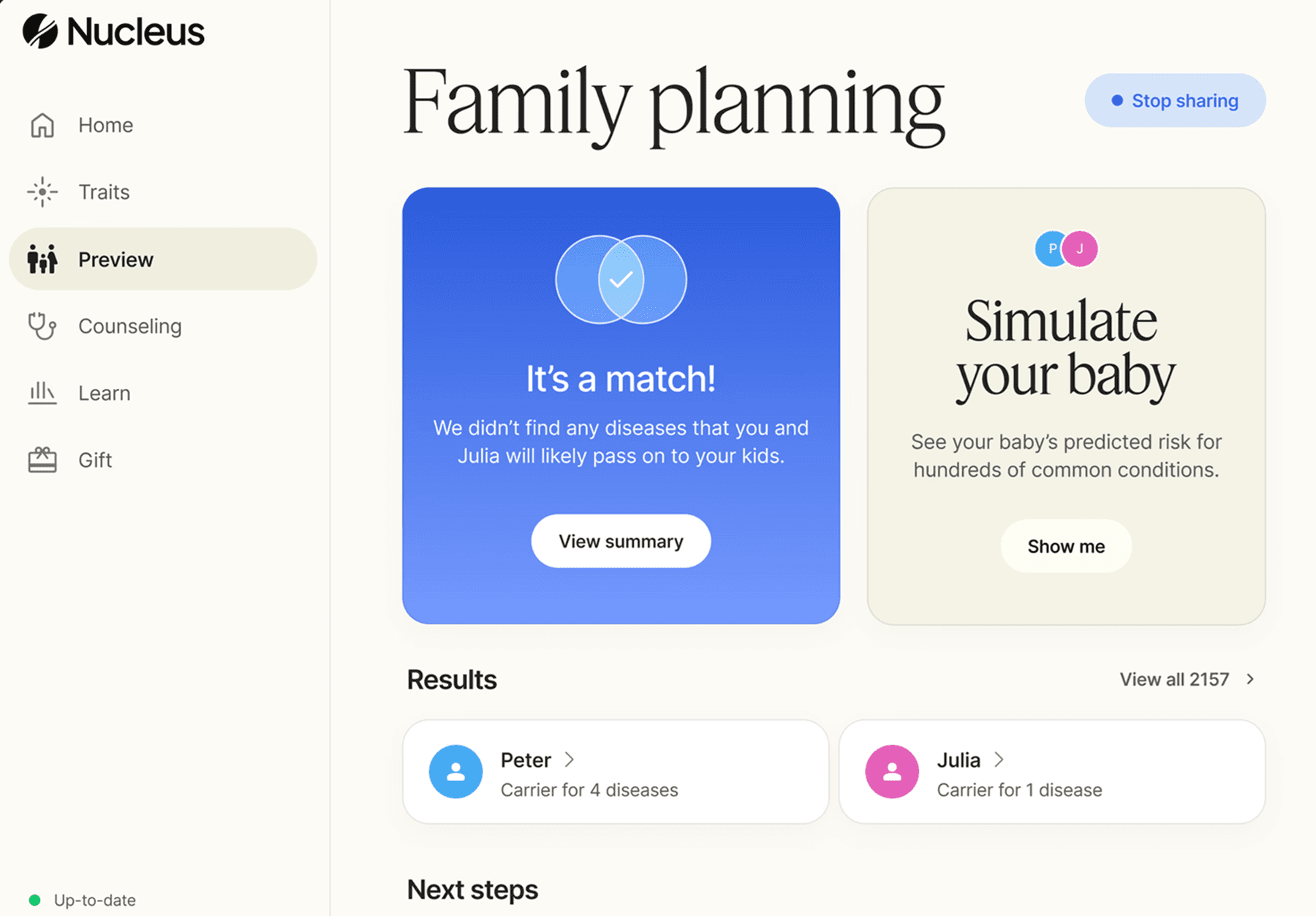
Nucleus Preview is a carrier screening test for over 2,000 inherited conditions to understand what you might pass down to your future child
You can also use the test to gain insights into your own genetic health and predicted risks
Donor matching network for a genetically compatible match
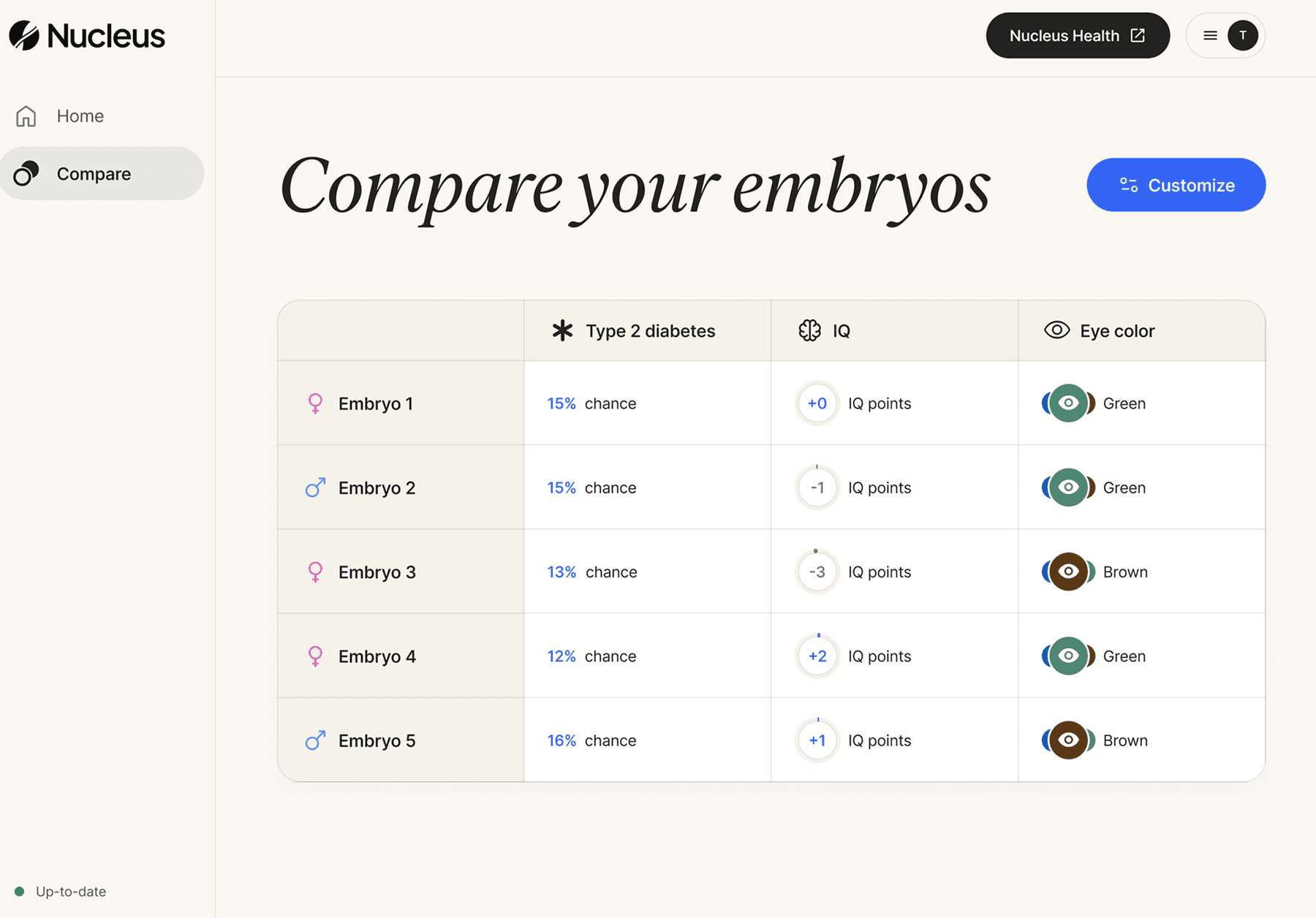
Nucleus Embryo software to compare your embryos based on genetic screening and get AI-assisted long-term health and well-being scores
All medications and consultations during treatment
Nucleus' platform is HIPAA-compliant and also offers unlimited consultations with genetic counselors, so you’re mentally prepared at every stage of your journey.
Book a call with the Nucleus team today to get started.
Featured image source: Anastasiya Gepp