

Gameto is a biotech startup that aims to revolutionize the way we treat infertility, menopause, and ovarian disease and make IVF a less exhausting process.
Instead of hormonal injections, Gameto is developing methods to mature eggs outside the body, and the results so far appear promising. For patients, this could mean less medication, fewer side effects, and a path to pregnancy that feels less like a medical marathon.
But although the startup has generated excitement in the scientific community and among investors, it’s still in its early years. Gameto clinical trials are ongoing, pricing remains unclear, and questions about long-term safety and access are far from resolved.
This review takes a closer look at the Gameto company. We’ll discuss the innovation, clinical evidence, and accessibility to help you understand what Gameto promises and what it might mean for you and the future of fertility care.
Gameto at a glance
Gameto is a U.S.-based biotechnology company founded in 2020 by entrepreneur Martin Varsavsky and physician-scientist Dina Radenkovic. Headquartered in New York and Austin, the company operates with a relatively small team of about 20 employees. Still, it has positioned itself as one of the most ambitious players in reproductive technology.
Gameto’s mission is to redefine fertility care through cell engineering and in vitro biology, developing technologies that make IVF and egg freezing safer, more accessible, and less tedious for patients.
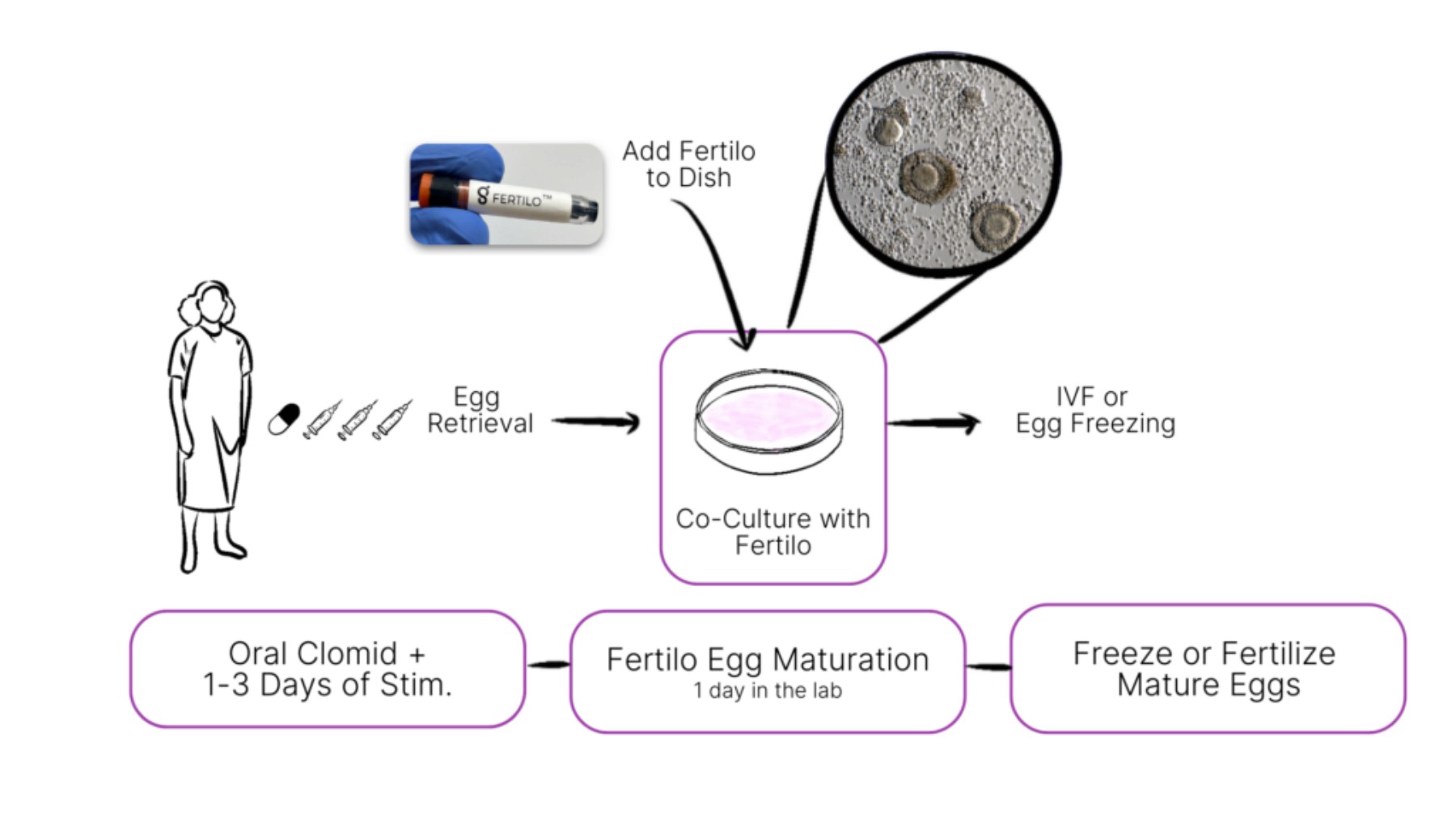
The company is best known for its Fertilo platform, a first-in-class approach to maturing eggs outside the body, which is currently advancing through late-stage clinical trials.
Source: Gameto
Despite its small size, Gameto has attracted substantial confidence from the biotech and investment communities. To date, it has raised over $127 million in venture capital, with support from leading investors, including:
Insight Partners
Two Sigma Ventures
Gaingles
Bold Capital Partners
RA Capital Management
Its most recent $44 million Series C round in 2025 signals strong investor belief in the company’s pipeline and its potential to scale globally.
Gameto startup review: A closer look at key aspects
Gameto represents a mix of bold innovation and unproven potential. To better understand where the company shines and where it still has room for improvement, we’ll break down this review into four distinct areas:
Gameto fertility and reproductive health programs
Innovation and scientific approach
Clinical evidence
Gameto IVF accessibility
1. Gameto fertility and reproductive health programs
Gameto is built on cell engineering technology that originated in geneticist George Church’s lab at Harvard. Instead of tweaking existing hormone treatments, the company is trying to rewrite the biology of female reproduction by creating lab-grown ovarian support cells.
This approach is the center of their three main programs:
Program | Focus | Goal |
|---|---|---|
Fertilo | IVF and egg freezing | Gameto’s leading program is designed to:
|
Deovo | Ovarian disease | Develop organoid models for:
|
Ameno | Menopause | Cell-based therapy to:
|
The Gameto Fertilo program has already produced early results, starting with the first healthy baby born in Peru in December 2024 through this method. The company has also won a $10 million ARPA-H award to advance its menopause program, demonstrating that regulators and funders recognize the value of this work.
However, the company is still in its early days. Fertilo is only entering Phase 3 trials in the U.S., so FDA approval is still a hurdle. Published, peer-reviewed results are scarce, and the program’s scalability and eventual cost are uncertain.

Source: Gameto
It’s impressive that a small biotech company has managed to conduct nine international studies with only a three-person clinical team. However, the lean setup also makes its operations vulnerable to scaling and other risks.
2. Gameto’s innovation and scientific approach
Instead of relying on more medication and slightly improved hormone protocols, Gameto grows ovarian support cells from stem cells in the lab and uses them to recreate the natural environment of the ovary.
In vitro maturation (IVM), the process of maturing eggs in a lab rather than inside the body, is not a new concept. It has been around since the early 1990s, and as of 2021, it’s no longer considered experimental, and thousands of babies have been born using IVM worldwide.
With Fertilo, Gameto builds on traditional IVM by using engineered ovarian support cells, aiming to:
Make egg maturation faster and more efficient
Reduce the need for high doses of hormones
Lower side effects and stress
Improve egg quality and embryo outcomes
Increase the chance of pregnancy
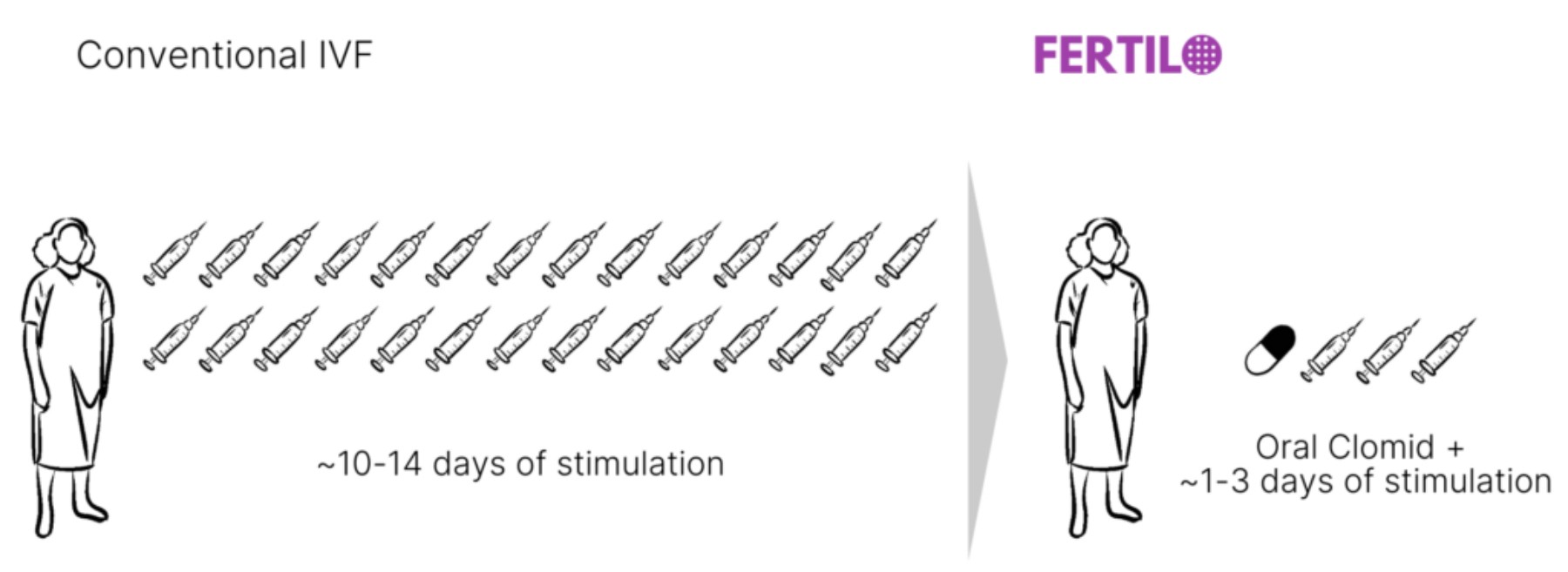
Traditional IVF requires two weeks of daily hormone injections to force eggs to mature in the body. It’s effective but taxing due to side effects, time required, and risk of ovarian hyperstimulation syndrome.
The Gameto Fertilo cycle only requires one to three days of hormone injections (about 80% less than conventional IVF), followed by an egg retrieval, after which eggs mature outside the body, in a dish, using engineered support cells that simulate the young, healthy ovarian environment. This could shrink the egg-maturation process from 14 days to 3 days.
Beyond fertility, Gameto is exploring the same science for menopause and ovarian disease. Its Ameno program aims to smooth the hormonal rollercoaster of menopause by using cell therapy to restore balance. Instead of a sudden shift, the goal is to make the process more gradual and less distressing.

Source: Gameto
The Deovo program is developing organoid models of the female reproductive system, which could help researchers design drugs specifically for women.
This innovation addresses problems that mainstream medicine has neglected for decades. However, it’s worth noting that cell therapies are challenging to transition from the lab to the clinic.
3. Fertilo clinical evidence
In small-scale clinical studies, Fertilo demonstrated higher egg maturation rates, better embryo quality, and stronger pregnancy outcomes compared to traditional in vitro maturation (IVM). The following table offers more details:
Outcome | Fertilo | Conventional IVM |
|---|---|---|
Oocyte maturation rate | 70% | 52% |
Pregnancy rate per cycle after the first transfer | 44% | 20% |
Patients with ≥1 viable, chromosomally normal blastocyst | 8 out of 10 | 3 out of 10 |
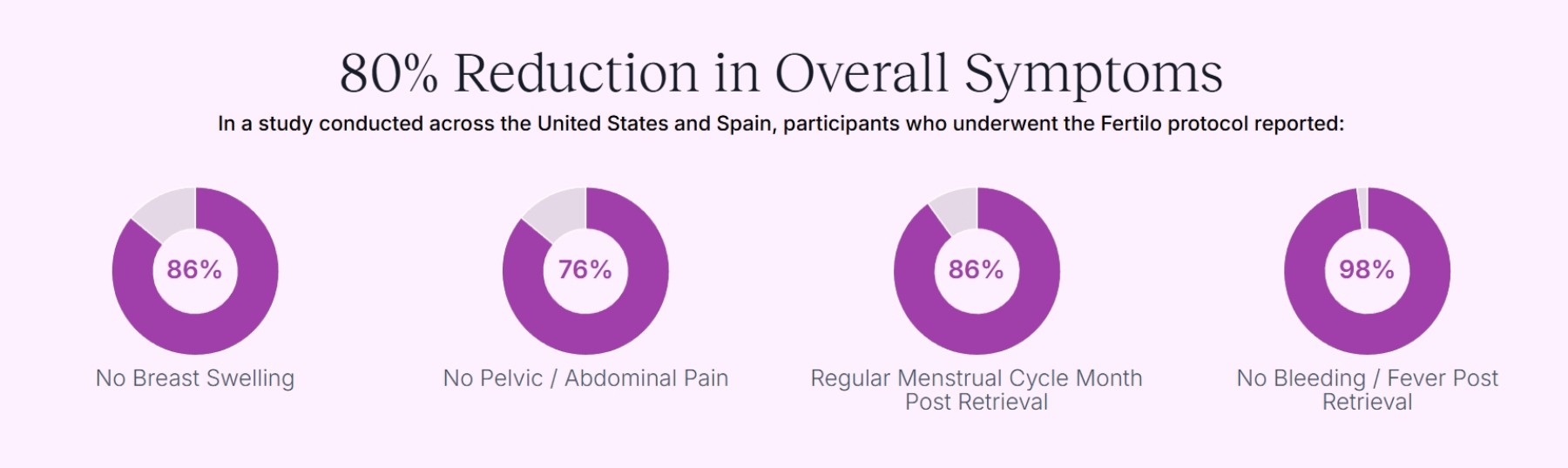
Beyond lab results, patients report a significantly gentler experience:
80% reduction in overall symptoms compared to conventional stimulation cycles
86% reported no breast swelling
76% had no pelvic or abdominal pain
98% had no bleeding or fever after retrieval
92% had no severe pain
Patients who experienced both Gameto’s Fertilo protocol and conventional IVF were asked whether they would repeat each cycle. While some patients were willing to repeat both, more reported a clear preference for Fertilo: 92% said they would choose Gameto IVF protocol again, compared with 77% who would repeat a conventional cycle.
Source: Gameto
So far, five Gameto babies have been born, and over 20 pregnancies have been recorded.
Still, the current evidence is based on small studies. The ongoing Phase 3 trial, with FDA oversight and rigorous design, will be critical in determining whether Fertilo can truly rival or surpass conventional IVF in real-world settings.
4. Gameto IVF accessibility
Gameto IVF protocol is not yet approved in the U.S., but it is already cleared for commercial use in several countries:
Austrailia
Argentina
Peru
Mexico
Gameto offers comprehensive training resources for clinics, and its technology facilitates seamless integration into existing IVF processes.
Although there’s no information about the cost of the Gameto fertility treatment option yet, the company promises substantial savings on otherwise prohibitive IVF expenses. For example, hormone medications alone can cost anywhere from $4,000 to $7,000 per cycle, so Fertilo might help mitigate this.
Additionally, since early results show better quality embryos and increased pregnancy rates per cycle, it’s reasonable to expect financial savings, as well as emotional and physical relief, from needing potentially fewer cycles and an overall shorter IVF timeline.
Note: Gameto doesn’t yet account for IVF embryo screening (PGT-A, PGT-M, PGT-SR, and PGT-P), which is an essential part of modern IVF. Learn more about these options in our guides:
The verdict: Where Gameto excels and where questions remain
Gameto is an ambitious biotech startup that has taken a bold approach to reproductive medicine. Its Fertilo program shows the potential to make IVF and egg freezing faster, safer, and less demanding for patients, while Deovo and Ameno programs address critical gaps in ovarian disease and menopause care.
The company’s small team has executed international studies and garnered significant investor and regulatory support, which attests to its credibility and resourcefulness. But some questions remain around patient-facing cost, clinical scalability, and long-term success outcomes, especially in a real-world setup where a cell-engineered approach to IVF needs more research.
Source: Gameto
Here is a quick look at Gameto's strengths and weaknesses:
Strengths | Weaknesses |
|---|---|
|
|
Remember that IVF is more than a scientific process. Success depends on multiple factors, including your current health, genetics, lifestyle, and the emotional resilience needed to navigate this demanding procedure.
With so much information to consider and new developments emerging constantly, future parents can benefit from concierge-like support to help design a plan that maximizes their chances of a successful pregnancy. That’s where Nucleus IVF+ comes in.
Nucleus IVF+ provides personalized guidance, clinic and donor matching assistance, and advanced genetic insights throughout every stage of IVF, making it a seamless experience for you.
How Nucleus IVF+ streamlines IVF while improving success
Nucleus IVF+ guides you through IVF with expert support and actionable insights, from clinic selection and choosing the best IVF approach to embryo transfer and beyond. It’s the first IVF package that blends genetic optimization and a human-centric approach.
The process begins with preconception genetic screening for both parents with Nucleus Preview. This comprehensive carrier screening checks for over 2,000 inherited conditions you could unknowingly pass on to your child. Understanding your genetic makeup and potential risks can help you plan the next steps and inform your decision regarding embryo screening.
You gain access to 24/7 support from licensed genetic counselors throughout your treatment. The package covers one IVF cycle with all testing, medication, and consultations included.
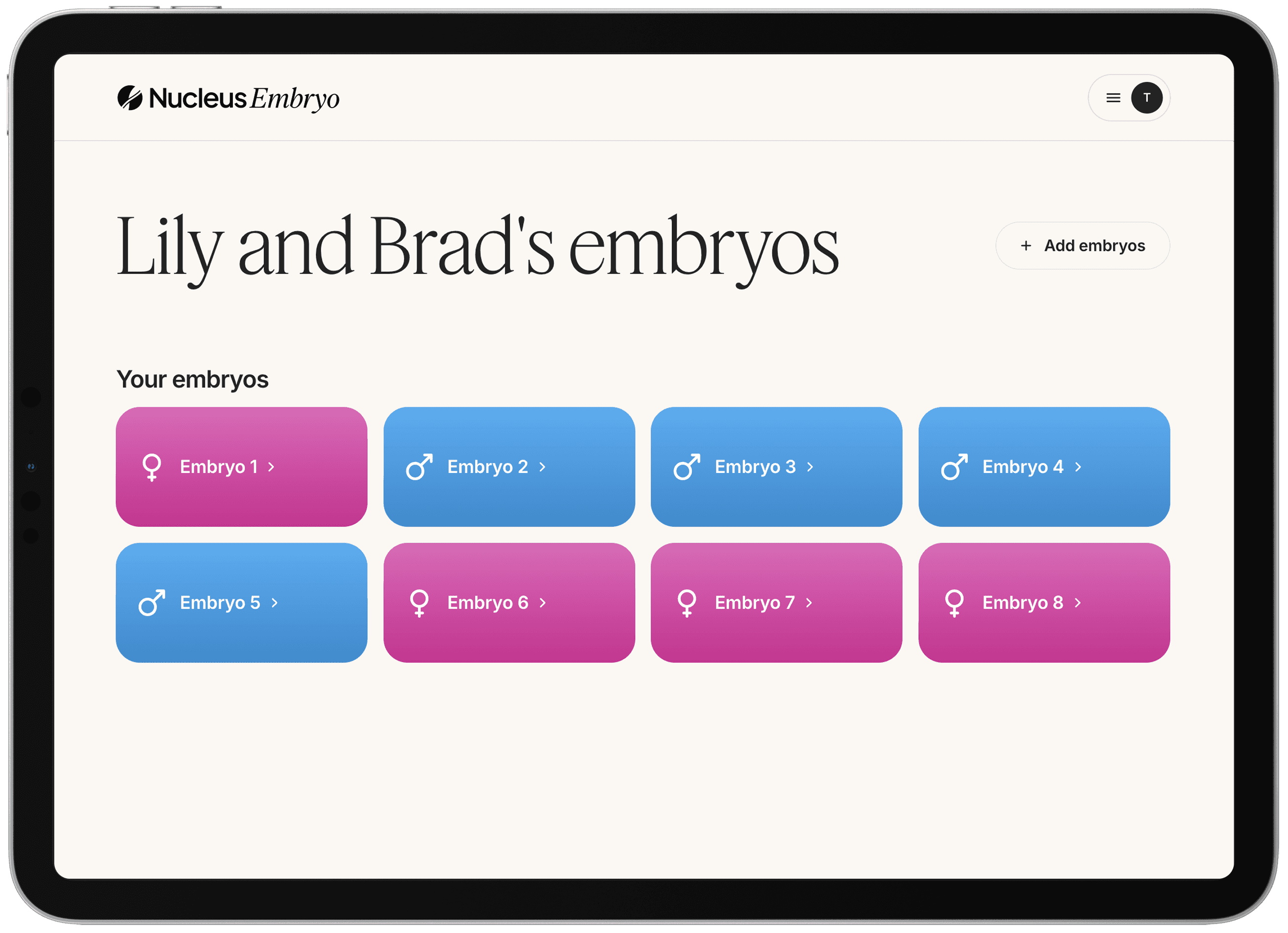
Nucleus IVF+ includes preimplantation genetic testing (PGT), which screens embryos before transfer, helping you improve the chances of a positive pregnancy and a healthy baby. It also offers a genetic optimization platform that enables you to compare and choose embryos for transfer based on factors like long-term health risks and well-being traits.
Book a consultation with our team to get started today.
You may also like…
Featured image source: Gameto