Established in 1986, IVF Florida Reproductive Associates has grown into one of the largest fertility networks in the state, operating across seven locations and offering an extensive range of fertility services and diagnostic procedures. It’s reputable and known for its transparent success reporting, but is it the right fit for your needs?
This guide examines the network’s care model spanning areas like:
Experts available across clinic locations
Reported success data and patient experiences
Financial considerations and accessibility
Let’s first briefly revisit the fertility landscape in Florida to contextualize what services you can access.
Legal considerations for IVF clinics in Florida
Unlike many U.S. states, Florida doesn’t mandate fertility insurance coverage for most group plans. Coverage largely depends on specific insurance policies and employer benefits. Private insurance plans may also impose limits on patient age, number of cycles, coverage of fertility medications, or require preauthorization or a physician referral. It’s best to review coverage details carefully before starting treatment.
Fertility preservation services are better supported in terms of insurance coverage. As of January 2026, all state group health insurance plans must provide coverage for medically indicated fertility preservation services without preauthorization.
Additionally, under House Bill 677, all plans issued or renewed on or after January 1, 2026, must cover standard fertility preservation services for cancer patients or individuals facing other fertility-affecting medical conditions.

Source: Jonathan Borba
For those considering third-party reproduction, surrogacy services are available to couples and single-by-choice parents regardless of marital status or sexual orientation. Agencies must obtain security background reports and conduct medical and mental health evaluations for surrogates, but the parental status after surrogacy can still be subject to legal review.
The use of donor eggs and sperm is also legally permitted, along with reasonable compensation for donors.
IVF Florida Reproductive Associates: Service factors to consider
With more than four decades of experience and a fertility team of board-certified reproductive endocrinologists, IVF Florida Reproductive Associates (IVF Florida) serves patients from across the state and beyond. In addition to fertility clinics in Pembroke Pines and Boca Raton, the network encompasses five more locations across Florida:
Coral Gables
Jacksonville
Jensen Beach
Jupiter/Palm Beach Gardens
Margate

Source: Yan Krukau
IVF Florida is a member of US Fertility, one of the largest fertility networks in the U.S., including reputable clinics such as RMA and Shady Grove Fertility. Being part of a fertility network of this scale expands access to research insights and innovation initiatives that should optimize care and improve patient outcomes. Large-network support may also expand access to patient communities and make treatments more accessible through financial programs.
The clinic also participates in the FertilityEquity™ initiative and has completed a program to help providers deliver more inclusive care to diverse patient groups.
Let’s further explore IVF Florida across six service aspects:
Care team
Service options
Inclusivity
Financial assistance options
Patient experiences
1. Care team
IVF Florida’s care team includes specialists across multiple locations, with expertise in various disciplines of reproductive medicine.
Dr. Daniel R. Christie, part of the medical team at IVF Florida in Pembroke Pines, is a board-certified reproductive endocrinologist with extensive experience in in vitro fertilization (IVF), in vitro maturation (IVM), and hormone replacement therapy (HRT).
His research focuses on frequent issues that plague female reproductive health, including ovarian cancer and hormonal imbalance. Dr. Marcelo Barrionuevo and Luis R. Hoyos also care for patients in Pembroke Pines.
Dr. Barrinuevo, who is additionally available at the Margate location, specializes in complex infertility diagnoses. Dr. Hoyos focuses on patients at the Coral Gables location and offers expertise in reproductive genetics. Dr. Laurice Bou Nemer also joins him as an expert in hormonal regulation and reproductive immunology, exploring how various lifestyle and clinical factors can influence fertility treatment outcomes.
At the Boca Raton and Jupiter locations, Dr. Zoran J. Pavlovic provides care with a focus on LGBTQ+ family-building solutions, endometriosis management, and fertility preservation procedures. Dr. Vanessa N. Weitzman specializes in diminished ovarian reserve and has a particular interest in egg freezing, cryopreservation methods, and IVF.
Dr. Kari Sproul von Goeben provides care at the Jacksonville location. She has been recognized as one of the top doctors in the area with two decades of experience in reproductive endocrinology and neuroscience.
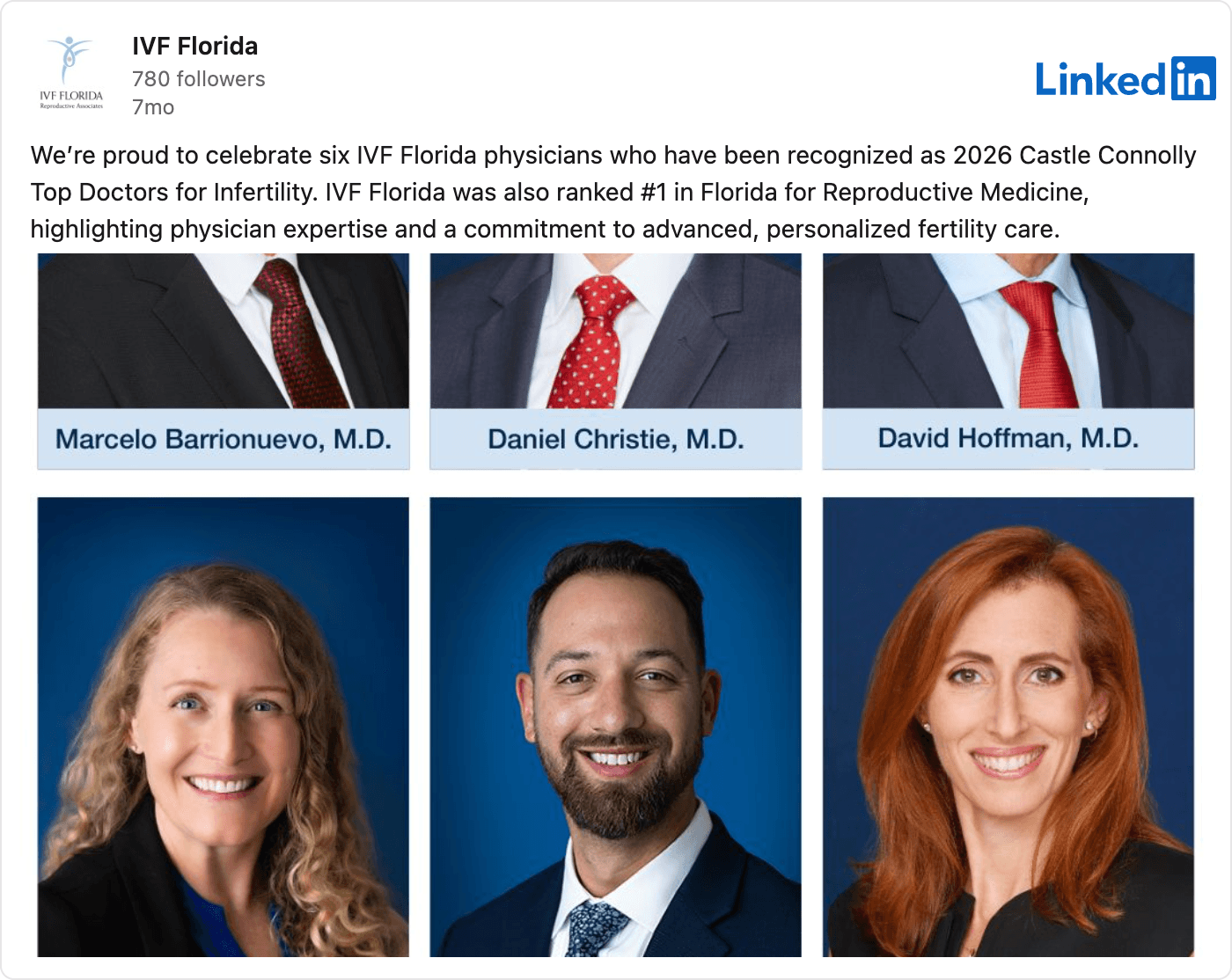
Full post: LinkedIn
2. Service options
Here’s a breakdown of the core fertility services and associated procedures available at IVF Florida:
Service | Details |
|---|---|
Infertility diagnostics | Main fertility assessment procedures include:
|
IVF |
|
| |
Fertility preservation through egg freezing |
|
|
You can also ask your care team about integrating tools like Nucleus Preview and Nucleus Embryo into your IVF process. Nucleus Preview supports carrier screening and genetic risk assessment before treatment, while Nucleus Embryo helps parents undergoing IVF select embryos with the highest potential for health and well-being.
3. Inclusivity
IVF Florida supports diverse family-building paths, including options for patients undergoing cancer treatment. The facility’s dedicated OncoFertility program supports fertility preservation treatment for patients undergoing invasive treatments such as chemotherapy that can significantly impact fertility. In such situations, procedures such as egg and embryo freezing through vitrification allow patients to pursue parenthood after cancer therapy.

Source: Lawrence Crayton
The clinic also addresses unique family-building scenarios, offering diverse options for both single parents and LGBTQ+ individuals. Same-sex female couples may explore IUI, IVF, fertility preservation, and reciprocal IVF.
For same-sex male couples, IVF Florida offers IVF with donor eggs and a surrogate, along with legal support for surrogacy. Options for transgender and gender-diverse patients include surrogacy, IUI, IVF using one partner’s or donor eggs or sperm, and fertility preservation before gender-affirming procedures.
Bonus read: Explore more guides on clinic options and fertility care costs in Florida:
4. Financial assistance options
IVF Florida provides multiple pathways to manage treatment costs, including insurance, financing, and refund programs coordination.
IVF Florida provides financial and insurance guidance through a team of financial educators and accepts plans from multiple providers, including Aetna, Network Blue, Cigna, Humana, First Health Network, and Preferred Patient Care.
For employer benefit programs, the clinic works with five key providers:
Know that although state-level insurance coverage for fertility treatments isn’t mandated in Florida, your insurance plan or employer benefits may cover part or all of the costs, depending on the policy.
IVF Florida also partners with Fertility Access, offering a range of IVF refund and multi-cycle programs with flat rates. Options include the 100% refund program, covering up to three egg retrievals and unlimited frozen embryo transfers. Eligible patients can claim a full refund if IVF is unsuccessful after these attempts.
A 50% refund bundle offers a partial refund if IVF fails using eggs from two retrievals, while the multi-cycle discount program allows for two or three egg retrieval attempts with unlimited frozen embryo transfers.
Through a partnership with CapexMD, IVF Florida offers access to monthly financing plans that don’t affect your credit score and include a quick prequalification process.
5. Success rates
Because IVF success rates vary by age, treatment type, and cycle factors, we need to review clinic-reported success rates with the awareness that patient profiles can heavily influence outcomes.
Here’s an overview of the latest reported data for live births per intended egg retrieval across all embryo transfers, using the patient’s own eggs:
Patient age | <35 | 35–37 | 38–40 | 41–42 | >42 |
|---|---|---|---|---|---|
Number of cycle starts | 299 | 287 | 286 | 173 | 139 |
Singleton births | 37.1% | 25.1% | 18.2% | 7.5% | 1.4% |
Live births | 37.5% | 25.1% | 18.2% | 7.5% | 1.4% |
Term births | 88.4% | 94.4% | 92.2% | 13/13 | 1/2 |
As reflected in the table, live birth rates are highest for patients under 35 and decline progressively with age, aligning with broader IVF trends in the U.S.
The table below provides a breakdown of live birth data per thaw for additional transfers or long-term freezes, using the patient’s own eggs:
Patient age | <35 | 35–37 | 38–40 | 41–42 | >42 |
|---|---|---|---|---|---|
Number of thaw procedures | 91 | 85 | 75 | 34 | 28 |
Singleton births | 46.2% | 44.7% | 36.0% | 58.8% | 28.6% |
Live births | 47.3% | 44.7% | 36.0% | 58.8% | 28.6% |
Term births | 74.4% | 73.7% | 74.1% | 80.0% | 6/8 |
You can get varying results with frozen embryo transfers, depending on embryo quality and freezing protocols. IVF Florida offers personalized guidance on embryo freezing depending on the available fertility window for the patient. Embryos are frozen in liquid nitrogen at ultra-low temperatures, which can help maintain quality for even decades.
6. Patient experiences

Source: Yan Krukau
IVF Florida holds a 7.4 FertilityIQ score across 110+ reviews, with operations rated 8.1, nursing team 8.3, and LGBTQ+ care 8.9. One reviewer shared that they felt informed throughout the process through the IVF Florida portal, where they could submit questions. They also noted that the staff was helpful and friendly in patient interactions. The patient particularly praised the approach of Dr. Hoyos during the emotionally charged experience of IUI, as well as his professionalism and expertise.
Another patient cited the accounting department's efficiency and the streamlined insurance verification process. They also reported feeling seen and heard during treatment and praised the medical staff's bedside manner.
Some patients report a less positive experience, particularly about the treatment being overly standardized and impersonal, with limited feedback on a failed cycle. However, these are isolated cases and may not reflect the care conditions at every Florida location. Consider discussing care expectations and communication preferences with your team early on to have an aligned IVF experience.
How to get the best out of fertility care with IVF Florida
IVF Florida is an established network with a long-standing reputation in the state, and a wide range of fertility services designed to support patients throughout the fertility journey.
In large-scale network settings, it is not uncommon for patients to have limited in-person contact with physicians, with aspects of care managed routinely by the broader medical team. The good news is that you can access more personalized IVF care and embryo screening options by integrating genetic science.
For some patients, IVF involves multiple decision points, often around how to personalize care and embryo selection to have a healthier baby. This is where genetic insights can directly shape outcomes. Genetic testing, when integrated into fertility care, can help you map what genetic risks and traits you can pass on to your children or which embryo aligns best with your family planning needs. Fertility support platforms like Nucleus offer tools that can help translate such genetic information into actionable, parent-friendly data.
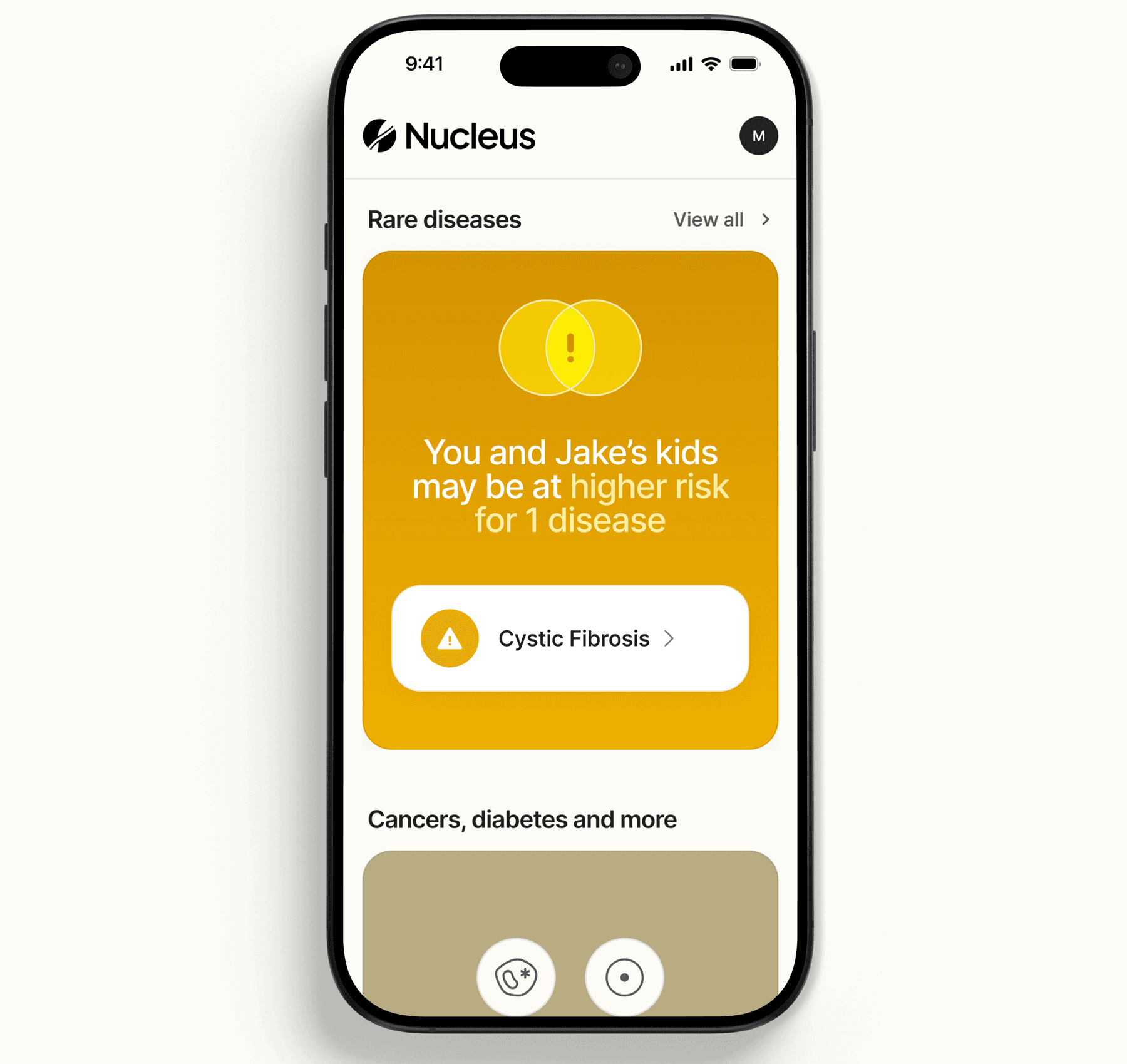
Nucleus Embryo: A new lens to guide embryo decisions
Historically, for many people going through IVF, embryo screening ended with a simple label: “normal” or “abnormal.” But when you have two or more healthy embryos to choose from, that binary answer may not be enough.
Nucleus Embryo is the first genetic optimization software that screens for long-term health, longevity, and traits. It uses the DNA your clinic has already collected to analyze each embryo’s full genetic profile, offering a deeper look into your potential child.
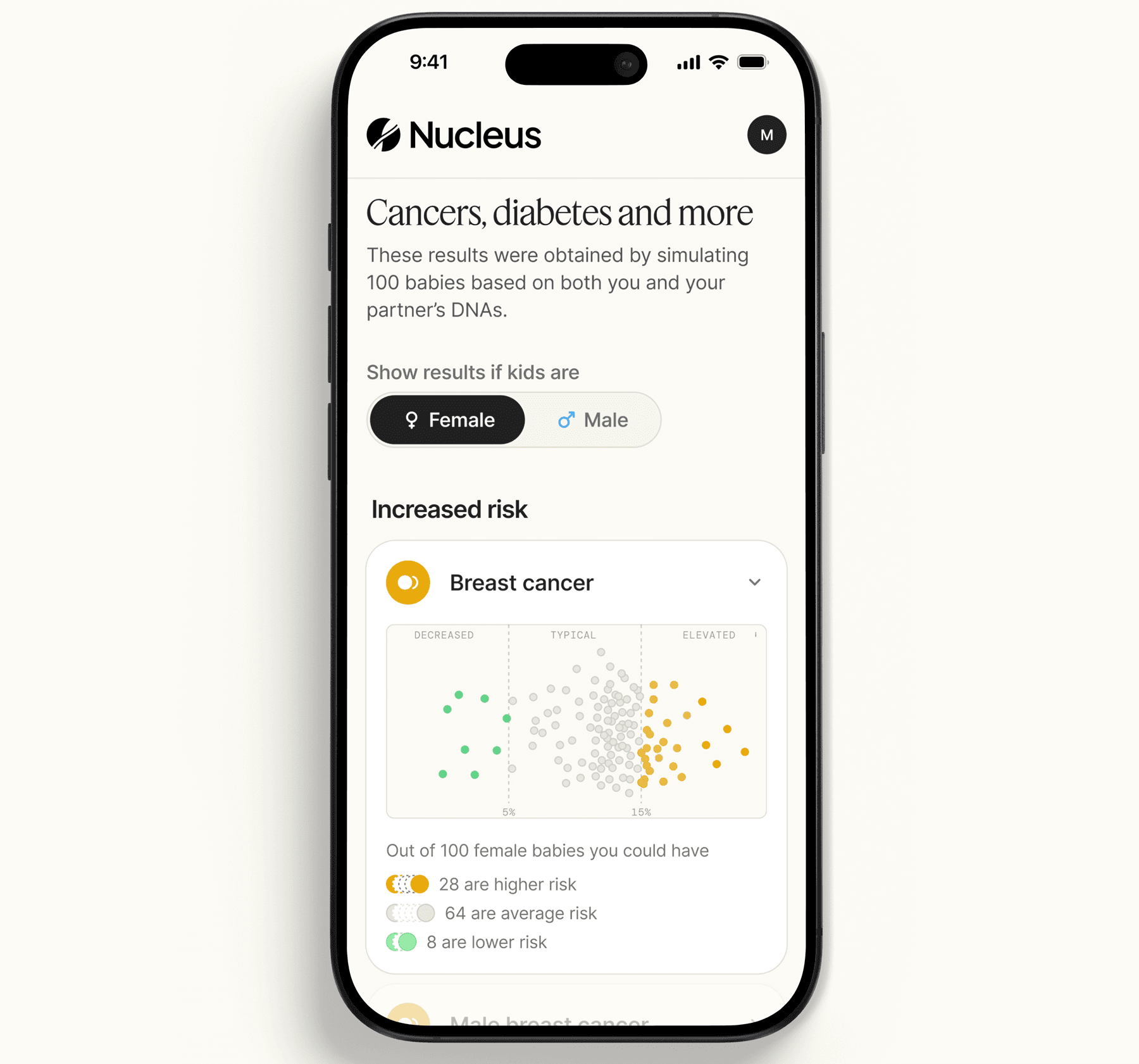
Nucleus uses your existing embryo data to analyze potential embryo health for complex, late-onset conditions like type 2 diabetes, coronary artery disease, ADHD, and depression. It also includes a carrier screening that assesses over 2,000 genetic factors and diseases, including physical and well-being traits like eye color, height, and IQ.
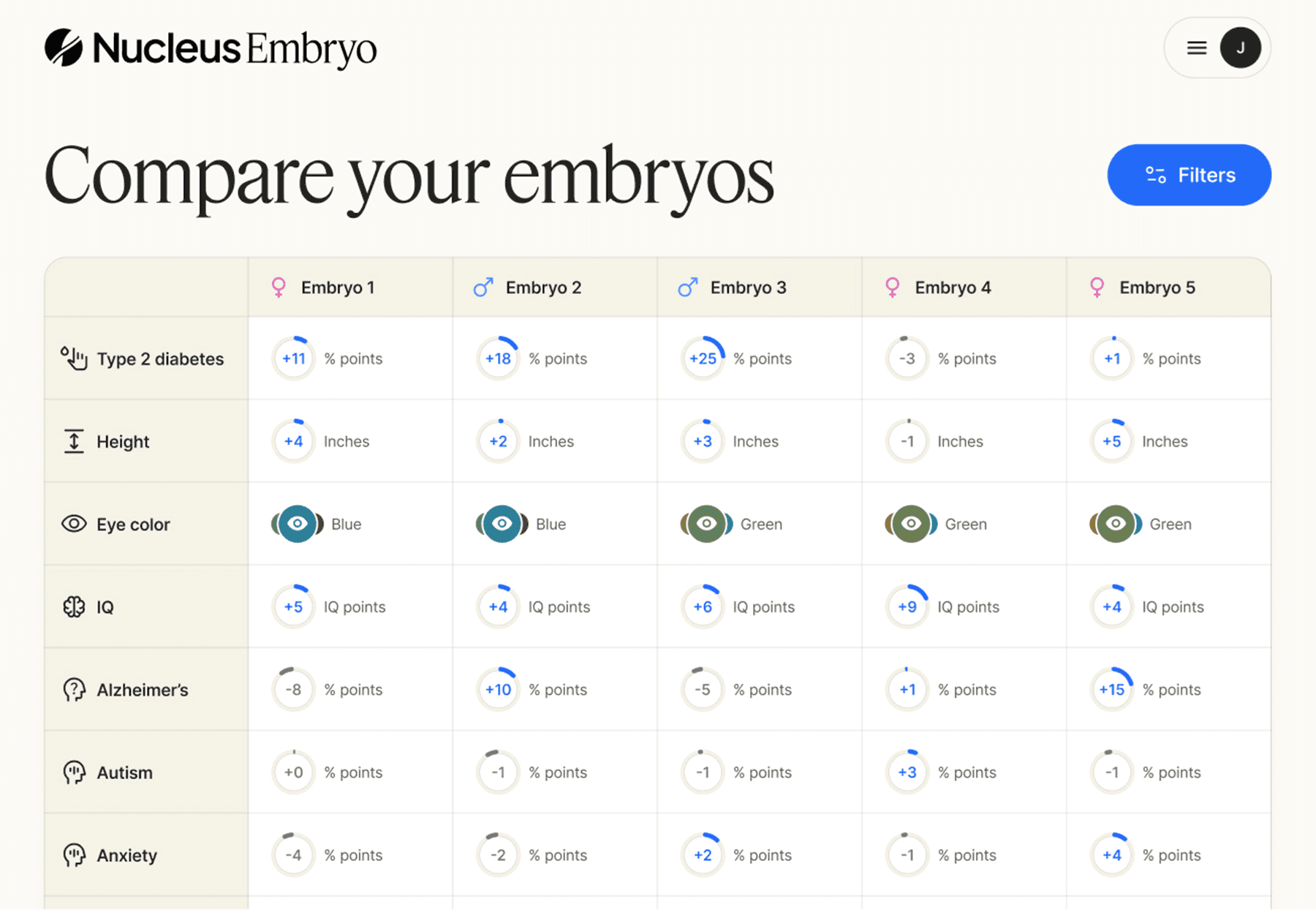
Nucleus works with several clinics in the U.S. as well as globally, including India, Mexico, Canada, and the Middle East.
What genetics-optimized IVF with Nucleus looks like
Nucleus Embryo can support you before the implantation happens during IVF. Here’s a rundown of how the process works:
Talk to our counselors/your fertility clinic: Let your doctor know you’d like to use Nucleus and confirm which preimplantation genetic testing (PGT) lab your clinic works with.
Use your existing embryo testing results: Nucleus works with the genetic data already generated during embryo testing, so you can use results from your clinic’s PGT lab without additional procedures.
Screen for inherited risks together: Through Nucleus’ preconception genetic screening included with Nucleus Embryo, you and your partner can be tested for more than 2,000 genetic conditions and traits to better understand potential health risks.
Evaluate your embryos: Our advanced predictive models analyze your embryos’ genetic data so you can look at them side by side based on health insights, inherited conditions, and other traits.
Move forward with embryo transfer: Using these insights, you and your care team can select an embryo and proceed with implantation.
How you benefit from Nucleus may vary on a case-by-case basis. It’s best to talk to our specialist to discuss your available treatment options.
Featured image source: IVF Florida via LinkedIn