Ontario is one of Canada’s provinces with the most meticulously regulated fertility care, and Toronto is the main hub for leading clinics. From large network establishments to boutique-style private fertility clinics, the city offers viable options across the spectrum, reflecting diverse care models and patient needs.
Many fertility clinics also address specialized areas, including male-factor infertility, third-party reproduction, and 2SLGBTQ+ family building pathways. Because patients often select clinics based on diagnostic capabilities, specialist expertise, or unique fertility goals, finding the right provider can feel overwhelming when there are many options.
This guide outlines some of the best IVF clinics in Toronto based on three core categories:
All-purpose clinics offering advanced diagnostic and genetic testing
Leading Toronto male fertility clinics
Practices with top fertility specialists in Toronto
We’ve also compiled some FAQs to address key considerations for fertility care in Toronto.
All-purpose fertility clinics with genetic testing in Toronto
All-purpose fertility clinics in Toronto offer most testing and treatment options, as well as potential third-party services like donors available under one roof. You don’t have to navigate multiple providers and can enjoy a more streamlined IVF experience.
Particularly, we focused on clinics that offer the best support during the diagnostic phase before fertility treatment. This phase is crucial for developing care plans and identifying underlying causes of infertility.
For instance, many fertility centers in Toronto offer the latest genetic testing tools to uncover hereditary risks and support responsible family planning from the outset. Carrier screening can address many questions intended parents have in the preconception phase. Advanced testing methods today can also reveal which embryos have a lower risk of developing chronic diseases like type 2 diabetes and Alzheimer's.
Three top-rated Toronto fertility clinics offering advanced genetic and fertility testing are:
CReATe Fertility Centre
Generation Fertility
Twig Fertility
1. CReATe Fertility Centre
At CReATe Fertility Centre, patients can experience a full-service care model, integrating comprehensive diagnostics and genetics-informed fertility care.
For female patients, the fertility journey at CReATe starts with a comprehensive hormonal evaluation and ultrasound assessment of the uterus, ovaries, and any physical factors that may affect pregnancy. Male fertility testing includes options such as sperm kinetics, anti-sperm antibody testing, and fluorescent in-situ hybridization (FISH), which evaluate the chromosomal integrity of the sperm.
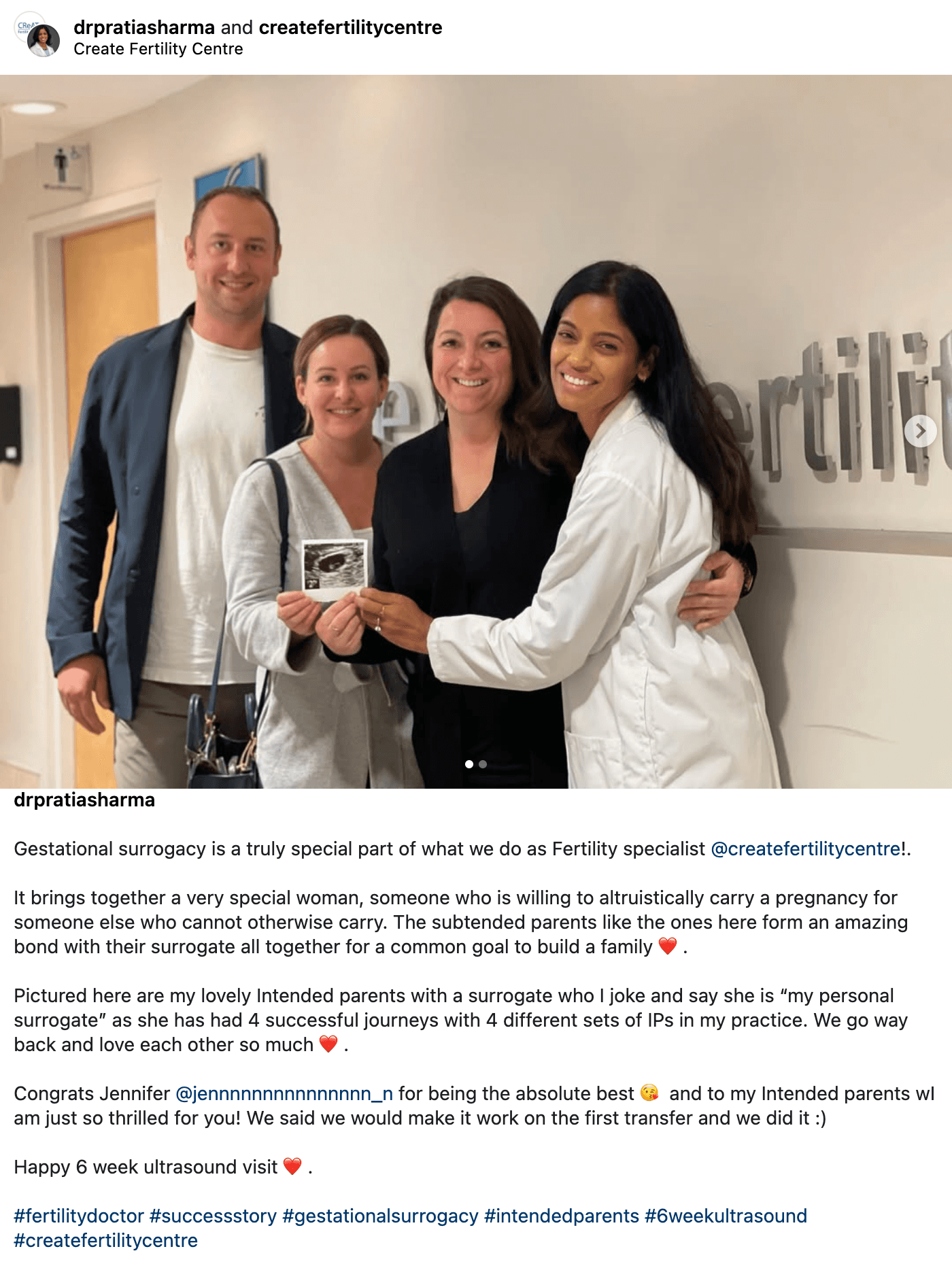
Full post: Instagram
CReATe Fertility Centre’s advanced genetic testing options are summarized below:
Procedure | Estimated pricing (CAD) |
|---|---|
PGT-A for the first eight embryos | $4,800 |
Per-embryo fee for additional embryos after the first eight | $350 |
PGT-M for the first eight embryos | $5,200 |
Per-embryo fee for additional embryos after the first eight | $450 |
Setup fee for additional condition testing | $1,000 |
PGT biopsy | $2,250 |
Morphokinetic analysis with EmbryoScope technology | $925 |
Tip 🌼
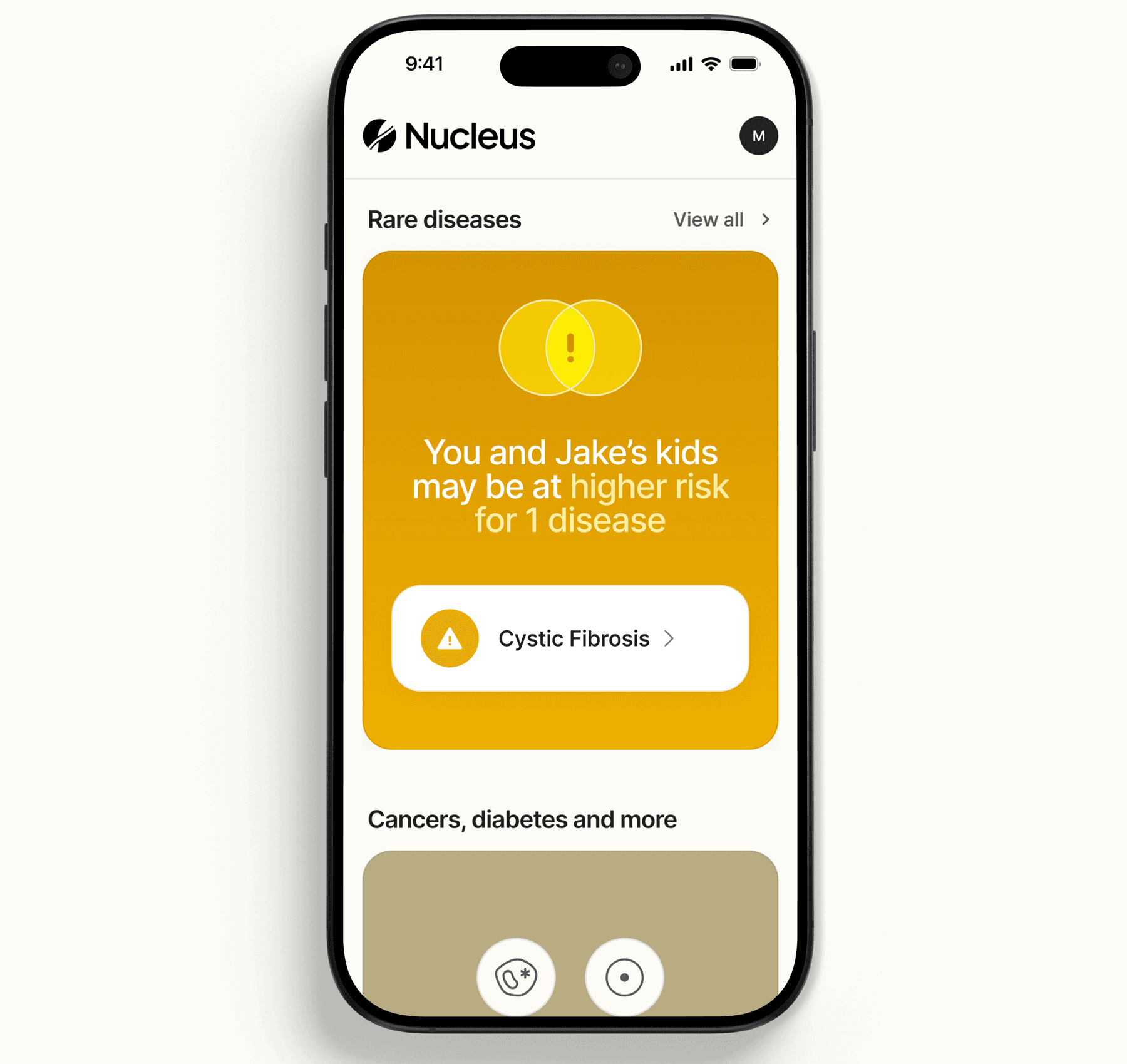
As part of IVF planning, you can also explore tools like Nucleus Preview and Nucleus Embryo in consultation with your care team. Nucleus Preview focuses on carrier screening and genetic risk assessment prior to treatment. Both parents can get assessed to map what genetic risks and traits they could pass on to their kids. Nucleus Embryo provides deeper insights to support embryo selection based on health and well-being potential.
2. Generation Fertility
At Generation Fertility, a detailed assessment of reproductive health is conducted through a range of diagnostic procedures, including:
Pelvic and transvaginal ultrasound
Baseline hormone evaluation
Endocrine testing
Semen analysis
Sonohysterogram (to closely examine the uterine cavity and fallopian tubes)
Once a complete picture of fertility status is established, the specialized team considers both the patient’s physical and emotional well-being when designing the treatment plan.
Genetic testing options, including PGT-A and PGT-M, further support informed decision-making. Endometrial health is evaluated using advanced procedures such as endometrial imaging and endometrial receptivity analysis (ERA), which enable precise determination of the optimal timing for embryo implantation.
3. Twig Fertility
Fertility assessments at Twig Fertility start at CAD $250 and include an egg quality evaluation with baseline bloodwork, an internal ultrasound, and a counseling session to review results and receive a personalized report.
A comparable fertility assessment is available for male patients, including bloodwork, semen analysis, and a private counseling session with a fertility specialist. This ensures a structured evaluation of both partners for balanced IVF planning.
The clinic provides a family history assessment conducted by a genetic counselor. During this session, intended parents can receive insight into personal risk factors and family medical history, helping them better understand the role of hereditary factors in family planning.
Twig Fertility offers complimentary genetic counseling sessions before and after genetic testing procedures.
Source: Jonathan Borba
Top male fertility clinics in Toronto
Male fertility plays an important role in improving overall reproductive outcomes. The following sections provide brief reviews of three leading Toronto fertility clinics for male fertility diagnosis and treatment:
Mount Sinai
Anova Fertility
MCF Reproductive
1. Mount Sinai
Mount Sinai operates a male infertility clinic within its urology department for a more focused approach to diagnosing and managing complex infertility cases. Before developing a care plan, the team conducts initial screening procedures, which may include bloodwork, urine tests, diagnostic imaging, and endocrine evaluation. In most cases, semen analysis remains the most informative initial test, assessing sperm morphology and motility.
Further diagnostic work may involve DNA fragmentation testing and hormonal assessment to better understand the underlying cause of infertility. When indicated, surgical procedures are performed in-house, including:
Testicular sperm aspiration (TESA)
Microdissection testicular sperm extraction (MicroTESE)
Varicocelectomy for the removal of enlarged scrotal veins
Vasectomy reversal
Percutaneous epididymal sperm aspiration (PESA)
Vibrostimulation to enhance ejaculation
Note: You’ll need a physician referral from your healthcare provider to access care at Mount Sinai.
2. Anova Fertility
Anova Fertility evaluates sperm health through a detailed screening process that assesses key parameters, including:
Sperm concentration
Signs of infection
Ejaculation volume
Sperm motility
Sperm morphology
Total sperm count
Based on these findings, fertility specialists can tailor treatment plans to address vital male fertility concerns, including potential blockages that may affect ejaculation or sperm production.
The facility also offers fertility preservation services through an on-site laboratory, enhancing convenience and continuity of care. For patients seeking sperm freezing for fertility timeline planning or medical reasons, the procedure is priced at CAD $850, which includes semen collection and one year of storage, while the additional storage is billed at CAD $695 annually.
Alongside male fertility services, the clinic offers a full IVF cycle estimated at CAD $13,999, excluding medications. The egg-freezing package, which covers the first year of storage, is priced at CAD $8,999, with medications typically ranging from CAD $5,000–$9,000.
3. MCF Reproductive
MCF Reproductive features a proprietary andrology department for addressing male fertility concerns. Key services offered within this sector include:
Semen analysis and sperm function screening, including viability and survival assessment
Anti-sperm antibody screening
Sperm fertilization potential assessment via the mannose-binding test
DNA integrity test
Sperm reactivity assessment
Evaluation of glucose, lipid, and protein content in seminal fluid
Bacterial cultures and mycoplasma testing
Sperm wash insemination
Donor sperm insemination as a family-building option for complex infertility cases
Beyond diagnostic procedures, the MCF Reproductive team emphasizes semen quality improvement through a combination of clinical interventions, therapeutic treatments, and targeted supplementation.
Beyond fertility testing and treatment, the clinic promotes a broader model of care that includes a range of complementary services. Wellness and traditional medicine offerings range from detoxification programs and weight management to blood cell analysis and acupuncture, addressing factors commonly associated with infertility.

Source: Helena Lopes
Tip: In cases of male infertility or unexplained fertility challenges, ask your care team about genetic testing to help identify underlying causes or guide treatment decisions.
Clinics with renowned fertility doctors in Toronto
Clinical expertise is one of the essential factors in clinic selection, fostering the trust and confidence patients seek throughout the often complex and emotional journey of fertility treatment.
We’ve narrowed down three leading Toronto fertility clinics known for their doctors:
TRIO Fertility
Hannam Fertility Centre
Pollin Fertility
Here’s an overview of each.
1. TRIO Fertility
TRIO Fertility boasts a large team of fertility specialists with decades of collective experience in reproductive medicine. Dr. Ken Cadesky, medical director and founding partner, is an assistant professor in the Department of Obstetrics and Gynecology and a reproductive surgeon. Dr. Cadesky focuses on embryo implantation studies, cases involving low ovarian response, and preimplantation genetic testing (PGT) research.
Dr. Robert F. Casper, founding partner and scientific director, brings more than three decades of experience in reproductive endocrinology and infertility. He’s certified as a diplomate of the American Board of Obstetrics and Gynecology in Reproductive Endocrinology and serves as a senior investigator at Mount Sinai Hospital, with his research being funded by the McGill Reproductive Centre (MRC).
Dr. Casper also served as the president of the Canadian Fertility and Andrology Society (CFAS) and has received a lifetime research achievement award from the CFAS.
Beyond its physician team, TRIO Fertility maintains dedicated departments for counseling, operations, laboratory services, and fertility-focused naturopathy.

Source: TRIO Fertility
2. Hannam Fertility Centre
Hannam Fertility Centre (HFC), with locations in downtown Toronto and Ottawa, brings more than 10 years of clinical experience. The center is supported by a multidisciplinary team that includes fertility specialists, naturopaths, laboratory professionals, and natural conception specialists.
Dr. Rebecca Arthur previously practiced at Mount Sinai Fertility for over a decade and served as an assistant professor at the University of Toronto. She holds a Master of Science in quality improvement and patient safety and is trained in minimally invasive gynecologic surgery, with certification from the American Association of Gynecological Laparoscopists.
Board-certified in both the U.S. and Canada, Dr. Paul Robb served as an investigator with the Oncofertility Consortium in Wisconsin and focuses on fertility preservation and the management of recurrent pregnancy loss. Dr. Robb completed his subspecialty fellowship in reproductive endocrinology and infertility at the University of Cincinnati and has been repeatedly recognized by peers as one of the best doctors in America.
Hannam also stands out because all its laboratory services are performed at the only CCRM-affiliated lab in Canada, which is certified by the College of American Pathologists (CAP).
3. Pollin Fertility
The fertility team at Pollin Fertility includes professionals certified by the Royal College of Physicians and Surgeons of Canada in Obstetrics and Gynecology (OBGYN) and Reproductive Endocrinology and Infertility (REI).
Many team members are also valued members of professional organizations such as the Canadian Fertility & Andrology Society (CFAS) and the American Society of Reproductive Medicine (ASRM).
Dr. Kim Garbedian, medical director and founding partner of Pollin Fertility, is a member of the Society of Obstetrics and Gynecology of Canada (SOGC). Dr. Evan Taerk, another founding partner, specializes in fertility surgery and leverages his Master's in psychiatry to support patients in managing the emotional challenges of fertility treatment.
Dr. Cassandra Greenberg offers specialized care for LGBTQ+ family-building pathways and fertility preservation. She is a reproductive endocrinology and infertility specialist trained at the University of Toronto.
Best fertility clinics in Toronto: Summarized
The table below consolidates the Toronto fertility clinics reviewed above for a quick assessment:
Clinic | Key highlight |
|---|---|
Bundled genetic testing pricing for multiple embryos | |
Generation Fertility | Advanced endometrial health assessment |
Twig Fertility | Tailored fertility assessment with genetic counseling sessions |
Mount Sinai | In-house surgical options and a multidisciplinary team |
Anova Fertility | Detailed sperm evaluation and fertility preservation options |
MCF Reproductive | Proprietary andrology department and holistic support |
Large team of specialists with PGT expertise | |
Multidisciplinary care and CCRM-affiliated laboratory services | |
Experts specializing in LGBTQ+ pathways |
While many clinics offer specialized care to address fertility issues or patient expectations, you may still struggle with the level of insight available at key decision points. For instance, in many IVF programs, genetic screening follows a standardized approach that only checks embryos for chromosomal viability, making it difficult for intended parents to choose which embryo has the best long-term health potential.
But with the genetic research technology adopted by Nucleus, families can now expand the use of the genetic data available for embryos.
Nucleus Embryo, a genetic optimization tool, uses viability as a starting point rather than the finish line, offering deeper insights into indicators of embryo health and longevity.
Choose embryos beyond basic viability with Nucleus
Historically, embryo selection relied on basic lab reports that focus primarily on chromosomal normality or embryo viability. These were decisions typically made by clinicians without giving parents much say in the process.
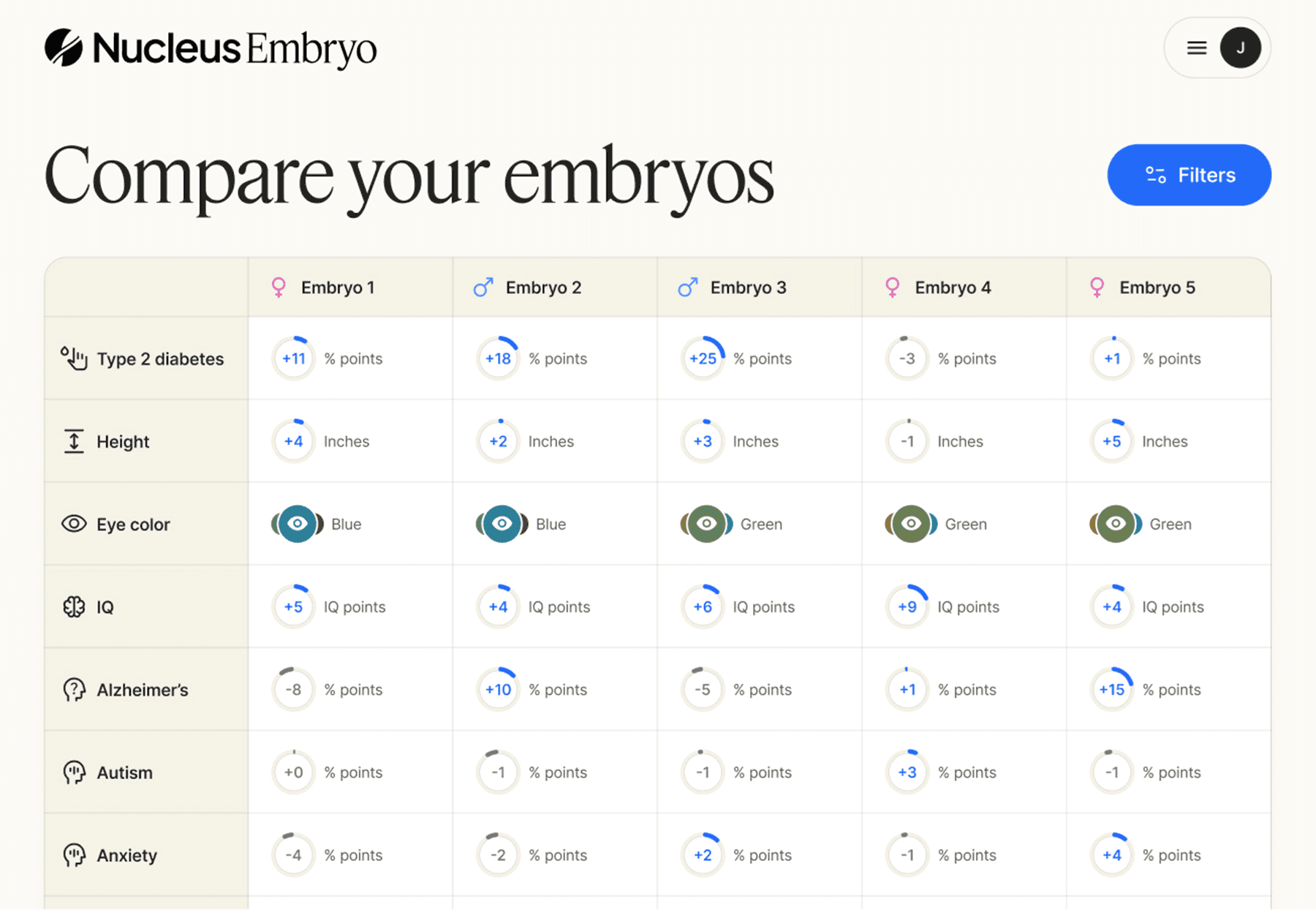
Nucleus Embryo helps parents explore this data in greater depth through advanced predictive models and translates complex genetic analysis into clear, actionable insights. You can access genetic predisposition across 2,000+ factors, including:
Heart health: coronary artery disease, hypertension
Neurological and mental health: Alzheimer’s disease, anxiety, bipolar disorder
Women’s health: endometriosis, PMOS (formerly known as PCOS)
Metabolic health: type 1 and 2 diabetes, celiac disease
Certain types of cancer: breast, ovarian, and prostate cancer
Hereditary disorders*: cystic fibrosis, hemochromatosis
Physical and longevity traits: including height, hair color, IQ, and ADHD
*Some conditions are detected through parental screening and could require further PGT-M before embryo transfer.
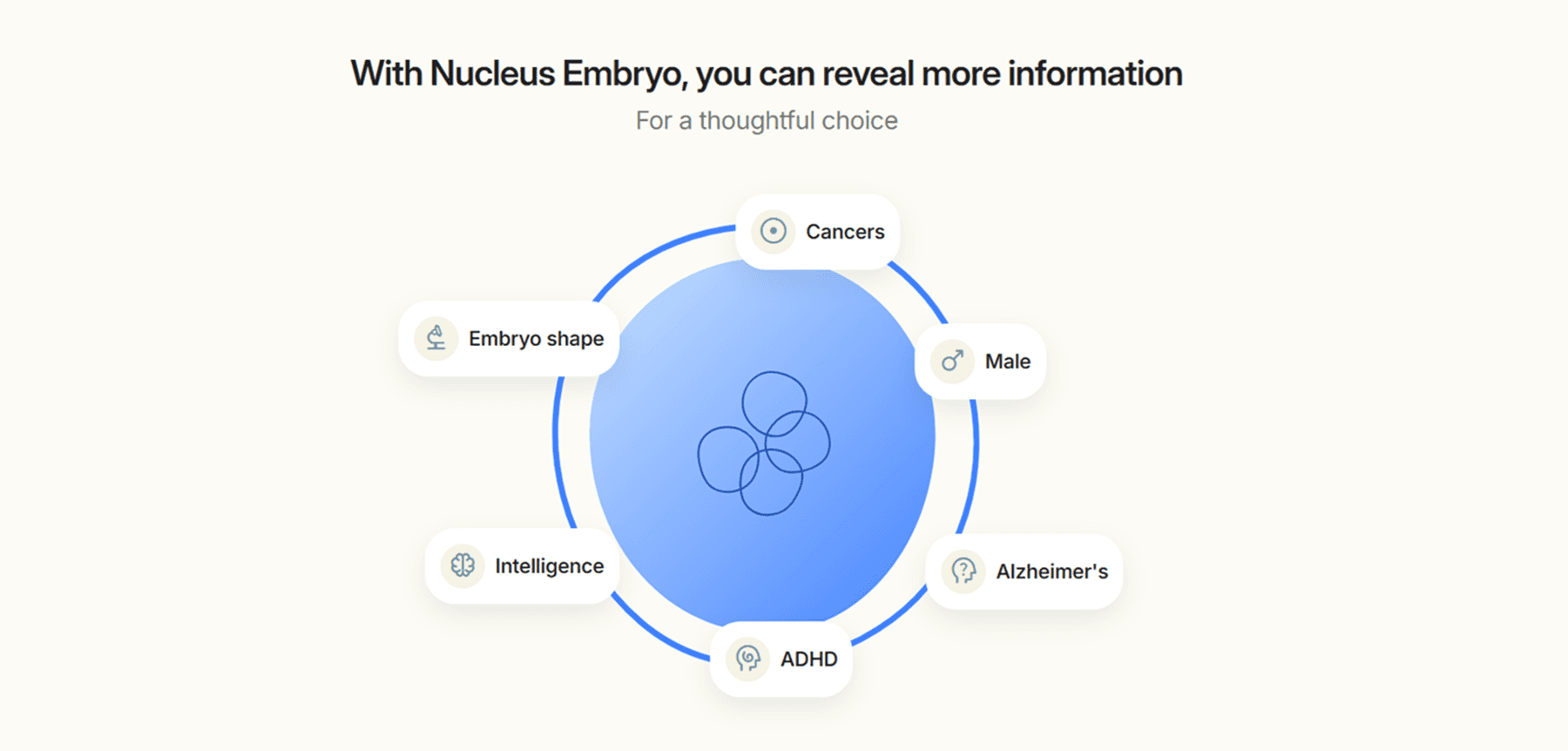
Through an intuitive, interactive interface, you can analyze up to 20 embryos side by side, review predicted health risks and traits, and sort embryos based on the factors that matter most to you. Genetic counseling is available to all patients who need help navigating and interpreting their results.
How to get started with Nucleus Embryo
If you are already undergoing IVF and preparing for embryo transfer, Nucleus Embryo, which includes Nucleus Preview, can be integrated into your treatment cycle in most cases. You can schedule a call with a Nucleus specialist to get started.
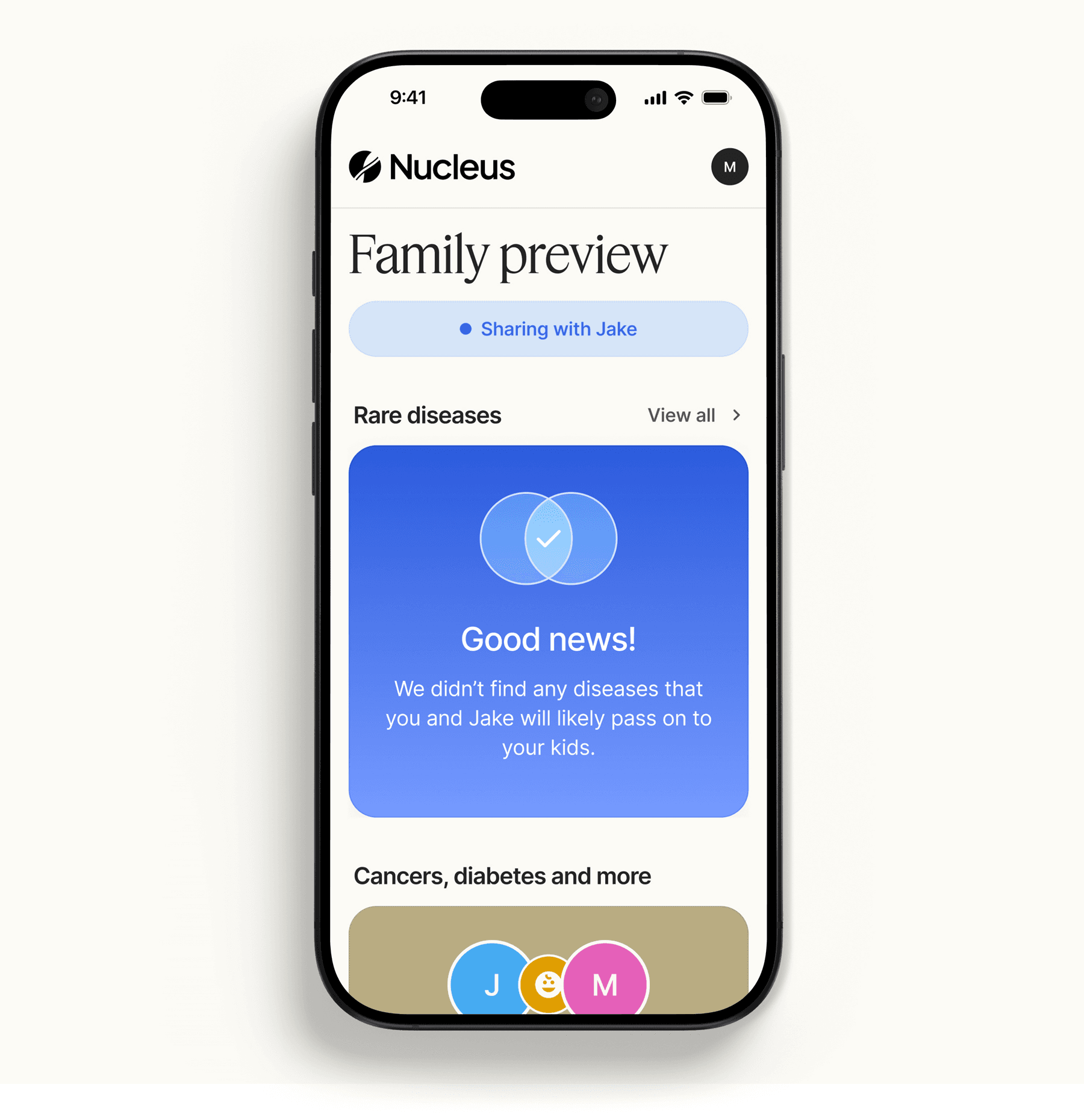
Nucleus Preview is for individuals or couples planning a baby. The test analyzes the DNA of both partners to identify carrier status for 2,000+ genetic conditions, as well as traits like eye color, intelligence, and height. Preview also includes a sibling-level simulation that models genetic risk across 100 potential children.
We work with many partner clinics in the U.S., as well as in Canada, India, the Middle East, and Mexico, to ensure patients around the world can access our advanced genetic optimization services.
For individuals or couples considering conceiving naturally, Nucleus also offers preconception screening separately. Nucleus Preview is designed to identify hereditary risks and traits.
These insights can help:
Identify inherited conditions that may require additional testing
Inform IVF planning and embryo testing strategies via PGT-A, PGT-M, etc.
Give parents clearer information about potential health risks
Nucleus Preview screening can be done at home — order the kit to get started.
FAQs
Is financial support available for fertility treatment in Toronto?
Fertility treatments can be expensive, especially when complex infertility challenges arise or when underlying medical conditions affect reproductive health. To improve affordability and promote broader access to care, the Ontario government has established the Ontario Fertility Program (OFP), which provides public funding for core fertility services.
The program supports eligible patients at nine Toronto fertility clinics:
CReATe
Anova Fertility and Reproductive Health
Generation Fertility Toronto West
Mount Sinai Fertility
Dr. Anthony Auyeung
Twig Fertility
Who is eligible for the Ontario Fertility Program in Toronto?
The two primary eligibility criteria are permanent residency in Ontario and possession of a valid Ontario health card.
Health card requirements include proof of primary residency and physical presence in the province for at least 153 days in any consecutive 12-month period, as well as during the first 183 days after establishing residency.
Applicants must also meet at least one of the additional requirements, such as Canadian citizenship, having applied for permanent residence, or residing in Ontario under a valid work permit with full-time employment for at least 6 months.
What treatments are covered under the Ontario Fertility Program?
The OFP also establishes procedure-specific criteria and limitations that directly affect what treatments you can access. Below is an overview of what the program covers and how requirements are defined for each funded service:
IVF: The program covers one full IVF cycle per patient per lifetime, including egg retrieval, fertilization, and embryo transfer. Patients must be under 43 years of age at the time of retrieval. An additional cycle may be approved for individuals acting as surrogates. The program requires single-embryo transfer of all viable embryos and does not cover fertility medications, genetic testing, and storage of reproductive material.
Assisted reproduction (AI): Beyond the general OFP eligibility criteria, no additional procedural limitations apply.
Intrauterine insemination (IUI): Ontario residents may undergo as many IUI cycles as clinically recommended, with no cap on the number of cycles or age restrictions.
Fertility preservation: OFP funding is available for patients undergoing treatment for medical conditions that could directly or indirectly compromise fertility, with coverage limited to one cycle per patient. Fertility preservation for non-medical or elective reasons is not included.
You may also like. . .
Featured image source: Aditya Oberai